Tag: #riseabovethenoise

  • I’m Goin’ to Dollywood! Personal Branding Lessons from an Icon

    I’m Goin’ to Dollywood! Personal Branding Lessons from an Icon

    The Dolly Parton example: Stay true to your roots, even as you reinvent yourself and your brand.

    By Mary E. Maloney

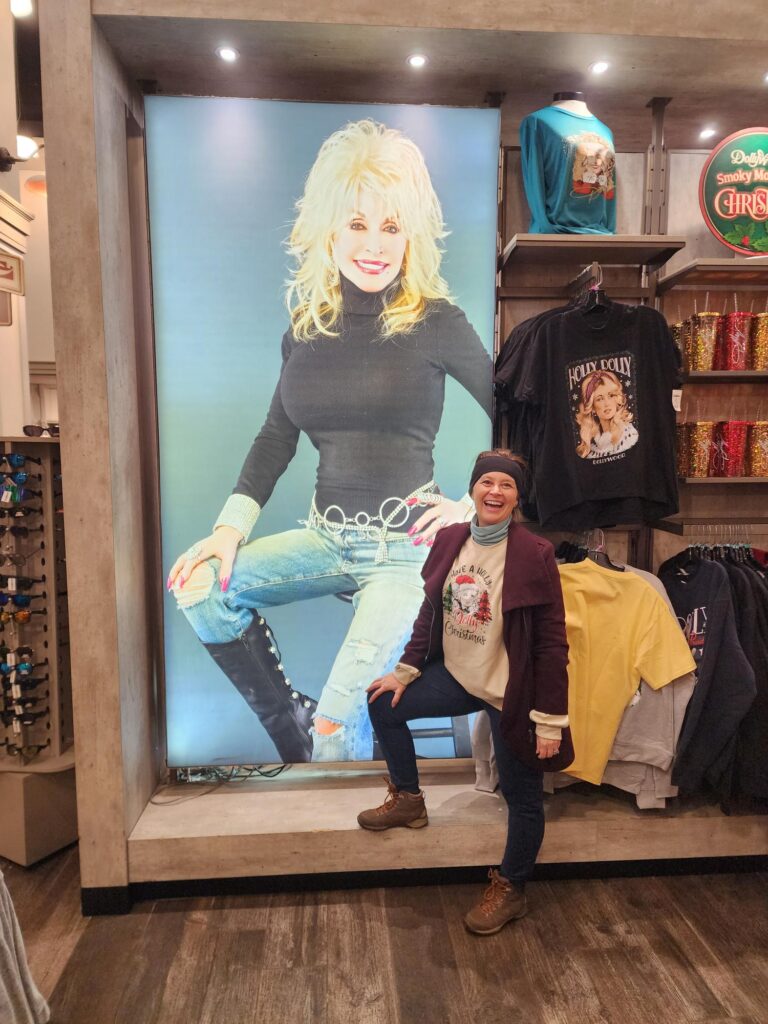
    My husband and I went to Dollywood in December. And while I loved the theme park and hiking in the nearby Tennessee hills, I was completely awed by the idea that the park is just one example of the amazing personal brand Dolly Parton has built. Let’s talk about how Dolly has nurtured and reinvented her brand and how you might be able to translate elements of her success into your own.
    During my December trip to Dollywood, I hiked the beautiful hills of Tennessee. I can see why Dolly loves her state so much!

    How She Launched Her Brand: With Excellence

    Dolly Parton came to the fore when she started topping the country music charts in the late 1960s. In other words, at the base of her brand is her distinctive singing voice and her commitment to music excellence.

    Parton has received numerous accolades, including 11 Grammy Awards from 50 nominations. She has won 10 Country Music Association Awards, including Entertainer of the Year, one of only seven female artists to achieve this distinction.

    Her music was a stepping stone to fame on TV and the big screen from The Porter Wagoner Show to 9 to 5 (1980), Steel Magnolias (1989) and others.

    And she continues to write and record music. Her latest, “If You Hadn’t Been There,” is a tribute to her husband of 58 years, Carl Dean, who passed away on March 3 at age 82. (Dolly herself is 79.)

    Lesson 1 from Dolly’s brand: Be exceptional at what you do.

    How She Maintains and Reinvents Her Brand: With Consistency

    Dolly has effectively built her brand up from the foundation of her music. In addition to the Dollywood theme park I visited (Dolly kicked off the park’s 40th anniversary season last month), she also co-owns the Dolly Parton’s Stampede dinner attraction chain.

    She has written multiple books, including Coat of Many Colors, 2016, a children’s picture book based on the lyrics of Dolly’s song with the same title; Good Lookin’ Cookin’: A Year of Meals – A Lifetime of Family, Friends, and Food, 2024, written with her sister; and more than one memoir (Dolly: My Life and Other Unfinished Business, 1994) and (Behind the Scenes: My Life in Rhinestones, 2023).

    She has her dog products line, Doggy Parton, offering apparel, accessories, toys, and more with “Dolly” flair. She has her own line of bakery products with Conagra’s Duncan Hines. And the new musical, Hello, I’m Dolly!, based on Dolly’s life and music, is slated to open in 2026.

    With so many successful brand reinventions and an estimated brand and net worth of $650 million, Dolly is clearly a prolific creator and an impressive businesswoman. But it’s not just the volume of what she has done and her financial success that stand out. It’s also the consistency with which she does everything that matters.

    Dolly is inspired by butterflies because they are gentle, beautiful and free-spirited. She uses them often in her branding.

    For example, butterflies abound in Dolly’s brand presentations. The logo for Dollywood turns the “w” into a butterfly. The Stampede dinner attraction opened the 2025 season with a new butterflies and horses segment.

    Why butterflies?

    “When I was growing up, I was always fascinated by butterflies,” she says on her website. “They are such gentle, beautiful and free-spirited creatures, and I’ve always related to them with my own personality and how I live my life. They’ve become my little symbol, and I like to include them wherever I can.”

    Dolly is also very consistent about who she is in all aspects of her career. She is the glamorous one, in sequins, with a very kind heart. She is known for having plastic surgery to look the way she wants to look. (“I’m so outgoing inside in my personality, that I need the way I look to match all of that,” she says.) She is the hometown Southern girl who has experienced poverty but still finds life nourishing and has great meals with her family. She also delights in partnering with other musicians but insists they don’t use cuss words in the final recording.

    Through and through, she’s Dolly.

    Lesson 2 from Dolly’s brand: Maintain unwavering consistency.

    How She Shows What She Stands For: With On-Brand Causes

    One of the key questions we at Revealing Genius help our executive personal branding clients answer is: What do you stand for? Another way to ask this same question is: What is the big relevant change in the world that you are uniquely poised to make?

    You won’t be surprised when I tell you that Dolly Parton answers this question in ways that speak to her roots, growing up poor in Tennessee, loving music and her family—and helping pave the way for the next generation to dream big.

    A key cause of Dolly’s is helping children learn to read because she believes it will help them live more fulfilling lives. Inspired by her father’s inability to read or write, Dolly’s Imagination Library is dedicated to inspiring a love of reading by giving books free of charge to children from birth to age five. Imagination Library works through local community partners in the United States, Canada, United Kingdom, Australia, and Republic of Ireland.

    “When I was growing up in the hills of East Tennessee, I knew my dreams would come true,” she says. “I know there are children in your community with their own dreams. They dream of becoming a doctor or an inventor or a minister. Who knows, maybe there is a little girl whose dream is to be a writer and singer. The seeds of these dreams are often found in books, and the seeds you help plant in your community can grow across the world.”

    During the pandemic, Dolly gave $1 million to the Vanderbilt Institute for Infection Immunology and Inflammation in Nashville. The gift ultimately helped fund research for Moderna’s highly effective COVID-19 vaccine, also known as the “Dolly Vaxx.” When she got vaccinated, Dolly updated the lyrics of her famous song, “Jolene,” to “vaccine” to encourage others to get their dose.

    “From singing barefoot on the front porch of her Tennessee mountain home to commanding the stage in six-inch heels, Dolly Parton is a larger-than-life living legend with a heart as big as her dreams,” her website proclaims. And her philanthropy accurately reflects this brand.

    Lesson 3 from Dolly’s brand: Boldly stand up for what matters to you.

    Put These Three Lessons From Dolly Into Action

    Let’s recap. In this article, we’ve described three key takeaways from the iconic Dolly Parton brand that you can use to help you build your own executive personal brand:

    1. Be exceptional at what you do.
    2. Maintain unwavering consistency.
    3. Boldly stand up for what matters to you.

    The good news is you don’t have to translate these ideas into your own brand on your own. We’re happy to help. Check out our signature Brand Declaration offering or register for our next 7-Day Summit or Mastermind Sphere of Influence. It will be our honor to work with you.


    Mary E. Maloney

    Mary E. Maloney, FACHE

    An executive advisor, educator, speaker, author and producer, Mary E. Maloney is the founder of Revealing Genius and the expert that accomplished leaders trust for positioning, messaging and brand strategy for themselves, their teams and their organizations. A former CEO and CMO, Maloney guides C-suite leaders, founders, physicians and board directors to powerfully and strategically message their expertise and “why” so they lead with conviction and achieve their most coveted goals.

  • In Transition? Your Superpower Can Help You Stand Tall

    In Transition? Your Superpower Can Help You Stand Tall

    When you excavate and affirm your executive personal brand, you can better navigate your next step.

    Some leaders think putting a career break on their resume or LinkedIn profile will damage their career prospects. I’d like to change the conversation/stigma around this notion through executive personal branding, including helping leaders identify their superpower.

    When leaders know who they are, what they stand for and what they’re best at in the world, they can stand tall and better deliver on their full potential in any situation–whether they’re learning something new in a career break, achieving their next career milestone or turning their big hairy audacious goal for the world into reality.

    Let’s start this article with an example of a person who owns her career breaks and pivots, then move into how to excavate your superpower to help you move forward through all parts of your life and finally, talk about how to affirm your superpower as part of your executive personal brand until you believe in it with conviction. “Excavate” and “affirm” are two of the three steps in the time-proven Excavate–Tell–Affirm™ process from Revealing Genius.

    Two Career Breaks, Seven Pivots

    Marine Hamou’s superpower lies in connecting the dots between exceptional people, ambitious ideas and business growth to help subject matter experts and startups win in the long run. She’ll be our guest in an upcoming edition of The Great Work of Your Life™ interview series. Notably, Hamou lists not one but two career breaks on her LinkedIn profile. And she has pivoted seven times during her career.

    During one of the breaks, Hamou immersed herself in learning Mandarin, attending classes at TCA Taipei School for three months. She also volunteered to teach English and computer skills for nine months in Southeast Asia.

    Hamou may see breaks as being full of possibilities in part because she is a “third culture kid,” a child who grew up in a different culture from her parents. 

    “Being in transition is not a disadvantage, it’s of great value,” she told me in a recent conversation. “It’s an opportunity to ask ourselves the hard questions.”

    A hard question Hamou has asked herself is “How much (income) is enough?” To be without a steady paycheck or a salary as she has at some points in her career can be scary, she noted. However, she thinks that if a leader honestly answers big questions like the one about income, the transition will always yield growth.

    According to Hamou, it’s also important to shift transition conversations from failure to growth: “Instead of asking, ‘What if I fail?’ (or) ‘What if it doesn’t work?’, … ask, ‘What can I learn?’

    “Transition is a time to reconnect with our true selves to move forward,” she added. “Blank pages are terrifying but also full of possibilities.”

    At Revealing Genius, we often ask our clients the hard question, “How do you want to live?” and encourage them to build their executive personal brand with their answer in mind. 

    Excavate Your Superpower

    So how can you get to know your superpower so it can support your efforts to move forward in the world, whether that’s into your dream job, onto a board and through a time of transition?

    One way Revealing Genius helps leaders excavate their superpower is by using the time-proven Excavate–Tell–Affirm™ process and asking them, “Who is your hero?” A leader’s hero can be someone they know, a famous person or a fictional character. 

    You can do this exercise right now. Who is your hero?

    The important and possibly harder follow-up we at Revealing Genius ask is, “What is it about this person that makes them your hero?” The answer to these two questions speaks volumes about your brand—and likely points to your superpower.

    A writer I know would name “Grandma Margaret” as her hero. She’d say the reason her grandmother is her hero is that during good times as well as during times of transition, Grandma Margaret would apply calmness and wisdom to every situation she encountered. 

    Interestingly, that writer’s superpower is being able to kindly and calmly bring up for discussion the elephant in any room. This ability helped her to discern when it was time to leave her longtime job and establish her own consulting business—and to approach the transition with strategies that included writing a learning plan!

    Affirm Your Superpower

    Superpowers, like executive personal brands, are made more potent by the use of affirmations. That’s why Revealing Genius builds affirmations into our executive personal branding program.

    Think about the famous children’s story, “The Little Engine That Could.” In it, a long train must be pulled over a high mountain after the locomotive breaks down. A small engine agrees to give this big job a try.

    As the little engine works to pull the train over the mountain, it repeats the motto, “I-think-I-can, I-think-I-can.” Children and adults alike applaud when the little engine reaches its goal. And we can all see that the engine’s superpowers—its positive attitude and perseverance—and the spoken affirmations of those superpowers help it get to the other side.

    We also hear a lot about affirmations being used in sports. When coaches consistently tell good athletes they can row faster, lift heavier or jump further, they do. When football players, gymnasts or discus throwers use affirmations to instill in themselves the belief that their training will pay off, new world records get set.

    Executive Personal Branding and Superpowers in Transition Times

    I know from experience that times of transition can be times of significant learning and growth. That’s why I help my clients own their career shifts and breaks. I support them in being unapologetic during these times, deliberate about learning and even strategic about how to leverage their superpower. When they know what they’re best at in the world, they may even plan their next transition!

    Want to learn more about the Excavate–Tell–Affirm™ process and the many ways it can benefit you? Get instant access to the free Revealing Genius 10-minute webinar, sign up for our Brand Leadership Summit or take our online course. We are honored to work with leaders 1:1 or to help build a brand manifesto.

    Mary E. Maloney

    Mary E. Maloney, FACHE

    An executive advisor, educator, speaker, author and producer, Mary E. Maloney is the founder of Revealing Genius and the expert that accomplished leaders trust for positioning, messaging and brand strategy for themselves, their teams and their organizations. A former CEO and CMO, Maloney guides C-suite leaders, founders, physicians and board directors to powerfully and strategically message their expertise and “why” so they lead with conviction and achieve their most coveted goals.

  • In Transition? Executive Personal Branding Helps Overcome Common Stigmas

    In Transition? Executive Personal Branding Helps Overcome Common Stigmas

    While some see being between roles as problematic, times of change are great opportunities for repositioning to do the great work of your life.

    Is it just me, or is there an unspoken stigma attached to being “in transition”? Could it be that “in transition” is linked to “not working a traditional job”? And that people in that situation are perceived as “less than” those working a traditional job—under the misguided logic that if a person were good, they’d be working? I’d like to change the conversation and the discourse on this subject via executive personal branding. 

    After almost two decades of working with executives in transition, I can tell you with conviction that being in transition does not signify a person has lesser worth. Instead, it reflects that the person is poised to pause and consider what’s next, to choose the right path for themselves, even to use executive personal branding to help discern what they do best in the world—and then go do the great work of their life.

    Let’s look at this stigma more deeply, talk about how executive personal branding can help mitigate it and, finally, discuss how leaders can support other leaders on this journey.

    The Stigma of Transition That’s Eased by Executive Personal Branding

    Leaders have been experiencing this stigma for a long time. While managing the “in-betweens” is not currently part of the larger business conversation, we specialize in it at Revealing Genius, so we think about it a lot.

    Leaders can be in transition for lots of good reasons (actual clients):

    • They’re retiring
    • They’re changing industries
    • They’re choosing to shift from being “busy” to being “engaged”
    • They’re writing a book
    • They’re ready to choose and pursue their life’s work
    • They were downsized even though they were the top producer
    • They’re positioning themselves to pursue their audacious vision for how the world could be a better place

    The fact that making such a significant change sometimes means not having a traditional job for a time may trigger the same stigma associated with unemployment. It’s well known that employers typically prefer candidates who currently have a job over those who don’t. And the stigma doesn’t stop there.

    According to a recent article in Time magazine about the stigma around not having a traditional job, even temporarily: “It’s not only employers who stigmatize.”

    “As the unemployed workers I’ve interviewed in the course of my research repeatedly emphasized,” writes Ofer Sharone, associate professor of sociology at the University of Massachusetts Amherst and author of The Stigma Trap: College-Educated, Experienced, and Long-Term Unemployed, “they experienced the unemployment stigma in every realm of their life, including when trying to network with former colleagues, or even when turning to their spouses or close friends for support. 

    “The way out of this trap is to confront it head-on and shine a bright light on the assumption that unemployment necessarily reflects anything about the unemployed person,” Sharone continues, when, in the case of economic and corporate shifts outside of anyone’s control, even top talent gets let go.

    Transition Better Using Executive Personal Branding

    In a recent New York Times article, Bruce Feiler offers five tools for making whatever life transition you’re experiencing go more efficiently. 

    The top tip offered by Feiler, a New York Times columnist and author of the bestseller Life Is in the Transitions: Mastering Change at Any Age? “Start with your transition superpower.”

    “Once you enter a transition, you often feel either chaotic and out of control or sluggish and stuck in place,” Feiler writes. “But my conversations suggest there is surprising order to these times.”

    “For starters, transitions have three phases. I call them ‘the long goodbye,’ in which you mourn the old you; ‘the messy middle,’ in which you shed habits and create new ones; and ‘the new beginning,’ in which you unveil your fresh self. These phases need not happen in order. Each person tends to gravitate to the phase they’re best at (their transition superpower).”

    Interestingly, the “excavate” step of the time-proven Excavate–Tell–Affirm™ executive personal branding process from Revealing Genius also leverages the idea of people having a superpower. Participate in the process and you’ll be asked, “At what are you best in the world?” The answer, you’ll learn, speaks volumes about your executive personal brand—and what you most want to do next.

    The “tell” step helps you effectively share your unique reason to serve with others, while the “affirm” step helps build so much conviction about your brand that you can feel it in your bones.

    “Transitions … are a time for us to think about who we want to become as part of our lives change,” says this article in Psychology Today. “Being in transition offers us an opportunity to reflect on our values (and the ways they may have changed), our goals and our identities in the different areas of our lives.” 

    Executive personal branding can help you do this effectively.

    Mitigating the Stigma of Transition

    In my long experience working with leaders in transition, “between times” are often important periods of learning and growth. It’s high time we remove the stigma about transitions and step up to help the people around us—and ourselves—with these key times in life.

    One way to do that is to proactively reach out to someone searching for their next job or reaching for a career milestone and offer to spend an hour assisting them in their efforts. During your meetup, perhaps you can help them more clearly articulate what they’re searching for, give them solid feedback on their resume or LinkedIn profile, connect them with a great lead or even make a key introduction. (Download our white paper about the value of personal introductions.)

    You might also refer them to us at Revealing Genius for help excavating what they stand for and who they most want to serve, plus support in believing in their brand and talking about it effectively with others. They (and you) can get instant access to the free Revealing Genius 10-minute webinar, sign up for our Excavate-Tell-Affirm™ Brand Leadership Summit or take our online course. We are honored to work with leaders 1:1 or to help build a brand manifesto.

    Mary E. Maloney

    Mary E. Maloney, FACHE

    An executive advisor, educator, speaker, author and producer, Mary E. Maloney is the founder of Revealing Genius and the expert that accomplished leaders trust for positioning, messaging and brand strategy for themselves, their teams and their organizations. A former CEO and CMO, Maloney guides C-suite leaders, founders, physicians and board directors to powerfully and strategically message their expertise and “why” so they lead with conviction and achieve their most coveted goals.

  • Rise Above the Noise: 6 Characteristics of On-Brand Key Messages

    Rise Above the Noise: 6 Characteristics of On-Brand Key Messages

    These bite-sized statements must articulate what you do, why you do it and the unique value you bring to the people you most want to serve.

    The healthcare space, like most industries, is busy—“noisy,” even—with lots of well-meaning people trying to make a positive difference in the world. A well-positioned executive personal brand that’s supported by exactly the right key messages can help you rise above the noise.

    Key messages are bits of information that articulate what you do, how you do it and what makes you different. You can put key messages to work for you by including them in any communication—from a team presentation to your application for your dream job or board seat to your LinkedIn profile.

    Let’s talk more about six important characteristics of outstanding key brand messages—and how you can use your messages to rise above the noise and stand out for the unique contributions that only you can make in the world.

    6 Characteristics of Effective Key Messages for Executive Personal Brands

    Most articles you read online about key brand messages (like this one from Onyx Health and this one from Map & Fire) say key messages need to be short, specific, digestible/repeatable, strategic and memorable. I’d add that the best key messages are also emotional. Let’s look at each of these in turn.

    1. Short. Doing executive personal branding using Revealing Genius’ time-proven Excavate–Tell–Affirm™ process will help you use fewer words (and more confident ones) to state your key brand messages. You’ll be pithy and on point, but concise. (Check out this related blog.)
    2. Specific. To help distinguish your brand from others, it’s helpful to get into the details. That way, you can better stand out from the sea of sameness. Try starting your key message with “We were the first to…” or “What makes me stand out is …”
    3. Digestible/repeatable. Being succinct and specific will help the people you most want to serve to understand who you are and what you do. Having a successful executive personal brand means you know how to effectively tell others about it in any situation—whether that’s during the two minutes you’ll get when they look at your CV or application or LinkedIn profile or the 30 seconds you’ll have in the proverbial elevator. And of course, when people have been able to comprehend your brand message, they’ll be better able to share it with others.
    4. Strategic. Your key message will be strategic when it’s positioned to help you achieve one or more big goals. A key message of standing for “inspiring hope” might be just the thing for the brand of the leader of a company striving to find medical cures.
    5. Memorable. Your key message will be more memorable if it taps into a hook or idea that separates you from others. The thing about an elephant in a pink tutu is that everyone remembers it!
    6. Emotional. Once your key message is short, specific, digestible, specific, strategic and memorable, it will already be good. If you can also make it emotional—so that it ties to the transformation only you can bring to the people you serve—it will be a home run with your target audience. Think about your answer to the question, “What am I best at in the world?”

    The excavate step of the Excavate–Tell–Affirm™ process tees up being able to leverage key messages to tell your most important audiences—whether that’s your team in a staff meeting, a hiring executive or the chair of the board—how you stand out. Ready to try this out?

    Get instant access to the free Revealing Genius 10-minute webinar, sign up for our Excavate-Tell-Affirm™ Brand Leadership Summit or take our online course. We would be honored to work with you 1:1 or to help you develop your brand manifesto.

    Mary E. Maloney

    Mary E. Maloney, FACHE

    An executive advisor, educator, speaker, author and producer, Mary E. Maloney is the founder of Revealing Genius and the expert that accomplished leaders trust for positioning, messaging and brand strategy for themselves, their teams and their organizations. A former CEO and CMO, Maloney guides C-suite leaders, founders, physicians and board directors to powerfully and strategically message their expertise and “why” so they lead with conviction and achieve their most coveted goals.

  • From Brand Declaration to Magazine (or Other Media) Placement

    From Brand Declaration to Magazine (or Other Media) Placement

    Executive personal branding supports a positive presence in your channels of choice.

    A female co-founder CEO leverages her company brand declaration (which parallels her personal executive brand) each time she publishes her “Living Well With Laura Henshaw” column in Vogue magazine.

    This excerpt introducing Henshaw’s Jan. 14 “Controversial opinion” column in Vogue also underscores what she and her Australian company Kic stand for—their “why.”

    A recent study has found that 34% of New Year resolutions are associated with weight loss. It’s embedded in us, through toxic diet culture, that with a new year, we should strive to weigh less, drop a size, restrict our diet, “bounce-back.” The list goes on.

    Aesthetic-based resolutions can be so harmful. That’s why at Kic, we’ll never condone before and after photos. Because essentially, we’re telling ourselves that our “before”—as we are, right in this moment—is not enough. But this is your reminder that your weight does not define your worth. You are enough, just as you are.

    Notably, this is the message Henshaw communicates in every media interaction because she understands a Revealing Genius tenet: “The hallmark of every iconic brand is consistency.”

    In keeping with this, Henshaw’s co-founder, Steph Claire Smith, recently leveraged Kic’s brand declaration and her personal executive brand in her Jan. 12 Marie Claire article, “Steph Claire Smith’s Tips to Stick to Your Resolutions on ‘World Quitter’s Day.’”

    Smith expresses the big idea behind the brand very concisely in her bio on that piece:

    Steph is the co-founder of Australian health & wellness app Kic. It was her personal experience with toxic wellness, perpetuated by social media and the modelling industry, that sparked a fire in her belly to make a difference, rewrite the diet “rule book”… and help others build a healthy and more sustainable relationship with food & exercise.

    Going through the Excavate–Tell–Affirm™ process from Revealing Genius helped these two leaders clarify their personal and company brands, learn how to tell their unique brand stories and affirm their brands until they felt them in their bones.

    In addition to supporting them in their media endeavors, the pair’s branding work also helped them rebuild the messaging for a Series A pitch deck to secure funding that will enable the two female founders to drive a global health and wellness movement through Kic.

    During the excavate step of the process, the two discovered their two-word purpose statement: lighting the way. They continued to clarify their brand and tell it as they wrote this transformation statement: We inspire people to take care of themselves, so they feel confident in who they are and believe they have everything they need to be enough. And when you read what they write in the media, you can feel their conviction about what they are doing—which comes from the affirmations part of the process.

    You, too, can leverage personal executive branding and your resulting brand declaration to support solid media appearances—and confidently go after funding for your start-up as well.

    What Is This Foundational Excavate–Tell–Affirm™ Process?

    The Excavate–Tell–Affirm™ process that Henshaw and Smith used is a bespoke methodology designed to be swift, thorough and energizing. It is built on many small and fun experiences and exercises uniquely positioned to help leaders excavate what they stand for and who they most want to serve; learn strategies for effectively telling others about their brand and exercises; and finally affirm their brand so completely that they can feel it in their bones. The process allows leaders like Henshaw, Smith and you! to choose whether to approach personal branding a little at a time or all at once.

    Gaining consumer media visibility and obtaining critical funding are not the only possible positives that can stem from going through the Excavate–Tell–Affirm™ process from Revealing Genius. The methodology has also been used successfully by many leaders to get their dream job, obtain a board seat, become incredibly effective at public speaking, change careers (and create their dream job in the process), navigate uncertainty, write a winning business plan, develop a one-sheet professional biography or elevator pitch, make their LinkedIn page (and their social media presence overall) more purpose- and power-ful, and lead a highly engaged team. I could go on and on, but you get the idea.

    Gain more insight into doing executive personal branding and developing your brand declaration using this time-proven approach! Get instant access to the free Revealing Genius 10-minute webinar, sign up for our Excavate-Tell-Affirm™ Brand Leadership Summit or take our online course. We would be honored to work with you 1:1.

    Mary E. Maloney

    Mary E. Maloney, FACHE

    An executive advisor, educator, speaker, author and producer, Mary E. Maloney is the founder of Revealing Genius and the expert that accomplished leaders trust for positioning, messaging and brand strategy for themselves, their teams and their organizations. A former CEO and CMO, Maloney guides C-suite leaders, founders, physicians and board directors to powerfully and strategically message their expertise and “why” so they lead with conviction and achieve their most coveted goals.

  • This Year, Resolve to Craft Your Impactful Narrative

    This Year, Resolve to Craft Your Impactful Narrative

    Harness the transformative power of storytelling to shape your executive personal brand and drive organizational success.

    For healthcare leaders, storytelling in the form of an impactful narrative goes beyond communication. It’s integral to shaping our executive personal brands.

    Framing discussions with a relatable, impactful narrative becomes a means to convey information while emphasizing what we stand for as leaders. Sharing our signature story has a profound impact, inspiring others like no one else can.

    Neuroscientific studies, including research by Paul J. Zak, show storytelling stimulates oxytocin production, enhancing information protection and strengthening connections.

    Beyond communication, storytelling catalyzes community and shared purpose. Leaders using narratives to illustrate organizational values and examples of transformative care shape a cohesive workforce and cultivate a positive organizational culture. Our stories provide crucial context, particularly in healthcare, where decisions directly impact patients.

    Whether it’s delivering a TEDTalk or a closed-door pep talk, publishing your first book or writing an important email, pitching for millions in funding or closing a sales deal, interviewing for a job or coaching a protégé, consider using your “story” for impact.

    Astute healthcare leaders like us recognize storytelling’s transformative power. We all have a unique story. Revealing Genius can help you learn to excavate it and use it strategically to contribute to improved patient care, organizational success and a powerful articulation of our leadership values.

    Mary E. Maloney

    Mary E. Maloney, FACHE

    An executive advisor, educator, speaker, author and producer, Mary E. Maloney is the founder of Revealing Genius and the expert that accomplished leaders trust for positioning, messaging and brand strategy for themselves, their teams and their organizations. A former CEO and CMO, Maloney guides C-suite leaders, founders, physicians and board directors to powerfully and strategically message their expertise and “why” so they lead with conviction and achieve their most coveted goals.

  • Your Signature Brand Story Is the Only Thing Your Competition Cannot Duplicate 

    Your Signature Brand Story Is the Only Thing Your Competition Cannot Duplicate 

    10 questions: clues to what you stand for

    Excavating our signature brand story takes a bit of self-reflection, and we might have more than one. In our live, facilitated Summit and online self-paced course, we introduce disruptive questions to get us thinking. These questions have proven to uncover nuggets of gold. Set a timer for three minutes and try on one or more of the following prompts. You may be delightfully surprised at what comes up:

    1) Tell me in your own words about you, what’s your story?

    2) Tell me about your current state and future state: Where are you now? What are you striving for?

    3) If you had one minute to offer three to five bullet points that summarize your strengths, what would you say?

    4) What are one to three of your proudest accomplishments and why?

    5) What is the big, relevant change in the world that you are passionate about? (For example, Arianna Huffington is addressing lack of sleep. She posits it is endemic to our society.)

    6) What is your favorite quote or mantra that you live by?

    7) What are three of your core values?

    8) If you could do just one TED Talk, what would your topic be?

    9) Who are your heroes (could be living, deceased, even a cartoon character) and most importantly, why.

    10) What is your extraordinary why?

    Once you have spent three minutes with one or more of these prompts, list a headline for a possible signature story that only you could tell, one that your competition couldn’t touch.

    Mary E. Maloney

    Mary E. Maloney, FACHE

    An executive advisor, educator, speaker, author and producer, Mary E. Maloney is the founder of Revealing Genius and the expert that accomplished leaders trust for positioning, messaging and brand strategy for themselves, their teams and their organizations. A former CEO and CMO, Maloney guides C-suite leaders, founders, physicians and board directors to powerfully and strategically message their expertise and “why” so they lead with conviction and achieve their most coveted goals.

  • Will We Position and Message Our Brands On Purpose This Year?  

    Will We Position and Message Our Brands On Purpose This Year?  

    #messaging matters.

    One of the fundamentals of brand leadership that we teach in our live, facilitated Summit and our self-paced online course is to get clear on our purpose and build our compelling brand narrative around it.

    Therefore, this issue is chock-full of tools to direct our attention to being on purpose:

    #BrandOnPurpose

    Being a steward of our executive personal brands is no longer a nice-to-have, it’s a must-have strategy for ourselves, our teams and our organizations.

    That’s our wish for you, to pursue what rings your bells and message it in an authentic way so that it resonates with your “beloved avatar” (target audience) and brings you the impact and fulfillment you deserve.

    #RiseAbovetheNoise

    try this on

    Your “what” is easier for your audience to understand when you know your “why.” 

    Do you feel stuck, not sure what to do next? Feeling just a little passionless or purposeless or totally overwhelmed? Maybe experienced a recent loss in employment and/or direction and recovery has been slower than normal?  How about knowing for sure that you aren’t in the right place, but struggling to articulate what “the right place” looks like?

    Then a Brand Declaration is for you. This is a bespoke process where you will join an elite group of people who have committed the time and energy to “give words” to their true north and calling. Arguably one of the most important exercises you will engage in for your career. A vital component of leadership and personal development, it will ground you in your core values and enable you to say yes to areas where you have quantifiable impact and say no respectfully to things that don’t serve you anymore. Even if “what” you do changes throughout time, you will always be guided by your “why.” You will leave with a succinct one-pager that captures: 

    • Your purpose (two words) 
    • Your “why” statement (one sentence)
    • Your hows (up to nine)
    Recent feedback on the Brand Declaration: “Appreciate this more than you can imagine. | I am excited for the first time in months about my future. | It is as if you awaken people from their slumber. | Today’s brand declaration went places that completely surprised me and “my why” is exactly my why, and has been for decades and I did not consciously know it. | Thank you so much for putting fuel into my tank.”
    Mary E. Maloney

    Mary E. Maloney, FACHE

    An executive advisor, educator, speaker, author and producer, Mary E. Maloney is the founder of Revealing Genius and the expert that accomplished leaders trust for positioning, messaging and brand strategy for themselves, their teams and their organizations. A former CEO and CMO, Maloney guides C-suite leaders, founders, physicians and board directors to powerfully and strategically message their expertise and “why” so they lead with conviction and achieve their most coveted goals.