Category: Tell About Your Personal Brand

Articulate your executive personal brand story/your personal brand message. If you can’t articulate it, you can’t establish it with others.

  • Amplify What Your Brand Stands For

    Amplify What Your Brand Stands For

    How three executives grew their LinkedIn followers to 30k+ and why it matters

    By Mary E. Maloney

    Niven Postma was on LinkedIn for more than a decade before she realized that “invisible contributions” didn’t have full impact. She realized she could do more with her executive personal brand, which focuses on strategy, empathy, and impact, if she talked about it. 

    And so she did.

    In 2020, Postma started posting regularly to LinkedIn about some of her favorite topics in leadership and organizational politics, not only sharing her knowledge but also asking questions and responding to related posts others were making. Now she has more than 30,000 followers.

    Postma, a leadership and organizational politics expert from Johannesburg, South Africa; Blake LeMoi, director of business development at Paid; and Joseph Polanin, CEO and fractional COO at Alaka’i Leadership Group, were panelists on a recent Revealing Genius live broadcast on YouTube and LinkedIn about how to amplify your brand by growing your LinkedIn followers to that level. 

    Interestingly, the panelists say that talking on LinkedIn about what they stand for helped them clarify not only what they stand for but also how they talk about it, just as the time-proven Excavate-Tell-Affirm™ executive personal branding process from Revealing Genius has done for many executives. (Read more in our past blog about how to use executive personal branding to help you build a superb LinkedIn profile.)

    Here’s more advice from our esteemed panelists on how to achieve a 30,000-follower level of brand success on the LinkedIn platform.

    Grow Your LinkedIn Followers Strategically

    The panelists emphasize growing your list of followers on LinkedIn will come more readily from focusing more on relationships than transactions. 

    “Be desperate to serve, not sell,” LeMoi says in the event recording, explaining that sharing insights and helping your audience naturally leads to business opportunities.

    Polanin stresses that meaningful relationships must be founded on mutual respect and trust, noting that he seeks connections with people—whether on LinkedIn or somewhere else—who demonstrate integrity across their personal and professional lives.

    Niven said her approach evolved from viewing LinkedIn as a means to generate business to something she now values for connection, learning, community building, and paying it forward. 

    All three experts agreed that monetary value and business opportunities naturally stemmed from prioritizing authentic relationships.

    Of course, the choice of social platform is also a strategic move. 

    LeMoi chose LinkedIn because his target audience is B2B professionals who often use the platform. Polanin similarly selected LinkedIn after determining his target clients—executives and CEOs—were most active there. Niven took a slightly different approach, preferring LinkedIn because it aligned with the professional aspect of herself she wanted to share publicly, while keeping her personal life private.

    “I believe in life, in business, and in social media, you have to have a vision before you want to go and you have to have a strategy and a roadmap of how you’re going to get there,” Polanin says in the recording.

    Terrific Tactics

    Tune in to the event recording to hear the panelists discuss practical LinkedIn tactics that they believe helped them grow their followings so effectively. 

    For example, they recommend leveraging LinkedIn tools, such as Premium features for connecting and messaging. All three experts also place importance on posting content about topics they’re genuinely passionate about based on their unique experiences, perspectives and expertise. (“You are the niche,” Polanin points out.) In addition, Postma explains that she found positive, thoughtful content performs best even as she avoids “toxic positivity.”

    “I like sharing the stuff that I’m thinking about. But then equally, I like hearing what people have to say about it,” she says. “So it’s almost like an R&D space, a container for what I know and what I didn’t know I know and what I’m learning.”

    Postma explains that she also likes engaging with other people’s content. “That’s why for me, it feels like a conversation. … I’m giving, but I’m getting a whole bunch as well.”

    Some additional tactics the panelists offer include:

    • Learn LinkedIn’s algorithm rules and adapt as they change
    • Post at consistent times to build audience expectation
    • Avoid posting URLs directly in initial posts (add them in comments after 20 minutes)
    • Like your own posts and add comments after posting to build momentum
    • Achieve LinkedIn’s “Top Voice” designation to add significant credibility

    The panelists also discussed the monetary payoff of their efforts.

    For example, LeMoi has leveraged his LinkedIn presence to take advantage of recruiting opportunities and break through gatekeepers. Polanin can trace 100% of his current consulting clients to LinkedIn connections, often through indirect referrals. All three noted that authentic content offering valuable insights typically outperforms overly “salesy” content.

    Game-Changing Advice

    Throughout the discussion, the experts emphasize authenticity, relationship-building, audience understanding, and consistent action as key principles for LinkedIn success. They encouraged attendees to start taking action immediately rather than waiting for perfect strategies, saying that even understanding just 20% of what you’re doing on LinkedIn is enough to begin making meaningful progress.

    The session concluded with fantastic big-picture advice from each of the panelists.

    LeMoi: “Share your insights, help your audience. When your audience is ready, they’ll come to you because you’re the one that has nurtured them through the education, through the process.”

    Polanin: “Build great relationships and you can’t go wrong. Life isn’t about what you can achieve. It’s about what you can become.” 

    Postma: “Have fun” and “Change your definition of success.” In other words, focus on creating consistent content about topics you love rather than focusing on follower counts.

    A LinkedIn Follower Growth Checklist

    Here’s an outline of the key takeaways from the roundtable that you might find useful in growing your number of LinkedIn followers:

    ☐ Be intentional and authentic

    ☐ Understand an act on platform mechanics

    ☐ Focus on your unique content niche

    Doing executive personal branding using the time-proven Excavate-Tell-Affirm™ executive personal branding process from Revealing Genius will help you clarify your brand, believe in it with conviction, and learn to better tell others about it. All this makes it a great underpinning on which to build your LinkedIn follower growth efforts.

    Check out our Brand Leadership Summit or sign up for our signature Brand Declaration offering. We’d be honored to support you in amplifying your brand.


    Mary E. Maloney

    Mary E. Maloney, FACHE

    An executive advisor, educator, speaker, author and producer, Mary E. Maloney is the founder of Revealing Genius and the expert that accomplished leaders trust for positioning, messaging and brand strategy for themselves, their teams and their organizations. A former CEO and CMO, Maloney guides C-suite leaders, founders, physicians and board directors to powerfully and strategically message their expertise and “why” so they lead with conviction and achieve their most coveted goals.

  • Masterminding a Better World Through Intentional Personal Branding

    Masterminding a Better World Through Intentional Personal Branding

    Revealing Genius Mastermind Spheres of Influence take a cue from Ben Franklin’s roundtable.

    By Mary E. Maloney

    Masterminds have been around throughout history. And groups of masterminds have been forming to share ideas and support one another for just as long. Maybe you could say masterminds have a long history of “masterminding” good for themselves and the world.

    All joking aside, consider the benefits created by the group of masterminds Ben Franklin formed. A renowned inventor and statesman, Franklin formed his “junto,” which means “together” in Spanish, in 1727 as a self-improvement club. 

    The junto met weekly for several decades, organized largely around the discussion of Franklin’s 13 “virtues” (temperance, silence, order, resolution, frugality, industry, sincerity, justice, moderation, cleanliness, chastity, tranquility, and humility).

    The group’s diverse members included printers, surveyors, a cabinetmaker, a clerk, and a bartender.

    Taking a Cue From Franklin’s Junto

    I can attest that masterminds are still meeting regularly to mastermind good for the world. I facilitate such a group every week. It’s the Revealing Genius Mastermind Sphere of Influence (SOI).

    The seasoned leaders we attract self-identify as changemakers, outliers, innovators, trailblazers, pioneers, visionaries, disruptors. game-changers, groundbreakers, truthseekers, way/pathfinders, catalysts, architects, builders, futurists and alchemists. They all have experienced imposter syndrome. 

    In the Revealing Genius Mastermind Spheres of Influence, we formalize our resolve to be intentional about our personal brands and to support one another about where we should focus our precious energy in six vital areas captured on a Vision Grid: spirituality, health & style, relationships, work/finance, recreation/fun, learning/education. I often remind myself that what we say “yes” to speaks volumes about our personal brands. 

    We do an exercise called “More of this, please!” to help members excavate what fills their cups—what matters to them most and sometimes even more importantly—what needs to be shed.  

    Why a Mastermind Sphere?

    What makes a Mastermind Sphere so powerful? 

    It’s not just another networking group. It’s a transformative collective of like-minded individuals committed to turning each group member’s “someday” into “today” by developing and actioning a strategic plan for their personal brand. Here’s why these groups work so very, very well:

    ✅ Collective Accountability: No more solo struggling. Join, and you’ll have a dedicated group that checks in on your progress, celebrates your wins, and helps you navigate challenges weekly.

    ✅ Strategic Support: Your sphere of influence will help you focus on four critical pillars:

      • Your success MODEL
      • Powerful MESSAGING
      • Effective MARKETING
      • Winning MINDSET

    ✅ Helpful Facilitation: Among other helpful exercises, you’ll identify what you need to shed elegantly and say “no” to gracefully to make space for what you desire most. You’d be amazed at just how powerful this is. You may even breathe a sigh of relief. 

    Imagine having a group that has your back as you refine your strategies, challenges your limiting beliefs, holds you accountable for making necessary power moves, and keeps you laser-focused on your “keystone goals.”

    Franklin’s junto meetings led to such innovations as volunteer fire-fighting organizations, improved security through night watchmen, a public hospital, and—something Franklin is famous for—the first public library. All arguably initiatives that impact the 7th generation.

    What will your participation in a Mastermind Sphere of Influence make possible?

    Mary E. Maloney

    Mary E. Maloney, FACHE

    An executive advisor, educator, speaker, author and producer, Mary E. Maloney is the founder of Revealing Genius and the expert that accomplished leaders trust for positioning, messaging and brand strategy for themselves, their teams and their organizations. A former CEO and CMO, Maloney guides C-suite leaders, founders, physicians and board directors to powerfully and strategically message their expertise and “why” so they lead with conviction and achieve their most coveted goals.

  • Brand Is the Profound Manifestation of the Human Spirit

    Brand Is the Profound Manifestation of the Human Spirit

    Here’s why you should clarify and declare your executive personal brand, plus three questions to get you started.

    By Mary E. Maloney

    The dictionary definition of the verb manifest is “to display or show (a quality or feeling) by one’s acts or appearance.” This idea applies perfectly to corporate and executive personal brands.

    To be sure, companies and leaders manifest their brands every day—some without realizing what they’re doing—with the way they do business, the decisions they make, the people they choose to hire and sell to, even the design aspects of their business materials, office spaces, and wardrobe.

    What the corporations and individuals with the strongest brands know is that by taking control of your brand, clarifying it, and declaring your commitment to it, you can dig into the incredible power of branding on purpose.

    Think about the words coined by Debbie Millman, designer and host of the Design Matters podcast:

    “Brand is more than a tool of capitalism. Brand is the profound manifestation of the human spirit.”

    In other words, brand is not just a tool for selling goods and services. It is also an expression of the deeper purpose of a company or person. A brand with clarity is powerful. A brand with clarity and purpose is world-changing.

    This article will explore the element of human spirit embodied by successful corporate and executive personal brands. Then it will consider your executive personal brand and how clarifying it through a Brand Declaration will benefit you, your network and, ultimately, the world.

    Learn From Iconic Corporate Brands

    Really successful corporate brands manifest themselves by having full clarity about what they stand for and what they do best in the world—and then acting on it.

    Let’s illustrate this idea with automotive brands you’ll know. Compare Volvo and BMW, for example.

    “‘Leadership in safety’ is one of Volvo’s three core values,” writes Peter Horvath in this article on Medium. “So it makes sense that in the late 50s, they developed the three-point safety belt—the kind you use in your car today.

    “What makes their brand value really manifest though,” Horvath adds, “is that they made the design freely available, to save lives not only in Volvo cars.”

    BMW’s brand is “the ultimate driving machine.” While this company has adopted three-point safety belts, their commitment to the people who buy their cars is that they will have an incredible experience out on the road.

    Volvo and BMW know what they stand for, and they have publicly declared it and acted on it. They manifest the human spirit, making the world a better place with their efforts.

    Learn From Iconic Personal Brands

    Similarly, leaders with full clarity about their executive personal brands are poised to not only achieve their individual goals but also to make expansive changes to the world around them.

    Think of Steve Jobs, the late co-founder and former CEO of Apple. His signature brand piece was wearing a simple turtleneck, which clearly reflected the sleek and highly functional design of Apple products he led his team to produce.

    Or Ariana Huffington. In her On My Mind newsletter on LinkedIn, Huffington offers her large audience “actionable advice on how to improve health, productivity, and resilience—plus some fun and inspiring extras.” One thing that Huffington has worked hard on is the endemic lack of sleep in our country.

    Huffington clearly epitomizes the larger impact of brand in keeping with another idea from Millman:

    Brand ”is our responsibility to design a culture that reflects and honors the kind of world we want to live in.”

    Branding Yourself—on Purpose

    Here’s a potentially concerning thought: You already have a brand. A way about you. When people go to your LinkedIn profile or hear you leading a meeting or watch you make decisions, they are seeing your brand in action.

    Are you presenting the brand you want? The one that truly represents you? The one that has the power of purpose behind it, pushing forward the unique transformation that only you can make?

    There is so much power, so much value in clarifying your brand rather than letting it be haphazard.

    “A strong, well-managed personal brand benefits you in several ways,” according to Jill Avery and Rachel Greenwald in this article in HBR. “It enhances your visibility, particularly among those who matter to you and to the things you hope to accomplish. It can also help you expand your network and attract new opportunities.”

    Avery and Greenwald go on to say, emphasis mine:

    “And on a deeper level, the process of building one can help you uncover, celebrate, and share the unique abilities you bring to the world.”

    In other words, a strong, well-managed personal brand helps you manifest your spirit.

    Let’s talk about how to clarify and declare your brand.

    The Brand Declaration and Why It Matters

    In this piece, I’ve referenced “declaring” a brand several times. What do I mean by that?

    A Brand Declaration is a one-page statement of your purpose, your why, and your hows:

    • Your purpose is why you exist to serve.
    • Your why is at what, you are the best in the world and the transformation you facilitate when tapped into your zone of genius/your strengths.
    • Your hows are your non-negotiables. In the absence of them, you cannot create an impact. Up to nine is the best practice.

    Having this on one page that you can keep nearby and reference daily is a fantastic outcome of the executive personal branding process. With it, you’ll be able to deliver on your brand purposefully. You’ll be able to choose your next step with more clarity. You’ll more effectively bring to the world the positive transformation that only you can.

    Creating Your Brand Declaration

    A great way to arrive at your powerful Brand Declaration is through our time-proven Excavate-Tell-Affirm™ executive personal branding process.

    First, you’ll excavate, or clarify, your brand. Next, you’ll learn how to tell your brand to others in a variety of settings and ways so your message is heard, trusted and understood. Finally, you’ll affirm your brand until you can talk about it with conviction. No doubt about it!

    Here are three questions to get you started. If you answer them and want more, please check out our signature Brand Declaration offering; join supportive, like-minded leaders also on their personal branding journeys in our weekly Mastermind Sphere of Influence; and sign up for our Excavate Your Brand Genius online course.

    Assuming the definition of brand is “the manifestation of the human spirit,” answer the following from a personal brand perspective:

    • Thinking big picture, what is the one challenge you must overcome with personal branding, that if resolved, will literally quantum leap you from success to significance?
    • What is the one thing that is holding you back from walking through any doorway (literally and figuratively) and sharing your point of view with clarity, confidence, and conviction?
    • If you could deliver just one TED Talk that goes viral, a swan song, what would the title be?

    Brand is our essence and it comes from within, whether it’s a company or an individual. It’s our divine duty to discern our unique competencies—and when we do, our brand comes alive. This sense of agency positions us to use our genius for the greater good and extend our impact on the world seven generations into the future.

    Mary E. Maloney

    Mary E. Maloney, FACHE

    An executive advisor, educator, speaker, author and producer, Mary E. Maloney is the founder of Revealing Genius and the expert that accomplished leaders trust for positioning, messaging and brand strategy for themselves, their teams and their organizations. A former CEO and CMO, Maloney guides C-suite leaders, founders, physicians and board directors to powerfully and strategically message their expertise and “why” so they lead with conviction and achieve their most coveted goals.

  • Oust Your Imposter With Your Brand Declaration

    Oust Your Imposter With Your Brand Declaration

    Use this tool to give you confidence in how you are uniquely positioned to serve the world.

    By Mary E. Maloney

    One thing that gets in the way of doing the great work of your life is feeling like a fraud, like you aren’t meant to be in your role—or to take the important next steps toward your keystone goals.

    In other words, an obstacle to forward momentum is the oft-discussed  “imposter syndrome.”

    Many highly accomplished people have thought about this obstacle and how to overcome it, including Sharon Bowen, chair of the New York Stock Exchange. In a recent interview with Northwestern magazine, Bowen said: 

    “If you have a little bit of imposter syndrome, you can overcome it. Wear your power when you walk in the room. If you are confident in your skin, people will know that.”

    Accomplished people leverage a Brand Declaration to help them gain the confidence they need to bypass imposter syndrome and soar. You gain clarity about who you are, what you stand for, and your non-negotiables for serving the world in the way that you are uniquely poised to do.

    Personal Branding Brings Consistency

    I always say that the hallmark of an iconic brand is consistency, and declaring your brand will help you be consistent.

    Some well-known people are famous for having a signature wardrobe piece that reflects their clarity about who they are and what they stand for. Think of Margaret Thatcher’s lapel brooch, which denotes her steady approach. Or Steve Jobs’ turtlenecks, which mirrored the sleek simplicity of the Apple products he created. Or how Gwen Stefani wearing red lipstick and using the color in her lyrics reflects the fearless intensity that’s earned her icon status.

    Maybe you don’t have a signature wardrobe piece, but I’m certain you have a signature brand style that you can clarify and live out more fully by making a Brand Declaration. 

    What’s Exactly Is a Brand Declaration?

    A brand declaration is a clear and powerful one-page statement of your brand. It consists of three parts: 

    1. Your Purpose: Why you exist to serve. 

    2. Your Why: At what, you are the best in the world and the transformation/shift/result you facilitate when tapped into your zone of genius, your strengths and core competencies. 

    3. Your Hows: Your non-negotiable standards of excellence in terms of how you behave, how your brand shows up. In the absence of them, you cannot create an impact. Up to nine is the best practice. 

    Here are some example Brand Declarations.

    What Have Others Done With Their Clarified Brands?

    We’ve seen our clients accept dream jobs and coveted board seats, give Ted Talks to standing ovations, make major pivots into having even more impact after accomplished careers and so much more, once they are grounded in their Brand Declaration.

    Today is a great day to set yourself up to do, full out, what you are meant to do for the world, what you were born to do.

    In just two calls, we can help you make a Brand Declaration, in which you “give words” to your true North and calling. We believe it’s a leadership imperative. Schedule today! We will be honored to assist you with this important work.

    Mary E. Maloney

    Mary E. Maloney, FACHE

    An executive advisor, educator, speaker, author and producer, Mary E. Maloney is the founder of Revealing Genius and the expert that accomplished leaders trust for positioning, messaging and brand strategy for themselves, their teams and their organizations. A former CEO and CMO, Maloney guides C-suite leaders, founders, physicians and board directors to powerfully and strategically message their expertise and “why” so they lead with conviction and achieve their most coveted goals.

  • How to Gain the Trust of Everyone in Your Network

    How to Gain the Trust of Everyone in Your Network

    Discover and deliver on your ‘why’ with a bedrock Brand Declaration.

    Deciding to buy—whether that’s investing in a product, a business relationship, a new hire or a business relationship—means deciding to trust. And a 2024 study, Trends in Personal Branding National Research, found that 74% of Americans are more likely to trust (and therefore buy from) someone with an established personal brand. 

    Another striking data point: 67% of all Americans would be willing to spend more money on products and services from companies of Founders whose personal brand aligns with their values. 

    In perhaps the most powerful statistic, 82% agree that companies are more influential if their executives have a personal brand they know and follow. 

    The data points to a stark realization that a trusted personal brand is not considered to be a game of vanity or popularity but a more critical component to how consumers make purchasing decisions. 

    But how do you build that trust-inspiring personal brand?

    Let’s first look at the most trusted corporate brands for lessons on the important link between branding and trust. Then let’s dive into how you can develop your own executive personal brand using a Brand Declaration from Revealing Genius as your launching pad. This will be good for you, the people you most want to serve and the world.

    In the words of educator, author and philosopher Howard Thurman:

    “Don’t ask what the world needs. Ask what makes you come alive, and go do it. Because what the world needs is people who have come alive.” 

    Corporate Brands Rated Tops for Trust Reap Benefits

    Andre Benjamin, VP/strategy and partnerships for HundredX, which partnered with Forbes to develop its 2025 most-trusted corporate brands list, underscores the idea that top trust rankings correlate strongly with future purchasing decisions. 

    “The higher you are on the list, the more people want to buy from you,” says Benjamin in a Forbes feature article about the list. “It’s not squishy. It’s real.

    “No one loves their phone company. No one loves a cable company,” Benjamin says. “But if you are doing a great job focusing on what those customers need and what engenders trust, you are rewarded relative to your industry.”

    Being Good at What You Do Isn’t Enough

    At this point, you might be wondering, “Can’t I just be good at what I do?” “Won’t being really good be enough to make people trust me?”

    I’m sorry to say it, but no. They need you to express what your brand stands for.

    A recent guest on my The Great Work of Your Life™ Interview Series, Dr. Ming Wang explains this well. As Dr. Wang sees it, the proverbial “10,000 hours” of doing something is simply the ante for doing it well. (Catch the episode and be sure to subscribe to the Revealing Genius YouTube channel!)

    “What drives me and gives me the energy is the why,” Wang says. An M.D. and a Ph.D. in physics and the subject of the movie “Sight” starring Greg Kinnear, his “why” is to witness the moment when someone goes from being in darkness to seeing the light—because he has restored their vision.

    “It is the ‘why’ we have to keep on identifying, sharpening and focusing,” he underscores in the show. Consider this: Leaders that people will die to follow know their “why.” 

    A Trusted Personal Brand Starts with a Brand Declaration™  

    A Brand Declaration is arguably one of the most important exercises you will engage in to pursue meaningful work. Think of it as a tool to excavate your True North, streamline the vocabulary and language to clearly and consistently articulate what your personal brand stands for, and affirm what you value most until you can feel it in your bones. 

    It consists of three parts: 1) defining your purpose, why you exist to serve; 2) your why, at what you are the best in the world with the transformation you create when you’re rooted in that zone of genius; and 3) your hows, your non-negotiable floor of excellence in terms of how you show up in the world. 

    It’s a time-proven tool to ground you in your core values and enable you to say yes to what gives you energy no matter what age or stage you’re in, particularly in times of transition. It will also enable you to gracefully shed things that don’t serve you anymore. It’s the foundation from which to build a trusted personal brand. 

    Here is the simple template for the output:

    My Purpose

    (This is why you exist to serve.)

    My Why

    (This describes at what, you are the best in the world, and the transformation (before and after experience) you facilitate when you are tapped into your zone of genius. Formula: To <contribution> so that <impact.>)

    My Hows

    (These are non-negotiable. In the absence of them, you cannot create an impact. Start with an action word. Up to nine is the best practice. )

    Here are two examples: 

    Tomas A, US Marine Corps, First Lieutenant, former Director Public Health Workforce Data Systems for the CDC Foundation & Bureau Director for PA Dept of Health, public speaker, mobilizes resources at scale

    My Purpose

    Stirring Bravery

    My Why

    To immerse myself in service so that people and organizations shine.

    My Hows

    Exemplify service above self

    Do the work

    Stay calm and focused regardless

    Help people to help themselves

    Move with agility

    Champion the trial of new things

    Have fun

    Exude confidence and excellence

    Internalize the compliment (take it!) 

    ————————————————————————————————–

    Dawn M, Board Director, Finance Chair, Enterprise Transformation Leader, expatriate

    My Purpose

    I exist to serve by Embracing Grace

    My Why

    To drive systemic, lasting change by involving and honoring people so that they feel empowered and comfortable (even courageous) to forge untested paths and find the adventure in overcoming great challenges.

    My Hows

    Exude uncompromising character, integrity, humility, trust, respect

    Raise the bar on accountability, by my example

    Ideate to problem solve

    Reconcile underlying assumptions

    Listen then act

    Strive for wisdom

    What Happens When You Have Your Brand Declaration in Hand

    With your Brand Declaration established, your network will see that you’re walking your talk. They will trust that you will consistently deliver on your purpose, your why, your hows and therefore be more inclined to “buy” from you. As a tangential bonus, you’ll also walk through any doorway with a palpable sense of agency and conviction. 

    The Brand Declaration leverages the Excavate-Tell-Affirm™ process which is quick, fun and iterative. You’ll not only clarify your brand now but also gain a process to revisit your brand at any time. Here’s a quick outline of the three steps:

    1. Excavate: Deep dive into your experiences, strengths and aspirations to uncover what you are uniquely equipped to offer to the world 
    2. Tell: Identify signature stories, the only thing the competition cannot duplicate, that effectively communicates your brand and potential impact 
    3. Affirm: Build clarity, confidence and conviction through targeted feedback and support.

    Your Brand Declaration should feel authentic and, when it does, it will be heard, trusted and actioned.

    We’ve seen our clients accept dream jobs and coveted board seats, give Ted Talks to standing ovations, make major pivots into having even more impact after accomplished careers and so much more, once they are grounded in their Brand Declaration. As Dr. Wang describes, knowing your “why” will give you energy—you’ll know you’re on the right track, doing what you do best in the world.

    You don’t have to build your executive personal brand  alone. In just two calls, we can help you  create a Brand Declaration, in which you “give words” to your true North and calling. We believe it’s a leadership imperative. Schedule today! We will be honored to assist you with this important work.

    Mary E. Maloney

    Mary E. Maloney, FACHE

    An executive advisor, educator, speaker, author and producer, Mary E. Maloney is the founder of Revealing Genius and the expert that accomplished leaders trust for positioning, messaging and brand strategy for themselves, their teams and their organizations. A former CEO and CMO, Maloney guides C-suite leaders, founders, physicians and board directors to powerfully and strategically message their expertise and “why” so they lead with conviction and achieve their most coveted goals.

  • A New Leadership Imperative: Declare Your Brand Style

    A New Leadership Imperative: Declare Your Brand Style

    Show up strong every day by clarifying your ‘purpose, why and hows’ using a Brand Declaration of what your personal brand stands for.

    Some well-known people are famous for having a signature wardrobe; they are perfect examples of a clear personal brand translating into brand style. 

    Margaret Thatcher’s style included a lapel brooch. The ever-present piece of jewelry reinforced the British prime minister’s brand as deliberate and steady.

    Steve Jobs wore black turtlenecks, mirroring the sleek simplicity of the Apple products he created.

    Taylor Swift is known for the color red. The singer’s use of the color in lyrics and branding—even lipstick—reflects the fearless intensity that’s earned her icon status.

    You don’t have to be a household name to benefit from knowing and showing your brand style. Leaders of all walks at all levels of their organizations can reap the rewards.

    And, good news! It’s not hard (and can even be fun)  to discern your brand style when you create a Brand Declaration using the time-proven Excavate-Tell-Affirm™ process from Revealing Genius.

    Brand Style, Defined

    Google the word “style” and pay attention to the second definition. That’s the one that really makes sense for executive personal branding: “a distinctive appearance, typically determined by the principles according to which something is designed.”

    So while Thatcher is known for her brooch, Jobs for his turtlenecks and Swift for the color red, these elements of style are really just reflections of their brands—Thatcher’s steady approach, Jobs’ commitment to user-friendly yet elegant design and Swift’s intense pursuit of greatness. Those wardrobe pieces flowed from each person’s principles.

    At Revealing Genius, we know from working with hundreds of clients like you that you can build a successful outward brand style when you have clarity about your “purpose, why and hows”—why you exist to serve, at what you are the best in the world and the non-negotiable high standards you must uphold to make it happen. 

    Creating a Brand Declaration using our signature, time-proven Excavate-Tell-Affirm™ process is a surefire way to define your brand style. 

    ‘Wear’ the Same Thing Every Day

    You could say that Thatcher, Jobs and Swift are not only known for “wearing” the same thing every day but also for showing up in the same way every day. They are clear about their purpose; they know why they are doing what they are doing; and even their tactics—the “hows” they use to do what they uniquely do best—are crystal clear. 

    Having a deliberately chosen signature style helps others see us how we want to be seen. When you get full clarity about your purpose, why and hows using a Brand Declaration, you’ll walk through every door and project the same brand. This consistency will build trust with everyone in your network.

    In addition, research by McKinsey shows that strong brands outperform their less recognizable competitors by as much as 73%! 

    Your brand style clearly matters.

    Notably, you don’t just express your brand through what you wear. The lion’s share of engagement with personal brands, including yours, is now occurring digitally, when you’re not in the room. 

    Let me ask you, does your LinkedIn profile truly reflect your brand style? How about your CV or resume? Download our free white paper, “The Critical Importance Of Your Signature Brand Style,” to get more examples of where your brand style can and should shine.

    But let’s not get ahead of ourselves. Before you can effectively tell everyone about your personal brand, you need to clarify it. Fortunately, doing so is not so hard as it might seem. It might even be fun!

    Excavating Your Brand Style

    I can’t help but think of the 1971 Billy Joel song that starts with the lyric, “She’s got a way about her.” When people think of you, what’s “your way about you?” 

    Don’t answer that question haphazardly. Instead, rely on the three steps of the Excavate-Tell-Affirm™ process from Revealing Genius to help you develop a Brand Declaration that declares your purpose, why and hows. Here’s a quick encapsulation of the process:

    1. Excavate: Take a deep dive into your experiences, strengths and aspirations to uncover your unique value proposition and give words to your extraordinary why.
    2. Tell: Craft compelling narratives that effectively communicate your brand and potential impact that feel authentic and, most importantly, reduce complexity and ambiguity. These narratives will be heard, trusted and acted upon by key people in your network.
    3. Affirm: Build your confidence and clarity about your brand through targeted feedback and support.

    As an example, here is my Brand Declaration. It’s the first thing I look at every day. I feel it in my bones: 

    My Purpose  

    (This is why you exist to serve.)  

    I exist to serve by Revealing Genius. 

    My Why 

    (This describes at what you are the best in the world, and the transformation (before and after experience) you facilitate when you are tapped into your natural strengths. Formula: To <contribution> so that <impact.>  

    To connect others to what lights them up so that they can gain clarity and confidence to share their brand genius. 

    My Hows 

    These are non-negotiable. In the absence of them, you cannot create an impact. Start with an action word. Up to nine is the best practice.  

    1. Play big. Stand tall.  
    2. Oooze with integrity.  
    3. Always trust my gut. 
    4. Listen between the lines.  
    5. Honor seeking my joy.  
    6. Take really good care of me. 
    7. Radiate joy, passion, service, irresistibility 
    8. Obsess with delivering tremendous value 
    9. Remind people of their greatness 

    Strengthen your entrance through every physical doorway and every digital channel, literally and figuratively. Get guidance in developing your Brand Declaration by registering for the Excavate-Tell-Affirm™ Brand Leadership Summit or through a Brand Declaration 1:1 arrangement with Revealing Genius.

    Mary E. Maloney

    Mary E. Maloney, FACHE

    An executive advisor, educator, speaker, author and producer, Mary E. Maloney is the founder of Revealing Genius and the expert that accomplished leaders trust for positioning, messaging and brand strategy for themselves, their teams and their organizations. A former CEO and CMO, Maloney guides C-suite leaders, founders, physicians and board directors to powerfully and strategically message their expertise and “why” so they lead with conviction and achieve their most coveted goals.

  • Transitioning? Rely on Your Transformation Statement

    Transitioning? Rely on Your Transformation Statement

    This concise expression of who you are, what you stand for and whom you most want to serve can inform your flight plan in times of change.

    As changes come into your life (and they will, over and over!), your transformation statement can give you a solid foundation from which to respond.

    In this blog, let’s look at what a transformation statement is and how it can help you soar through all sorts of transitions.

    What Is a Transformation Statement?

    Also known as a 30-second commercial, positioning statement or “elevator pitch,” a transformation statement is a single sentence that encapsulates what you do best in the world, whom you most want to serve and the transformation you are uniquely poised to help them make.

    When we at Revealing Genius work with our clients on their executive personal brands, we ask them to tell us their signature brand stories—the stories that are their alone, that their competitors can’t tell. We listen closely and help them fill in the following formula:

    I <action word> <my beloved avatar> how to <do what they want to accomplish> so that they can <have the result/transformation>.

    Think about a story from your life that resonates with you. This is a story that you probably tell over and over, in lots of contexts. Most likely this story gets at the heart of what you do and what you stand for. 

    Reflect on that story as you fill in the blanks in the formula:

    <Action word> What was the key thing that you did in this story? What is the one action word that best describes your action? (For Revealing Genius, the word is “guide.”)

    <Beloved avatar> Who did you help in the story? What are the details about that person that make them so important to you? Consider the person’s age, gender, profession, faith or hobby. Get into the details. (For Revealing Genius, this is “healthcare leaders.”)

    <What they want to accomplish> What was the goal or objective of the person you helped? (Revealing Genius clients want to purposely identify and articulate their brand value.)

    <The result/transformation> What significant change did you facilitate in this story? Be sure to consider the emotional impact of what you did. (The transformation that Revealing Genius is uniquely poised to create for our clients is positioning them as recognized experts in their fields so they can rapidly achieve the next milestones in their careers.)

    Putting all those pieces together, here’s the Revealing Genius transformation statement:

    We <guide> <healthcare leaders> to <purposely identify and articulate their brand value> so they <become recognized experts and rapidly achieve the next milestones in their careers>. 

    What’s yours?

    Transformation Statements in Times of Transition

    Throughout our lives and careers, our who, what, where and hows will change, possibly many times.

    What we do for a living could evolve as our careers progress and we develop as individuals; “where” we dwell could shift, whether the move is planned or unplanned; when comes and goes, i.e. when I get my Master’s degree or when the kids move out; the “hows” we operate with in the world also constantly change, i.e. doing the things that a rising star does versus leading as a CEO.

    But our “why” is constant, our True North guide, the thing that helps us navigate gracefully always.

    It does take a bit of work to clarify, believe in and learn to articulate our core purpose. But doing so is totally worth it. 

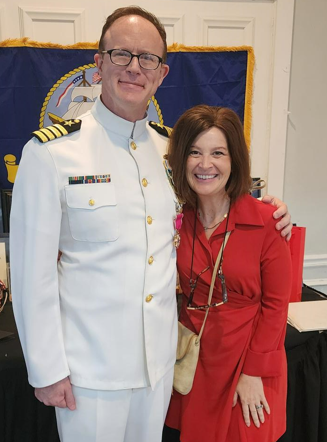
    As part of the celebration of July 4, 2024, Revealing Genius hosted a special Transformation Thursday workshop for graduates of our Brand Leadership Summit featuring Jean Paul “JP” Dube. I had the pleasure of attending JP’s retirement ceremony in May 2024 honoring his service as a captain in the United States Navy.

    Even though JP recently completed his tour of duty, he still has “a lot of gas left in the tank” as he re-enters civilian life. He sought (and got) feedback on his transformation statement. The workshop participants and I helped him craft a powerful one that will propel him forward in his next chapter.

    JP’s transformation statement before the workshop:

    I enable small to medium size businesses with security and risk management challenges to develop effective and cost saving security and risk management programs so their business can remain competitive in their field.

    After the workshop:

    I equip healthcare leaders to examine risks to their organization so they can develop hack-free countermeasures that ensure employees are safe and patients receive uninterrupted care.

    The Benefits of Being On-Purpose

    Companies have known the benefits of being on-purpose for a long time. Gartner says on-purpose brands outperform their competitors by 120%. Individuals can take a page from this playbook and thrive.

    Imagine the possibilities for yourself if you had a transformation statement and other executive personal brand collateral in hand. When you clarify your why, affirm it until you believe in it with conviction and learn to tell others about it (that’s our time-proven Excavate-Tell-Affirm™ process in action!), you’ll be making a positive impact and feeling fulfilled, no matter what, where you or how you are in the world! 

    Are you ready to take the next step? We’d be honored to assist you. Learn more through our free 10-minute webinar, Brand Leadership Summit or online course. We’re honored to work with boards and leadership teams as well as individual leaders on your transformation statement and your brand manifesto.

    Mary E. Maloney

    Mary E. Maloney, FACHE

    An executive advisor, educator, speaker, author and producer, Mary E. Maloney is the founder of Revealing Genius and the expert that accomplished leaders trust for positioning, messaging and brand strategy for themselves, their teams and their organizations. A former CEO and CMO, Maloney guides C-suite leaders, founders, physicians and board directors to powerfully and strategically message their expertise and “why” so they lead with conviction and achieve their most coveted goals.

  • The Aim of Your Transformation Statement? Flight!

    The Aim of Your Transformation Statement? Flight!

    This succinct expression of your executive personal brand will help you better understand who you most want to serve so your career or business can soar.

    Why does a caterpillar transform into a butterfly? So it can fly!

    So too with transformation statements … by creating and strategically deploying this key brand message, you’ll be able to effectively articulate to anyone, in any situation, the unique transformation only you can help them achieve. And then you and the people you help will both take wing!

    In this blog, I’ll talk about the time-proven Excavate-Tell-Affirm™ process from Revealing Genius and how it can help you develop your transformation statement. Then I’ll dive into the formula for a well-crafted transformation statement that can help you clarify who you most want to serve (your beloved avatar), so you can do The Great Work of Your Life.

    The Cocoon (Process) for Creating Your Transformation Statement 

    We’ve previously posted on the Revealing Genius blog about our process for developing a truly effective transformation statement, also known as an “elevator pitch,” a 30-second commercial or positioning sentence.

    During the excavate step of the time-proven Excavate-Tell-Affirm™ process, Revealing Genius listens actively to leaders as they tell their brand stories. Telling unique stories typically leads to an all-but-perfect transformation statement as this simple but effective formula gets filled in: 

    I <action word> <my beloved avatar> how to <do what they want to accomplish>
    so that they can <have the result/transformation>.

    As an example, here’s a transformation statement for Revealing Genius: 

    We <guide> <healthcare leaders> to <purposely identify and articulate their brand value>
    so they <become recognized experts and rapidly achieve the next milestones in their careers>. 

    Notice that while the formula is designed to express what you do, it’s really all about the people you want to serve, your “beloved avatar,” and the transformation you are best in the world at helping them achieve.

    This article from ellispond.com says it well: “It’s not just about understanding who they are, it’s about understanding who they want to become.

    “They have a problem, and you have the solution,” the article continues. “But nothing will sell that solution if you don’t understand the transformation that needs to take place within them.”

    Here at Revealing Genius, we ask clients, participants in our Brand Leadership Summit (the next one will take place Sept. 5-13) and people taking our on-demand online course to reflect on their beloved avatars. What is their day like? What are they thinking? What are they feeling? What are they struggling with? Why are they turning to you for help? 

    It’s important to get as much detail in your mind’s eye about your beloved avatar and include that detail in your transformation statement. Does this mean you can only serve people who meet all your criteria for a beloved avatar? Of course not. In all, your clarity about the transformation you were born to support will help you better articulate, with conviction, your unique genius.

    Your Transformation Statement Helps Your Career or Business ‘Take Off’

    I can honestly say that people come alive when they excavate their personal brands and learn to tell others about them through messaging tools like the transformation statement. When they also affirm their brands so they can feel them in their bones, the power of that conviction spills over into being on-brand every day.

    Gartner says on-purpose brands outperform their competitors by 120%. Individuals can take a page from this playbook and thrive.

    I’ve seen it happen many times.

    Here’s a shining example from my blog: How Kate Found Her Dream Job.

    I’ve also seen people who go through our Excavate-Tell-Affirm™ process get the promotion they seek, be selected for a coveted board seat, start a new business, grow an existing organization, do an outstanding update to their LinkedIn profile or CV, make a top-notch all-staff presentation … and so much more.

    Ready to excavate your genius and, in turn, transform the world? We’d love to help you, your career and your organization soar—in service to your beloved avatar.
    Learn more about executive personal branding, including transformation statement development, through our free 10-minute webinar, Brand Leadership Summit or online course. We’re honored to work with boards and leadership teams as well as individual leaders.

    Mary E. Maloney

    Mary E. Maloney, FACHE

    An executive advisor, educator, speaker, author and producer, Mary E. Maloney is the founder of Revealing Genius and the expert that accomplished leaders trust for positioning, messaging and brand strategy for themselves, their teams and their organizations. A former CEO and CMO, Maloney guides C-suite leaders, founders, physicians and board directors to powerfully and strategically message their expertise and “why” so they lead with conviction and achieve their most coveted goals.

  • Rise Above the Noise: Boost Your Key Messages by Learning From Automotive Brand Pros

    Rise Above the Noise: Boost Your Key Messages by Learning From Automotive Brand Pros

    Key lessons from beloved car brands—most importantly, #MessagingMatters!

    Pretty much everyone buys a car. But the reasons each of us buys a car can be quite different. Knowing this, automotive marketers have developed and reinforced unique key messages for their brands that help to set them apart from the others in the market. When you do executive personal branding, you can take a lesson from the carmakers and develop and communicate distinguishing key messages as well.

    Let’s look at several car brands and how they use key messages to distinguish themselves in the market. Then let’s talk about how to discern key messages that will matter to your executive personal brand—and help you communicate your unique calling to the people you most want to serve.

    Getting Clear About Key Messages

    Quickly defined, key messages are the main points of information a brand wants members of its target market to hear, understand and remember. 

    According to this article from dobies health marketing, auto manufacturers are experts at creating key messages in part because they include information about the features, advantages and benefits of their cars. 

    A feature is a prominent part, characteristic or special attraction, the dobies health marketing article says. For example: “The new Cadillac CVS has pop-up navigation, a 40-gig hard drive, wood trim and a sunroof.” An advantage is a favorable impression or effect (of the feature). “It’s a luxury vehicle.” Finally, a benefit is something that promotes well-being (from the perspective of the recipient). “When you’re driving it, you’ll feel fabulous.”

    Four Examples of Distinctive Key Messages From the Auto Industry

    Let’s talk about four beloved car brands that have distinctive key messaging: BMW, Volvo, Mercedes and Tesla.

    BMW has talked with the world so much about the performance of its models that we know if we buy from them, we’ll be behind the wheel of the “ultimate driving machine.” 

    BMW card hood brand
    Photo by Adam Przeniewski on Unsplash

    In contrast, Volvo has been talking with us about safety for so long that we recognize that as a top benefit of buying this brand. 

    Volvo
    Photo by Miguel Teirlinck on Unsplash

    And how can Mercedes best serve? That’s right. They surround customers with comfort and luxury while we drive. 

    mercedes
    Photo by Sebastian Pociecha on Unsplash

    Tesla, a relatively new player in the automotive market, delivers yet another key message: It pursues the latest technology. 

    “By constantly innovating in different spaces and sharing their work, it’s almost as if social media followers are right there in the science lab with Tesla, which gives the impression it is the most technologically advanced car brand out there,” according to an article from digitaldoughnut.

    Tesla brand
    Photo by Tesla Fans Schweiz on Unsplash

    Each of these four brands has—and is communicating—that it has a higher purpose than just selling cars. You, too, have a purpose that’s higher than the basic concept of what you do. And your executive personal brand will benefit from your discovering what that is and learning to articulate it to your key audiences.

    Applying These Lessons to Your Key Messages

    How can leaders translate what the car brands do so well into their own executive personal brand? The Excavate–Tell–Affirm™ process is a valuable tool.

    Going through this time-proven process, leaders first dig into—excavate—who they are, what they stand for and the big change only they can make in the world for the people they most want to serve. With this knowledge in hand, executives can both affirm their brand until they feel it in their bones and learn to tell the world about what makes them stand out. The “tell” step of the process is where key messages come in. 

    Let’s look at some hypothetical examples of key messages in action.

    “Dr. Amelia Stevens” is an amazing neurosurgeon. But that’s not all. She also is a leader in bringing along the next generation of neurosurgeons. Making the key message of “I educate aspiring surgeons” a part of her executive personal brand has opened opportunities for Dr. Stevens at desirable hospitals, attracted top surgical residents to her team and even brought her patients who believe in her larger mission.

    Another example of the power of key messages comes from “Farid Bedi,” the CEO of a healthcare technology company. Not only is he a “tech geek” CEO (his words) in a traditional sense, but he’s the best in the world at getting researchers jazzed to envision and create world-class patient care software. Expertly sharing this key message, Bedi has reaped a host of benefits, including helping his company bring top researchers onto the team, inspiring current customers to stay during uncertain times and bringing in more potential customers.

    Ready to develop key messages that will help describe your unique genius to the world? We at Revealing Genius have lots of ways for you to accelerate your executive personal branding efforts.

    Get instant access to the free Revealing Genius 10-minute webinar, sign up for our Excavate-Tell-Affirm™ Brand Leadership Summit or take our online course. We would be honored to work with you 1:1 or to help you develop your brand manifesto.

    Mary E. Maloney

    Mary E. Maloney, FACHE

    An executive advisor, educator, speaker, author and producer, Mary E. Maloney is the founder of Revealing Genius and the expert that accomplished leaders trust for positioning, messaging and brand strategy for themselves, their teams and their organizations. A former CEO and CMO, Maloney guides C-suite leaders, founders, physicians and board directors to powerfully and strategically message their expertise and “why” so they lead with conviction and achieve their most coveted goals.

  • Rise Above the Noise: 6 Characteristics of On-Brand Key Messages

    Rise Above the Noise: 6 Characteristics of On-Brand Key Messages

    These bite-sized statements must articulate what you do, why you do it and the unique value you bring to the people you most want to serve.

    The healthcare space, like most industries, is busy—“noisy,” even—with lots of well-meaning people trying to make a positive difference in the world. A well-positioned executive personal brand that’s supported by exactly the right key messages can help you rise above the noise.

    Key messages are bits of information that articulate what you do, how you do it and what makes you different. You can put key messages to work for you by including them in any communication—from a team presentation to your application for your dream job or board seat to your LinkedIn profile.

    Let’s talk more about six important characteristics of outstanding key brand messages—and how you can use your messages to rise above the noise and stand out for the unique contributions that only you can make in the world.

    6 Characteristics of Effective Key Messages for Executive Personal Brands

    Most articles you read online about key brand messages (like this one from Onyx Health and this one from Map & Fire) say key messages need to be short, specific, digestible/repeatable, strategic and memorable. I’d add that the best key messages are also emotional. Let’s look at each of these in turn.

    1. Short. Doing executive personal branding using Revealing Genius’ time-proven Excavate–Tell–Affirm™ process will help you use fewer words (and more confident ones) to state your key brand messages. You’ll be pithy and on point, but concise. (Check out this related blog.)
    2. Specific. To help distinguish your brand from others, it’s helpful to get into the details. That way, you can better stand out from the sea of sameness. Try starting your key message with “We were the first to…” or “What makes me stand out is …”
    3. Digestible/repeatable. Being succinct and specific will help the people you most want to serve to understand who you are and what you do. Having a successful executive personal brand means you know how to effectively tell others about it in any situation—whether that’s during the two minutes you’ll get when they look at your CV or application or LinkedIn profile or the 30 seconds you’ll have in the proverbial elevator. And of course, when people have been able to comprehend your brand message, they’ll be better able to share it with others.
    4. Strategic. Your key message will be strategic when it’s positioned to help you achieve one or more big goals. A key message of standing for “inspiring hope” might be just the thing for the brand of the leader of a company striving to find medical cures.
    5. Memorable. Your key message will be more memorable if it taps into a hook or idea that separates you from others. The thing about an elephant in a pink tutu is that everyone remembers it!
    6. Emotional. Once your key message is short, specific, digestible, specific, strategic and memorable, it will already be good. If you can also make it emotional—so that it ties to the transformation only you can bring to the people you serve—it will be a home run with your target audience. Think about your answer to the question, “What am I best at in the world?”

    The excavate step of the Excavate–Tell–Affirm™ process tees up being able to leverage key messages to tell your most important audiences—whether that’s your team in a staff meeting, a hiring executive or the chair of the board—how you stand out. Ready to try this out?

    Get instant access to the free Revealing Genius 10-minute webinar, sign up for our Excavate-Tell-Affirm™ Brand Leadership Summit or take our online course. We would be honored to work with you 1:1 or to help you develop your brand manifesto.

    Mary E. Maloney

    Mary E. Maloney, FACHE

    An executive advisor, educator, speaker, author and producer, Mary E. Maloney is the founder of Revealing Genius and the expert that accomplished leaders trust for positioning, messaging and brand strategy for themselves, their teams and their organizations. A former CEO and CMO, Maloney guides C-suite leaders, founders, physicians and board directors to powerfully and strategically message their expertise and “why” so they lead with conviction and achieve their most coveted goals.