Category: Executive Personal Branding

  • I’m Goin’ to Dollywood! Personal Branding Lessons from an Icon

    I’m Goin’ to Dollywood! Personal Branding Lessons from an Icon

    The Dolly Parton example: Stay true to your roots, even as you reinvent yourself and your brand.

    By Mary E. Maloney

    My husband and I went to Dollywood in December. And while I loved the theme park and hiking in the nearby Tennessee hills, I was completely awed by the idea that the park is just one example of the amazing personal brand Dolly Parton has built. Let’s talk about how Dolly has nurtured and reinvented her brand and how you might be able to translate elements of her success into your own.
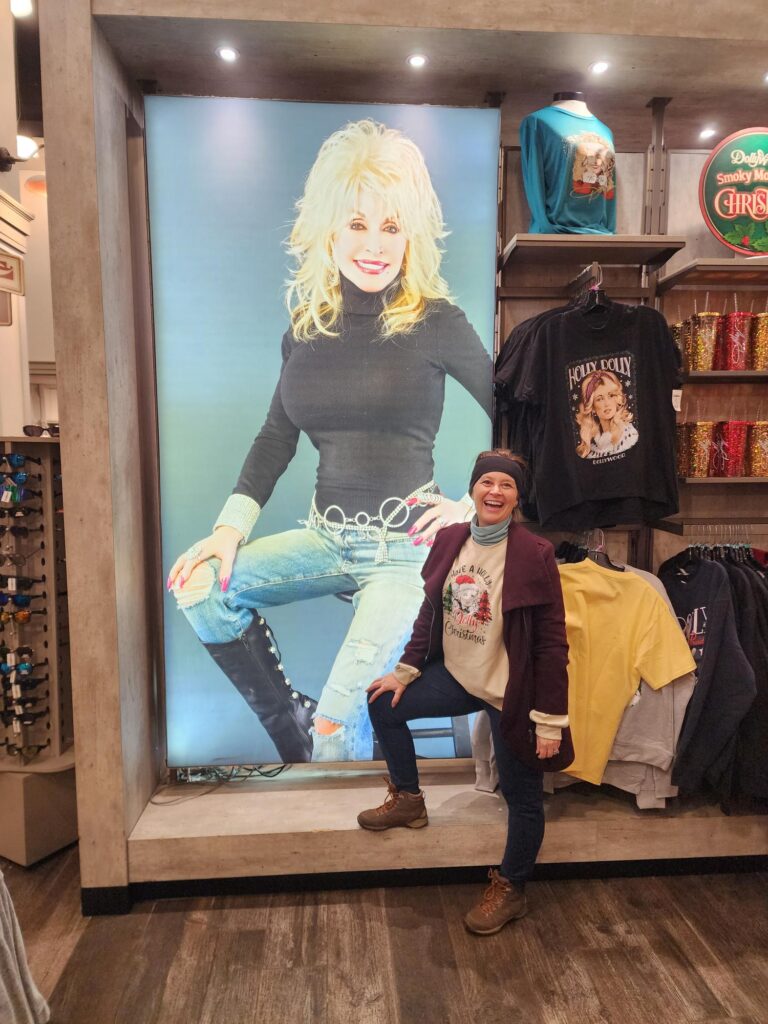
    During my December trip to Dollywood, I hiked the beautiful hills of Tennessee. I can see why Dolly loves her state so much!

    How She Launched Her Brand: With Excellence

    Dolly Parton came to the fore when she started topping the country music charts in the late 1960s. In other words, at the base of her brand is her distinctive singing voice and her commitment to music excellence.

    Parton has received numerous accolades, including 11 Grammy Awards from 50 nominations. She has won 10 Country Music Association Awards, including Entertainer of the Year, one of only seven female artists to achieve this distinction.

    Her music was a stepping stone to fame on TV and the big screen from The Porter Wagoner Show to 9 to 5 (1980), Steel Magnolias (1989) and others.

    And she continues to write and record music. Her latest, “If You Hadn’t Been There,” is a tribute to her husband of 58 years, Carl Dean, who passed away on March 3 at age 82. (Dolly herself is 79.)

    Lesson 1 from Dolly’s brand: Be exceptional at what you do.

    How She Maintains and Reinvents Her Brand: With Consistency

    Dolly has effectively built her brand up from the foundation of her music. In addition to the Dollywood theme park I visited (Dolly kicked off the park’s 40th anniversary season last month), she also co-owns the Dolly Parton’s Stampede dinner attraction chain.

    She has written multiple books, including Coat of Many Colors, 2016, a children’s picture book based on the lyrics of Dolly’s song with the same title; Good Lookin’ Cookin’: A Year of Meals – A Lifetime of Family, Friends, and Food, 2024, written with her sister; and more than one memoir (Dolly: My Life and Other Unfinished Business, 1994) and (Behind the Scenes: My Life in Rhinestones, 2023).

    She has her dog products line, Doggy Parton, offering apparel, accessories, toys, and more with “Dolly” flair. She has her own line of bakery products with Conagra’s Duncan Hines. And the new musical, Hello, I’m Dolly!, based on Dolly’s life and music, is slated to open in 2026.

    With so many successful brand reinventions and an estimated brand and net worth of $650 million, Dolly is clearly a prolific creator and an impressive businesswoman. But it’s not just the volume of what she has done and her financial success that stand out. It’s also the consistency with which she does everything that matters.

    Dolly is inspired by butterflies because they are gentle, beautiful and free-spirited. She uses them often in her branding.

    For example, butterflies abound in Dolly’s brand presentations. The logo for Dollywood turns the “w” into a butterfly. The Stampede dinner attraction opened the 2025 season with a new butterflies and horses segment.

    Why butterflies?

    “When I was growing up, I was always fascinated by butterflies,” she says on her website. “They are such gentle, beautiful and free-spirited creatures, and I’ve always related to them with my own personality and how I live my life. They’ve become my little symbol, and I like to include them wherever I can.”

    Dolly is also very consistent about who she is in all aspects of her career. She is the glamorous one, in sequins, with a very kind heart. She is known for having plastic surgery to look the way she wants to look. (“I’m so outgoing inside in my personality, that I need the way I look to match all of that,” she says.) She is the hometown Southern girl who has experienced poverty but still finds life nourishing and has great meals with her family. She also delights in partnering with other musicians but insists they don’t use cuss words in the final recording.

    Through and through, she’s Dolly.

    Lesson 2 from Dolly’s brand: Maintain unwavering consistency.

    How She Shows What She Stands For: With On-Brand Causes

    One of the key questions we at Revealing Genius help our executive personal branding clients answer is: What do you stand for? Another way to ask this same question is: What is the big relevant change in the world that you are uniquely poised to make?

    You won’t be surprised when I tell you that Dolly Parton answers this question in ways that speak to her roots, growing up poor in Tennessee, loving music and her family—and helping pave the way for the next generation to dream big.

    A key cause of Dolly’s is helping children learn to read because she believes it will help them live more fulfilling lives. Inspired by her father’s inability to read or write, Dolly’s Imagination Library is dedicated to inspiring a love of reading by giving books free of charge to children from birth to age five. Imagination Library works through local community partners in the United States, Canada, United Kingdom, Australia, and Republic of Ireland.

    “When I was growing up in the hills of East Tennessee, I knew my dreams would come true,” she says. “I know there are children in your community with their own dreams. They dream of becoming a doctor or an inventor or a minister. Who knows, maybe there is a little girl whose dream is to be a writer and singer. The seeds of these dreams are often found in books, and the seeds you help plant in your community can grow across the world.”

    During the pandemic, Dolly gave $1 million to the Vanderbilt Institute for Infection Immunology and Inflammation in Nashville. The gift ultimately helped fund research for Moderna’s highly effective COVID-19 vaccine, also known as the “Dolly Vaxx.” When she got vaccinated, Dolly updated the lyrics of her famous song, “Jolene,” to “vaccine” to encourage others to get their dose.

    “From singing barefoot on the front porch of her Tennessee mountain home to commanding the stage in six-inch heels, Dolly Parton is a larger-than-life living legend with a heart as big as her dreams,” her website proclaims. And her philanthropy accurately reflects this brand.

    Lesson 3 from Dolly’s brand: Boldly stand up for what matters to you.

    Put These Three Lessons From Dolly Into Action

    Let’s recap. In this article, we’ve described three key takeaways from the iconic Dolly Parton brand that you can use to help you build your own executive personal brand:

    1. Be exceptional at what you do.
    2. Maintain unwavering consistency.
    3. Boldly stand up for what matters to you.

    The good news is you don’t have to translate these ideas into your own brand on your own. We’re happy to help. Check out our signature Brand Declaration offering or register for our next 7-Day Summit or Mastermind Sphere of Influence. It will be our honor to work with you.

    Mary E. Maloney

    Mary E. Maloney, FACHE

    An executive advisor, educator, speaker, author and producer, Mary E. Maloney is the founder of Revealing Genius and the expert that accomplished leaders trust for positioning, messaging and brand strategy for themselves, their teams and their organizations. A former CEO and CMO, Maloney guides C-suite leaders, founders, physicians and board directors to powerfully and strategically message their expertise and “why” so they lead with conviction and achieve their most coveted goals.

  • Personal Branding Lessons Learned From Successful Super Bowl Ads This Year

    Personal Branding Lessons Learned From Successful Super Bowl Ads This Year

    Three helpful ways to consider the impact of your executive personal brand

    By Mary E. Maloney

    My hometown of Philadelphia was agog with excitement when our Eagles flew to victory 40-22 at the 2025 Super Bowl. I was especially excited about the game because I love seeing an underdog triumph. There are also personal branding lessons that can be learned from the corporate brand ads each year during this big event. 2025 was no exception.

    This year’s campaigns included spots that expertly demonstrated what corporate brands stand for—the big, hairy, audacious goal they have for changing the world for the better, the “cause.”

    For example, biopharmaceutical giant Pfizer” took a stand with this bold statement, “Pfizer is fighting for 8 cancer breakthroughs by 2030”  in its “knock out cancer” ad and leveraged signature storytelling in its area of specialty (helping people beat disease) Check it out! (see :56 second mark)

    We can take a page from this corporate playbook. When an individual leader effectively tells their unique brand stories—and articulates, with conviction, what they stand for, that has impact too.

    But how can we measure such impact? Let me tell you about a scoring methodology for corporate ads that translates logically to executive personal brands as well.

    The Advertiser Impact Score

    I recently attended a webinar presented by British market research and data analytics firm YouGov that described the use of an advertiser impact score to understand the effectiveness of this year’s Super Bowl ads.

    The AIS used in the webinar considered people’s awareness of the ad, “buzz” created by the ad, and changes in purchase consideration over a specific period. In this formulation, purchase consideration was weighted twice as heavily as the other two.

    Here are the survey questions YouGov used to explore each factor for the various Super Bowl ads:

    Ad awareness. Which of the following brands have you seen an advertisement for in the last two weeks?

    Buzz. Over the last two weeks, about which of the following brands have you heard something positive (whether in the news, through advertising, or talking to friends and family?) And in the same timeframe, about which of the following brands have you heard something negative? 

    Purchase consideration. When you are in the market next to purchase [product or service], from which of the following would you consider purchasing?

    In case you’re wondering, the five 2025 Superbowl ads YouGov’s AIS analysis rated highest were Poppi sparkling soda, booking.com, Dunkin’, T-Mobile, and Google Pixel.

    AIS for Executive Personal Branding

    These same factors are worth considering in the context of the success of your executive personal brand. Consider these questions to self-survey your brand impact: 

    Awareness. How aware are the people you serve or hope to serve of your personal brand? What have you done in the past that could raise awareness of your unique contributions? What could you do in the future to boost your brand?

    Buzz. Would you say people are talking about your brand this week, this month, or this year? Why or why not? What could you do to “give them something to talk about”?

    Engagement consideration. Why do people purchase your product or service? Why do employees trust you and follow your lead? How has that changed over time, and what will be the driver going forward? How can you influence the trajectory of these associations?

    Laying the Groundwork for Brand Success

    No matter how you measure your personal brand’s impact, it will be better positioned for success if you lay a strong foundation. Using the Excavate-Tell-Affirm™ process from Revealing Genius to make your Brand Declaration is a time-proven way to build a solid brand framework that is uniquely yours—and with our process, you’ll be able to tell others about it with an unprecedented sense of agency and confidence. It would be our honor to assist you.

    Mary E. Maloney

    Mary E. Maloney, FACHE

    An executive advisor, educator, speaker, author and producer, Mary E. Maloney is the founder of Revealing Genius and the expert that accomplished leaders trust for positioning, messaging and brand strategy for themselves, their teams and their organizations. A former CEO and CMO, Maloney guides C-suite leaders, founders, physicians and board directors to powerfully and strategically message their expertise and “why” so they lead with conviction and achieve their most coveted goals.

  • Executive Outplacement Ripe for Disruption

    Executive Outplacement Ripe for Disruption

    Executive personal branding and the Excavate-Tell-Affirm™ process from Revealing Genius effectively support executives in transition.

    The email arrived on a Tuesday afternoon. “Dr. Sarah Chen,” chief medical officer at a prestigious healthcare system for the past decade, stared at her screen in disbelief. The merger was final, and her position had been eliminated. After years of dedication and countless achievements, she was now facing an unexpected career transition.

    As the initial shock subsided, Sarah’s thoughts raced. “What’s next? How do I even begin to look for a new role? Will anyone value my experience? What do I really want to do to have impact at this juncture in my career?”

    The outplacement services offered by her organization seemed underwhelming—a few résumé writing sessions and generic networking tips. She couldn’t shake the feeling that this approach was woefully inadequate for someone at her level, especially in the rapidly evolving healthcare landscape.

    Sarah’s story is far from unique. I’ve encountered countless healthcare leaders thrust into similar situations. Their experiences have led me to a profound realization: The field of executive outplacement services is ripe for disruption. Fortunately, executive personal branding and the Excavate-Tell-Affirm™ process from Revealing Genius can lead the way toward better executive transitions.

    The Changing Face of Executive Careers

    Gone are the days when executives would stay in their roles for decades, unprepared for eventual exits. In today’s dynamic business environment, change should not just be inevitable—it should be planned for and even welcomed. The new world of executive careers is characterized by frequent transitions, with leaders expecting to move into new roles every few years.

    This shift in career expectations has created a mismatch between traditional outplacement services and the needs of modern executives. The old model, often stigmatizing transitions and focusing on tactical, templated approaches, is no longer sufficient. 

    The traditional approach rarely addresses on a substantive level how to navigate through the “loss” regardless of how the executive exited, planned or unplanned, amicable or not. Even loss of routine and creating a new normal with large amounts of white space on a calendar can be daunting. Executives have different needs and desires compared to an early or mid-careerist.

    Instead, what’s needed is a strategic, customized process that goes much deeper to embrace change and prepare executives for the next chapter in their careers.

    The Unique Needs of Healthcare Executives

    Healthcare executives, in particular, face unique challenges when transitioning roles. Many, especially those with medical backgrounds, have never been formally trained in executive personal branding or strategic self-positioning. Yet, in today’s competitive landscape, these skills are crucial for securing new opportunities and making impactful career moves.

    From my experience working with healthcare leaders, I’ve observed that what they truly need is a bespoke process for reinvention—a complete rebrand, if you will. This process should help them:

    1. Gain clarity and direction about their purpose, why they exist to serve, a North Star they can use for the rest of their careers 
    2. Position themselves and message strategically using a Brand Declaration 
    3. Confidently pursue their next keystone goal

    A Fresh Approach: Excavate-Tell-Affirm

    I believe we need a paradigm shift in how we approach executive outplacement. The time-proven three-spoke process I’ve developed, Excavate-Tell-Affirm, offers a fresh perspective:

    1. Excavate: Deep dive into the executive’s experiences, strengths and aspirations to uncover their unique value proposition and extraordinary why.
    2. Tell: Craft compelling narratives that effectively communicate the executive’s brand and potential impact that feels authentic and most importantly reduces complexity and ambiguity and is heard, trusted and actioned.
    3. Affirm: Build confidence and clarity through targeted feedback and support.

    At Revealing Genius, we believe in taking a giant step back, thinking deeply about one’s purpose, why you exist to serve, how you want to live and how you can find fulfillment and have seventh-generation impact. 

    This approach moves beyond the tactical to the strategic. It’s about helping executives like you not just find their next role, but reimagine their professional identity and how they want to show up as part of their new normal. 

    Real-World Impact of Executive Personal Branding

    The effectiveness of this new approach is evident in the success stories I’ve witnessed:

    • An EVP in organizational development from one of the largest health systems in the Northeast  gained the confidence to start her own consulting firm.
    • A finance executive for a national foundation  successfully positioned himself for a president’s role.
    • A CEO from an iconic health insurance brand , who had never needed a réumé before, created new messaging and became an advisor in behavioral health.
    • An introverted COO with expertise in call centers uncovered signature brand stories that landed her a coveted role at a Fortune 10 firm, amidst fierce competition.
    • A hospitalist rebranded herself and was invited by a private equity firm to lead a rural telehealth startup as CEO.
    • A physician-executive who had reached the pinnacle of his career in his region went on to work with a nationwide influencer, expanding his influence and impact to a broader audience.

    These stories demonstrate the power of a personalized, strategic approach to executive outplacement. They show that with the right guidance, you and other healthcare executives can not only navigate transitions successfully but also expand your influence and impact in new and exciting ways—the next act might look very different.

    The Organizational Imperative

    It’s worth noting that upping the game with executive outplacement isn’t just about the success of individuals. It’s also a reflection of organizational values. According to the American College of Healthcare Executives, organizations have a professional and ethical obligation to provide outplacement services to healthcare executives who have dedicated their time to the organization. I’d add that organizations have an obligation to provide modern, effective outplacement services to these high-value executives.

    How an organization handles outplacement speaks volumes about its brand, culture and core values. By offering innovative, high-quality outplacement services, healthcare organizations can demonstrate their commitment to their leaders’ long-term success, even as they part ways.

    What You Can Do Today

    By reimagining outplacement as a process of reinvention and rebranding, organizations and individual healthcare leaders like you can pursue the great work of their lives. Because that’s the game, right? 

    The time for change is now. Let’s welcome reinvention, embrace the possibilities of career transitions and get you the support you truly need to thrive in the next chapter of your professional journey. If you have questions about how you can use your outplacement package to work with Revealing Genius, I hope you’ll schedule a complimentary exploratory call.

    Mary E. Maloney

    Mary E. Maloney, FACHE

    An executive advisor, educator, speaker, author and producer, Mary E. Maloney is the founder of Revealing Genius and the expert that accomplished leaders trust for positioning, messaging and brand strategy for themselves, their teams and their organizations. A former CEO and CMO, Maloney guides C-suite leaders, founders, physicians and board directors to powerfully and strategically message their expertise and “why” so they lead with conviction and achieve their most coveted goals.

    AI was used in the development of this article.
  • Why You Need to Align Your Board (and C-Suite) With a Brand Declaration

    Why You Need to Align Your Board (and C-Suite) With a Brand Declaration

    Uniting your top leaders is fundamental to your organization’s success.

    What’s the one thing you want your audience to know about your organization? The one thing that, if you articulated it well, would align your board and thereby put you fully on track to deliver on your mission and vision? The answer is at the heart of your brand declaration, a statement of the aims of your company or non-profit.

    Take the case of The Atlas Enterprise, which publishes the resource lovingly known as “the Bible of neurosurgery.”

    When The Atlas Enterprise worked with Revealing Genius and strategy consultancy Clarke & Esposito to build its brand declaration, it created unprecedented alignment among its leadership team members—the board directors and its founder and public voice, Aaron Cohen-Gadol, M.D.

    Before creating the brand declaration, the non-profit’s leaders were struggling with how to talk meaningfully and compellingly about the organization’s portfolio of products together, then as stand-alones. Since developing the brand declaration, the team has been able to describe the non-profit’s offerings so their complexity is heard and understood. 

    In addition, the brand declaration development process helped Dr. Cohen recognize and acknowledge that his personal brand was just as important to organizational success as the overarching brand. He wrote a brand declaration for himself, too! (Read the case study about this initiative.)

    Board and leadership alignment are clearly key to organizational success. Let’s dive deeper into the ways it can help with high-level strategic work and day-to-day governance, key obstacles to achieving board alignment, and strategies for overcoming those obstacles, including the brand declaration.

    The Board Alignment Imperative

    At a high level, board alignment is fundamental to overall organizational health and success because it boosts decision-making, organizational culture, stakeholder confidence and the ability to adapt to changing circumstances. 

    The benefits of board alignment in day-to-day governance also are many. A board that’s aligned: 

    • Ensures the organization’s mission and strategic pillars are promulgated. When everyone on the board is on the same page, working collaboratively towards common objectives becomes easier, increasing the likelihood of success in achieving the organization’s mission.
    • Streamlines consensus in decision-making and actions. When board members share values, vision and goals, gaining consensus on critical decisions becomes easier. Alignment also enhances the effectiveness of the board’s actions.
    • Helps raise the floor on organizational culture. A cohesive board with shared values and a unified vision can set an example for the rest of the organization, demonstrating a culture of teamwork, trust and collaboration.
    • Inspires stakeholder confidence. When stakeholders see a united front, they are more likely to trust the organization’s leadership and support its initiatives.
    • Can better adapt the strategic plan to changing circumstances. Alignment is crucial during the strategic planning process. A unified board can more effectively develop and implement strategic plans that reflect its collective wisdom and vision. This enhances the organization’s ability to adapt to changing circumstances and achieve long-term success.
    • Provides common ground for conflict resolution. In any organization, conflicts can arise. Shared values and goals provide a foundation for finding common ground and working toward mutually beneficial solutions.
    • Increases board member commitment, engagement and retention. Members are more likely to be engaged and committed when they feel the board aligns with their interests and values. This, in turn, fosters a stable and supportive community. 
    • Increases the effectiveness and efficiency of governance processes. For example, when board members are aligned, onboarding and offboarding board members become seamless.

    10 Obstacles to Board Alignment

    An organization benefits when its board and leadership team are aligned, but getting there isn’t always easy. Here are some common obstacles that can get in the way of uniting your top leadership.

    1. Diverse backgrounds and perspectives. Board members often come from diverse professional backgrounds, disciplines and experiences. Balancing these diverse perspectives and aligning them toward a common vision can be challenging, especially if differences in values or priorities exist.
    2. Competing interests. Board members may have different interests or priorities based on their roles, affiliations or professional agendas. Conflicting priorities can make it difficult to achieve alignment on overarching organizational goals.
    3. Limited communication. Inadequate communication or information-sharing among board members can hinder alignment. If members aren’t well-informed about the organization’s mission, goals or ongoing activities, it can become difficult for them to align their efforts.
    4. Lack of trust. A lack of trust among board members can lead to skepticism, resistance to change and difficulties in reaching consensus on important decisions.
    5. Turnover and transitions. Board turnover or changes in officers can disrupt alignment efforts. New members or board chairs may bring different perspectives or priorities, and it takes time for them to integrate into the existing culture and align them with the organization’s objectives.
    6. Resource constraints. Limited financial or human resources can lead to competing demands and priorities. Board members may struggle to align with one another when faced with resource constraints or competing for the same limited resources.
    7. External pressures. Changes in regulations, economic conditions or shifts in the academic and professional landscape can create challenges for board alignment. Adapting to external pressures while maintaining alignment requires excellent strategic planning and effective communication.
    8. Lack of strategic planning. Without a clear and well-defined strategic plan, board members may lack a roadmap for alignment. A lack of strategic direction can result in disparate efforts and conflicting actions among members.
    9. Cultural differences. In organizations with international or diverse memberships, cultural differences can contribute to challenges in achieving alignment. Different cultural perspectives and expectations may need to be navigated and harmonized.
    10. Communication styles. Differences in communication styles among board members can lead to misunderstandings and misinterpretations, making it difficult to establish a shared understanding and alignment.

    Building a Board Declaration

    Overcoming the challenges above requires thoughtful and proactive efforts from board leaders, including employing effective communication strategies, fostering a culture of trust and collaboration, and investing in team-building activities. Regular assessments of board dynamics and a commitment to reaching a shared vision also are essential.

    At Revealing Genius, we recommend a brand declaration to support board and leadership alignment and effectiveness. Developing a declaration based on our time-proven Excavate–Tell–Affirm™ process helps excavate your company’s purpose, what it stands for and whom it most wants to serve. Once you’ve excavated your brand, you can affirm it until all your leaders feel it with conviction and more effectively tell all your stakeholders about it.

    Considering a brand declaration for your organization or yourself? We’re honored to work with boards and leadership teams and individual leaders. You can also learn more via our free 10-minute webinar, Brand Leadership Summit or online course.

    Mary E. Maloney

    Mary E. Maloney, FACHE

    An executive advisor, educator, speaker, author and producer, Mary E. Maloney is the founder of Revealing Genius and the expert that accomplished leaders trust for positioning, messaging and brand strategy for themselves, their teams and their organizations. A former CEO and CMO, Maloney guides C-suite leaders, founders, physicians and board directors to powerfully and strategically message their expertise and “why” so they lead with conviction and achieve their most coveted goals.

  • Ignite Your Next Success by Knowing Your Purpose

    Ignite Your Next Success by Knowing Your Purpose

    Manifest your greatest aspirations by uncovering your personal and organizational  ‘why.’

    It wasn’t until Guillermo didn’t get the board seat he was aiming for that he went on a journey to understand his purpose and become able to substantively communicate his “why.” Doing this using the time-proven Excavate–Tell–Affirm™ process from Revealing Genius changed the trajectory of his career. By developing his brand manifesto, Guillermo came alive.

    At the time Guillermo applied for that board seat, he was an accomplished executive, the recently retired president of a division of a large, well-known company. He had grown a brand to be a global household name. He was one of two on the shortlist for the role. So why didn’t he get it? The chair said the other, equally qualified candidate was better able to link her “why” to the firm’s reason for existing and how she could add value.

    The “purpose” Guillermo has now excavated? “Expanding possibilities.” The “why”? “To fuel empowerment for achieving breakthroughs that matter.”

    Wow.

    Today, Guillermo serves as an investor/advisor to two organizations and as a board director for two others. 

    Another example of the power of purpose: Peter had recently retired from being CFO of a $100M nonprofit. Going through the Excavate-Tell-Affirm™ process enabled him to discover what would bring him joy, fulfillment and income in his next act—teaching “finance language” to nonprofit CEOs. Peter called the one-minute brand affirmation that accompanied the final product “a love letter” to himself that only he would read.

    Inspired? Read on for more stories about people’s success after excavating their purpose and how you can make it happen in your world. The example in the last section of this blog describes the bonus power that can be achieved when an organization and its top executive go through this process together.

    Individuals’ Next Success After the Excavate-Tell-Affirm™ Process

    Taking what I learned about building brands as a CEO and CMO helped me create the Excavate-Tell-Affirm process, which has helped many C-suite executives articulate their brand

    value, including their extraordinary why. Here are six worthy examples: 

    1. A CEO emeritus of one of the largest payers in the nation repositioned himself to become a mentor and investor to innovative healthcare technology firms in the behavioral health space.
    2. A neurosurgeon who dedicated his life’s work documenting complex surgical procedures is finally becoming known for the innovative surgical training techniques he is using to train the next generation of brain surgeons.
    3. The president of one of the largest health systems in the nation, at the apogee of his career, strategically remessaged to attract a seven-figure salary in a role where he could impact millions of lives with one of the largest healthcare disruptors in the world.
    4. A physician executive took on her first CEO role for a telemedicine company and is making her mark specializing in #hyperlocal healthcare and revitalizing rural communities.
    5. A nurse who moved up the ranks to the C-suite at the same prestigious health system over 41 years pivoted into a private consulting practice and now has a waiting list of top-tier clients in need of her unique leadership development approach for large multi-location organizations in healthcare and beyond.
    6. A scientist from one of the largest pharmaceutical companies in the world rekindled her love of medicine and her work and found the courage to share her point of view, which has led to significant internal support and funding of a moonshot project she masterminded.

    Organizations Can Benefit, Too

    I hope you’ve enjoyed those stories of individuals’ success. Creating a brand manifesto can be particularly powerful when an organization does it alongside its top executive. Here’s a case in point.

    When The Atlas Enterprise worked with Revealing Genius and strategy consultancy Clarke & Esposito to build its brand manifesto, it created unprecedented alignment among its leadership team members—the board directors and its founder and public voice, Aaron Cohen-Gadol, M.D.

    Before creating the brand manifesto, the non-profit’s leaders were struggling with how to talk meaningfully and compellingly about the organization’s portfolio of products together, then as stand-alones. Since developing the brand manifesto, the team has been able to describe the non-profit’s offerings so their complexity is heard and understood. 

    In addition, the brand manifesto development process helped Dr. Cohen recognize and acknowledge that his personal brand (and manifesto) was just as important to organizational success as the overarching brand. He wrote a brand manifesto for himself, too! (Read the case study about this initiative.)

    Get Your Next Success by Boosting Your Brand

    My clients tell me they’ve been passed over for dream jobs and board seats; they lead tech companies that don’t get funded because their narrative is too complex to understand; they watch top talent leaving their company to go with a competitor because the competitor’s CEO is perceived to be more passionate about a cause. 

    Don’t let these things be true for you!

    Ignite your next success! Learn more about building a brand manifesto for yourself or your organization through Revealing Genius. We’re honored to work with boards and leadership teams as well as individual leaders. You can also learn more via our free 10-minute webinar, Brand Leadership Summit or online course. 

    Mary E. Maloney

    Mary E. Maloney, FACHE

    An executive advisor, educator, speaker, author and producer, Mary E. Maloney is the founder of Revealing Genius and the expert that accomplished leaders trust for positioning, messaging and brand strategy for themselves, their teams and their organizations. A former CEO and CMO, Maloney guides C-suite leaders, founders, physicians and board directors to powerfully and strategically message their expertise and “why” so they lead with conviction and achieve their most coveted goals.

  • Executive Personal Branding Builds Trust With Patients

    Executive Personal Branding Builds Trust With Patients

    Healthcare leaders, departments and organizations with on-purpose brands elevate patient care and propel themselves forward.

    This blog was originally published on swaay.health.

    Stacey Parkin is the chief patient experience officer of a large health system in Washington state. For her, improving the patient experience is personal—and a key element of her executive personal brand.

    “Having a child with a congenital heart defect and a mother with MS, I have navigated the healthcare system for years and wanted to make it better from the inside out,” she says in an article from Healthcare Innovation. “I am passionate about my work and making the experience more seamless and personal.”

    Having such clarity about their purpose and where it comes from helps healthcare marketers like Stacey build trust and credibility with patients.

    A healthcare marketer’s executive personal brand is in turn very important to medical facilities, as patients develop their impressions about a facility based on their interactions with the professionals they meet there.

    Executive personal branding—for individual marketers, whole departments and even boards and entire organizations—is a key tool for clarifying purpose, deepening conviction about that purpose and finding the best ways to express it. Done right, personal branding helps leaders, their organizations and ultimately, their patients.

    So, what exactly is executive personal branding? And how can you, your team and your organization use it to create a sustainable positive impact on individual, team and organizational performance that will lead to a top level of patient care?

    What Is Executive Personal Branding?

    Executive personal branding is about excavating what you stand for, who you would most like to serve and the transformation only you can create for them.

    It’s also about learning how to do a good job when you tell everyone you meet, in every setting, about your brand. Going through an executive branding process should help you ably and confidently answer the age-old business question, “So, what do you do?” It can also help you build an effective LinkedIn profile, prepare an on-brand all-staff presentation, write a CV that will help you get an interview and then give an amazing interview.

    Executive personal branding is also about affirming your brand. After you go through the process, you will be able to feel your brand in your bones and share it with conviction.

    The Power of Taking Personal Branding Past the Individual Level

    I have worked with many individual healthcare leaders to refine their executive personal brands. Knowing what you stand for, who you most want to serve and how to express those two things is powerful in helping individuals take their next right steps.

    And executive personal branding can be even more powerful and transformational when groups of leaders look at it together.

    In addition to working with individual leaders as a consultant, I’ve facilitated the development of marketing department brand manifestos as a chief marketing officer, ensuring that everyone in the department aligned on why the group existed and exactly how it was meant to serve the organization.

    As a CEO, I’ve worked with C-suite leadership teams on the brand message for the high-traffic “About” page of the organization’s website. In the CEO role, I’ve also worked with board members, enabling them to align with a brand manifesto for their organization, a document that goes beyond vision, mission and values to emotionally describe why and who their organization exists to serve.

    It is exciting for everyone involved when branding goes throughout the organization. The patient experience benefits when staff engagement goes up as the process progresses, and each team member becomes more effective in building trust and credibility with everyone they serve.

    Try This On: An Executive Personal Branding Exercise

    In my executive branding work with leaders at all levels, I present numerous small exercises as part of Excavate-Tell-Affirm™ process to help them clearly articulate their foundational purpose. Here’s a three-minute example you can try right now:

    Take out a piece of paper and make two columns on it, one with the header, “More of this, please,” the other with the header, “Less of this, please.” Spend two minutes completing your table. Think about all aspects of your life as you compile your answers: spirituality, health, style, relationships (family, friends, community), work, finances, recreation, social and learning. Write down what comes top of mind.

    Now, look at your list. What stands out to you? When you think of your executive personal branding, what gives you energy when you do it? What would you like to say yes to?

    There are many more strategies and tools for developing an executive personal brand for yourself, your department, your C-suite, your board and your whole organization. Learn more by taking our self-paced online course, and let us know how we can help.

    Mary E. Maloney

    Mary E. Maloney, FACHE

    An executive advisor, educator, speaker, author and producer, Mary E. Maloney is the founder of Revealing Genius and the expert that accomplished leaders trust for positioning, messaging and brand strategy for themselves, their teams and their organizations. A former CEO and CMO, Maloney guides C-suite leaders, founders, physicians and board directors to powerfully and strategically message their expertise and “why” so they lead with conviction and achieve their most coveted goals.

  • In Transition? Executive Personal Branding Helps Overcome Common Stigmas

    In Transition? Executive Personal Branding Helps Overcome Common Stigmas

    While some see being between roles as problematic, times of change are great opportunities for repositioning to do the great work of your life.

    Is it just me, or is there an unspoken stigma attached to being “in transition”? Could it be that “in transition” is linked to “not working a traditional job”? And that people in that situation are perceived as “less than” those working a traditional job—under the misguided logic that if a person were good, they’d be working? I’d like to change the conversation and the discourse on this subject via executive personal branding. 

    After almost two decades of working with executives in transition, I can tell you with conviction that being in transition does not signify a person has lesser worth. Instead, it reflects that the person is poised to pause and consider what’s next, to choose the right path for themselves, even to use executive personal branding to help discern what they do best in the world—and then go do the great work of their life.

    Let’s look at this stigma more deeply, talk about how executive personal branding can help mitigate it and, finally, discuss how leaders can support other leaders on this journey.

    The Stigma of Transition That’s Eased by Executive Personal Branding

    Leaders have been experiencing this stigma for a long time. While managing the “in-betweens” is not currently part of the larger business conversation, we specialize in it at Revealing Genius, so we think about it a lot.

    Leaders can be in transition for lots of good reasons (actual clients):

    • They’re retiring
    • They’re changing industries
    • They’re choosing to shift from being “busy” to being “engaged”
    • They’re writing a book
    • They’re ready to choose and pursue their life’s work
    • They were downsized even though they were the top producer
    • They’re positioning themselves to pursue their audacious vision for how the world could be a better place

    The fact that making such a significant change sometimes means not having a traditional job for a time may trigger the same stigma associated with unemployment. It’s well known that employers typically prefer candidates who currently have a job over those who don’t. And the stigma doesn’t stop there.

    According to a recent article in Time magazine about the stigma around not having a traditional job, even temporarily: “It’s not only employers who stigmatize.”

    “As the unemployed workers I’ve interviewed in the course of my research repeatedly emphasized,” writes Ofer Sharone, associate professor of sociology at the University of Massachusetts Amherst and author of The Stigma Trap: College-Educated, Experienced, and Long-Term Unemployed, “they experienced the unemployment stigma in every realm of their life, including when trying to network with former colleagues, or even when turning to their spouses or close friends for support. 

    “The way out of this trap is to confront it head-on and shine a bright light on the assumption that unemployment necessarily reflects anything about the unemployed person,” Sharone continues, when, in the case of economic and corporate shifts outside of anyone’s control, even top talent gets let go.

    Transition Better Using Executive Personal Branding

    In a recent New York Times article, Bruce Feiler offers five tools for making whatever life transition you’re experiencing go more efficiently. 

    The top tip offered by Feiler, a New York Times columnist and author of the bestseller Life Is in the Transitions: Mastering Change at Any Age? “Start with your transition superpower.”

    “Once you enter a transition, you often feel either chaotic and out of control or sluggish and stuck in place,” Feiler writes. “But my conversations suggest there is surprising order to these times.”

    “For starters, transitions have three phases. I call them ‘the long goodbye,’ in which you mourn the old you; ‘the messy middle,’ in which you shed habits and create new ones; and ‘the new beginning,’ in which you unveil your fresh self. These phases need not happen in order. Each person tends to gravitate to the phase they’re best at (their transition superpower).”

    Interestingly, the “excavate” step of the time-proven Excavate–Tell–Affirm™ executive personal branding process from Revealing Genius also leverages the idea of people having a superpower. Participate in the process and you’ll be asked, “At what are you best in the world?” The answer, you’ll learn, speaks volumes about your executive personal brand—and what you most want to do next.

    The “tell” step helps you effectively share your unique reason to serve with others, while the “affirm” step helps build so much conviction about your brand that you can feel it in your bones.

    “Transitions … are a time for us to think about who we want to become as part of our lives change,” says this article in Psychology Today. “Being in transition offers us an opportunity to reflect on our values (and the ways they may have changed), our goals and our identities in the different areas of our lives.” 

    Executive personal branding can help you do this effectively.

    Mitigating the Stigma of Transition

    In my long experience working with leaders in transition, “between times” are often important periods of learning and growth. It’s high time we remove the stigma about transitions and step up to help the people around us—and ourselves—with these key times in life.

    One way to do that is to proactively reach out to someone searching for their next job or reaching for a career milestone and offer to spend an hour assisting them in their efforts. During your meetup, perhaps you can help them more clearly articulate what they’re searching for, give them solid feedback on their resume or LinkedIn profile, connect them with a great lead or even make a key introduction. (Download our white paper about the value of personal introductions.)

    You might also refer them to us at Revealing Genius for help excavating what they stand for and who they most want to serve, plus support in believing in their brand and talking about it effectively with others. They (and you) can get instant access to the free Revealing Genius 10-minute webinar, sign up for our Excavate-Tell-Affirm™ Brand Leadership Summit or take our online course. We are honored to work with leaders 1:1 or to help build a brand manifesto.

    Mary E. Maloney

    Mary E. Maloney, FACHE

    An executive advisor, educator, speaker, author and producer, Mary E. Maloney is the founder of Revealing Genius and the expert that accomplished leaders trust for positioning, messaging and brand strategy for themselves, their teams and their organizations. A former CEO and CMO, Maloney guides C-suite leaders, founders, physicians and board directors to powerfully and strategically message their expertise and “why” so they lead with conviction and achieve their most coveted goals.

  • Can AI Tell Your Executive Personal Brand Story Better Than You Can?

    Can AI Tell Your Executive Personal Brand Story Better Than You Can?

    It can probably tell it faster, but better is a different thing altogether. Still, there’s value in knowing and leveraging these powerful tools.

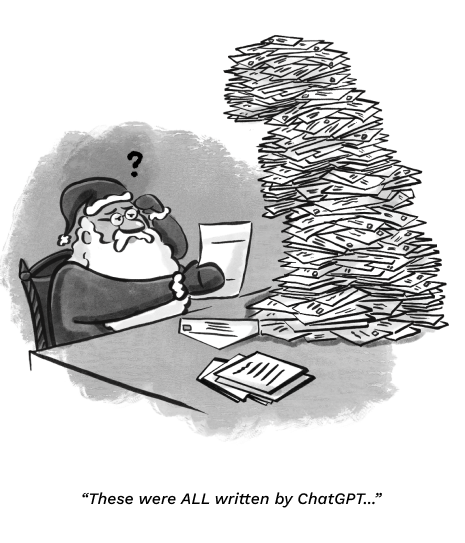
    With the explosion of ChatGPT and other artificial intelligence tools over the last year, it would be no wonder if Santa got a lot of letters written by AI this past holiday, as suggested in this clever cartoon by Ontraport, the marketing automation tool used by Revealing Genius. (Big thanks to Nicole, graphic designer at Ontraport, who created it for Ontraport comics.) The question is, how good is artificial intelligence, really, at writing a kid’s letter to Santa—or in helping a healthcare leader with executive personal branding?

    santa letters pil

    The short answer is that ChatGPT is very good at storytelling, and you might even call it prolific in how readily it can create a great deal of content and messaging. Generative AI is expected to get even better as it continues to learn over time.

    But there are three significant “but’s” we need to discuss.

    The first but, and it’s is a pretty big one, is that these large language model platforms make things up. Some sources suggest that they will provide misinformation even when they know they shouldn’t!

    The second but, and this is an even bigger one, is that ChatGPT, Claude.ai and their counterparts are not human—and never will be. So, they’ll continue to be machine-like in how they approach the world, no matter how good they get. Maybe machine activity is not what you want at the base of your executive personal brand.

    Thirdly, they’re not you—and never will be.

    This clever meme, whose original author we couldn’t easily contact for permission to reprint it fully here, illustrates the vast value of humanity.

    In the first frame, a cat labeled “artist” is fishing in a puddle with a bait bucket next to him. In the second frame, a second cat is approaching. In the third frame, the second cat is labeled “AI.” It is sitting near the artist cat, fishing out of the artist cat’s bait bucket.

    In other words, the artist can draw from a much bigger pool than AI can.

    Taking all of this into consideration, Revealing Genius currently considers generative AI to be a useful tool in creating the messaging that you’ll need for your executive personal brand once you develop it.

    The balance of this blog will describe the time-proven Excavate–Tell–Affirm™ process that Revealing Genius uses to help healthcare leaders develop their executive personal brands, then present ideas about how AI might be a useful tool in creating some (but not yet all!) of the messaging and collateral you’ll need to take your brand into the world.

    Excavate–Tell–Affirm™ Process for Executive Personal Branding

    The Excavate–Tell–Affirm™ process is a bespoke, time-proven methodology that helps healthcare leaders like you achieve their goals. Designed to be swift, thorough and energizing, the process has been used by visionary thought leaders including global C-level executives, physicians, public servants, military leaders, Ph.D.s, healthcare startup company leaders and consultants. Many say it was the catalyst to transforming their respective brands.

    What does it mean for your life and career to develop your brand? It means knowing your purpose. It means having conviction about what you really stand for. It means getting clarity about your next right step.

    Having an executive personal brand that really resonates for you supports many possible real-life efforts. Tick all the items below that you’re interested in doing. Personal branding can and has supported all of them:

    ___Getting a dream job

    ___Getting a board seat

    ___Being incredibly effective at public speaking

    ___Changing careers (and getting a dream job)
    ___Revising a curriculum vitae or resume

    ___Developing a one-sheet professional biography or elevator pitch

    ___Pursuing a career passion

    ___Pursuing a retirement passion

    ___Updating a LinkedIn page (and your social media presence overall) to make it purpose- and power-ful

    ___Revising a resume to make it purpose- and power-ful

    ___Putting up an effective website

    ___Putting up a fantastic virtual studio in Zoom

    ___Writing a winning business plan

    ___Acquiring series A or series B venture capital funding

    ___Creating a compelling video or podcast

    ___Leading a new team

    What are some things you’re considering doing next in your life? It’s highly likely that excavating your personal brand and developing messaging to better communicate it can move you toward ____________!

    Now, for a moment, let’s assume you’ve excavated your brand, formulated ideas about how you’ll tell it and affirmed it so you can feel it in your bones. How might generative AI help you take this cultivated brand out into the world?

    Using AI to Create Executive Personal Brand Materials and Messaging

    Generative AI technology like ChatGPT, Claude.ai and others is fluent and prolific in its use of language. Give it a few seconds and the right prompt, and it can summarize the transcript of an hour-long presentation. Give it another few seconds and another good prompt, and it can take that summary and create a 750-word article, then a related post for X or LinkedIn. When you’re ready to put your executive personal brand to work for you, AI is definitely a tool to leverage for its content-creating abilities.

    “The fusion of AI and personal branding is most evident in content creation,” according to this article on LinkedIn. “AI tools can generate high-quality, engaging content from blog posts to social media updates. With AI’s assistance, individuals can maintain a consistent online presence, freeing up time to focus on more strategic aspects of their brand.”

    According to Forbes, AI is even transforming the way professionals get headshots. It can be used to help generate and edit video, craft compelling narratives, optimize social media engagement and create websites.

    Another article from Forbes asserts, “with the right use of AI tools and a focus on authenticity and sincere connections, you can establish a strong personal brand that unlocks new doors, cultivates meaningful relationships and positions you as a leader in your industry.”

    Remember, you’ll need to keep a close eye on the technology because it sometimes creates fallacies, but there’s no doubt that it’s powerful.

    The second Forbes article offers these suggestions for useful AI tools for creating content for your brand:

    • ActiveCampaign, Constant Contact, Emma, Mailchimp, MailerLite: Email campaign management tools
    • Buffer: A social media management tool that helps you schedule posts and track engagement across multiple platforms
    • ElevenLabs: A natural-sounding speech synthesis and text-to-speech software using AI technology
    • Grammarly: A grammar and writing assistant that can help you ensure your content is error-free and polished
    • HubSpot,Pipedrive, Salesforce: Customer relationship management tools for building workflows and managing customers and leads
    • Ortto: An AI workflow assistant that generates marketing campaigns and content ideas for blogs, ads, emails and social media posts
    • Make, Zapier: Automation tools that connect various apps and allow the creation of workflows to automate repetitive tasks

    Solidify Your Brand First; Leverage AI Later

    Remember, before you jump into learning AI tools for brand content creation, create a solid executive personal brand. There are several easy ways to learn more about how the Excavate–Tell–Affirm™ process from Revealing Genius helps leaders like you with their branding efforts.

    For starters, read these three short blogs—and peruse our full blog. It’s free!

    1. Excavate Your Personal Brand: Three Keys to Unlocking Your Professional Brand
    2. Tell Your Personal Brand: Can You Say What You Stand for in Just a Few Words? (Tony Dungy can.)
    3. Affirm Your Personal Brand: Your Professional Brand Anchored by Assessments and Affirmations

    You can also learn more—and get started on developing your executive personal brand—by getting instant access to our free 10-minute webinar, signing up for our Excavate-Tell-Affirm™ Brand Leadership Summit or taking our online course. We would be honored to work with you 1:1.

    Mary E. Maloney

    Mary E. Maloney, FACHE

    An executive advisor, educator, speaker, author and producer, Mary E. Maloney is the founder of Revealing Genius and the expert that accomplished leaders trust for positioning, messaging and brand strategy for themselves, their teams and their organizations. A former CEO and CMO, Maloney guides C-suite leaders, founders, physicians and board directors to powerfully and strategically message their expertise and “why” so they lead with conviction and achieve their most coveted goals.

  • Six Uncommon Book Picks to Inspire Your Personal Branding

    Six Uncommon Book Picks to Inspire Your Personal Branding

    For those of us who love to support the underdogs, here are some less-known branding books that are definitely worth reading.

    If you’re reading this blog soon after it was originally published, you’re approaching that most wonderful time of year when many healthcare leaders and others reflect on the year that’s ending—and set goals and resolutions for the year to come. Sometimes, in the quiet moments—whether it’s the holidays or not—you may find yourself reflecting on your vision of what the world could be and how you could better move your vision forward. Whenever you do that, you’re laying the foundation for creating, refining or adding polishing touches to your executive personal brand.

    With the commitment that Revealing Genius has to the underdogs among us, we’re dedicating this blog to the authors of six books we love—and that we recommend to you. Each has the potential to inspire your executive personal brand development efforts in a big way. To further support underdogs, we’re intentionally linking, wherever possible, to the authors’ websites or to bookshop.org, which supports local bookstores with each purchase.

    Please let me know what you think of these!

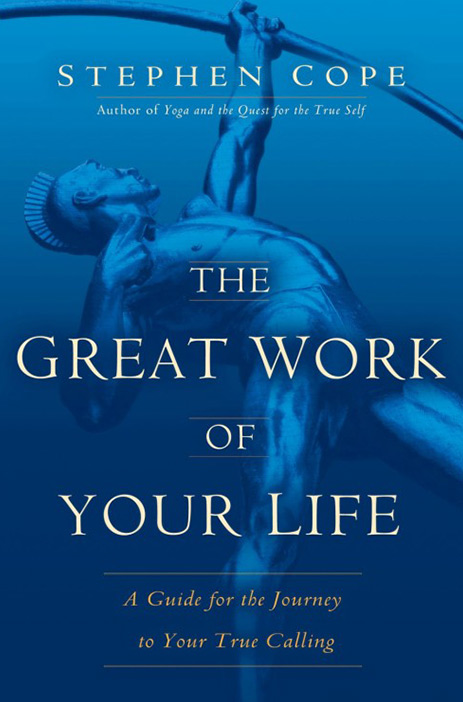
    1. Steven Cope: The Great Work of Your Life: A Guide for the Journey to Your True Calling

    Cope dedicated this book to his mentors, people who “demonstrated in their lives the nobility of work.” The Great Work of Your Life inspires readers to pursue their authentic work in the world. That’s the game we are playing, right? In addition, the stories in this book are so moving, compelling and real, that it is hard to put down. Notably, this is the inspiration for The Great Work of Your Life™ interview series by Revealing Genius.

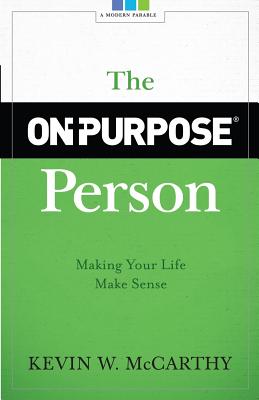
    2. Kevin W. McCarthy: The On-Purpose Person: Making Your Life Make Sense

    What I love about the On-Purpose Person is McCarthy’s conviction that “being on-purpose is the difference in people who make a difference.” I wholeheartedly agree. The book is written in a lively, highly relatable parable format. Without spoiling the plot, the story underscores how much joy can be found in “paying it forward” with wisdom. McCarthy also is the creator of the onpurpose.me tool that clients of Revealing Genius use (we are a proud licensee) to help them excavate their executive personal brands.

    3. Sheelagh Mawe: Dandelion: The Extraordinary Life of a Misfit

    You can read this amazing book in one sitting and have the message about spirit stay with you forever. Just about anyone reading the book will think that Dandelion, an Irish farm horse, is a metaphor written just for them. Of Irish descent and a farm girl myself, I was drawn to the lilting Irish storytelling style this book used. It made me pause and think, laugh out loud, and reach for the tissues. I read it on a short airplane ride, and I often refer to the author as one of the best-ever raconteurs, a person who tells anecdotes skillfully and powerfully. Take a deep breath and jump into this one. The story is an emotional rollercoaster, and the ending will have a significant impact.

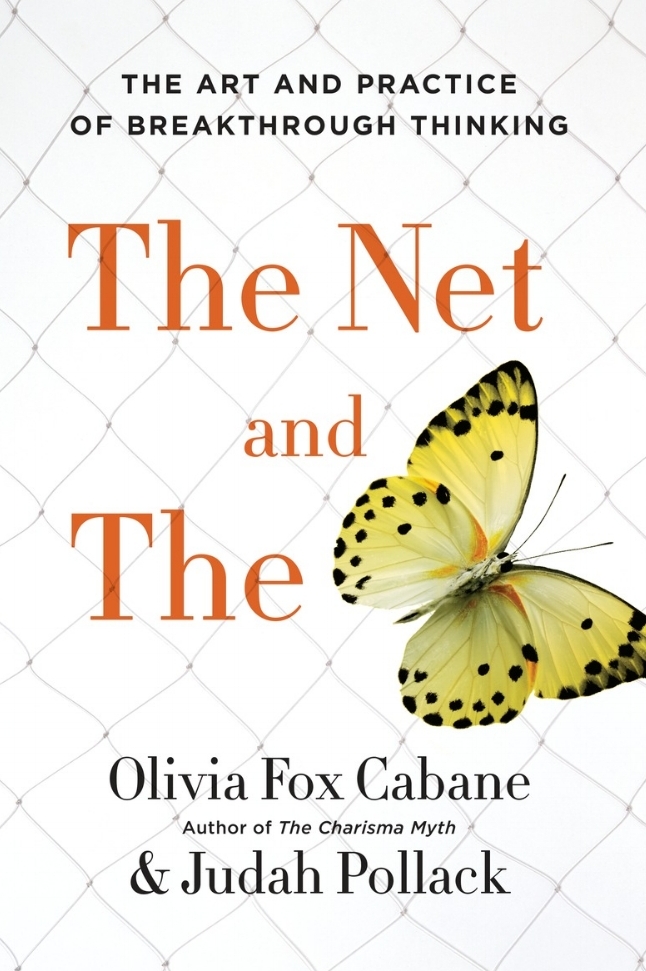
    4. Olivia Fox Cabane and Judah Pollack: The Net & the Butterfly: The Art and Practice of Breakthrough Thinking

    Based on neuroscience discoveries, this book helped me understand the creative and executive modes of our brains; the metaphor of the net and the butterfly really sticks for me when I think about acting on “aha” moments. The creative mode is like a butterfly. It’s beautiful and erratic, hard to catch sometimes and highly valued as a result. But it needs a net. The executive mode of our brain is the task-oriented network. It needs to discern the right action to take. Using both modes proactively, we can induce breakthrough moments, create eureka insights and proactively solve tough puzzles. I’ve done this consistently using the practices in this book, and it’s so energizing. Try it and let me know how it goes.

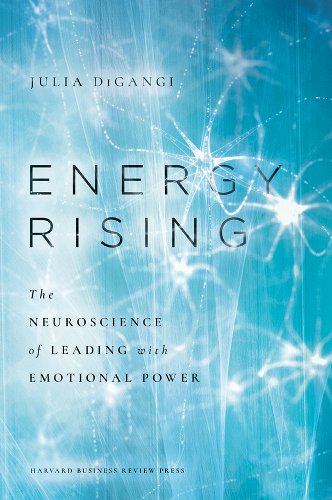
    5. Julia DiGangi, Ph.D.: Energy Rising: The Neuroscience of Leading with Emotional Power

    energy rising book cover

    This author is so on brand and her new book (published in October 2023) was so intriguing that I featured it in my monthly digital magazine, Keystone Brands. As I help people develop their executive personal brands, I’m a big fan of talking about energy management rather than time management. (What you say yes to says volumes about your brand!) Energy Rising offers a path to finding impact and fulfillment, no matter what life-changing experiences you face. Dr. DiGangi shares eight neurogenetic codes that help people unlock the energy that powers our brains to live a more fulfilling life. It’s a keeper for any leader, like me, who has survived unspeakable tragedy and now finds themselves driving transformational change. The book is all about how to access and rely on their true North to navigate.

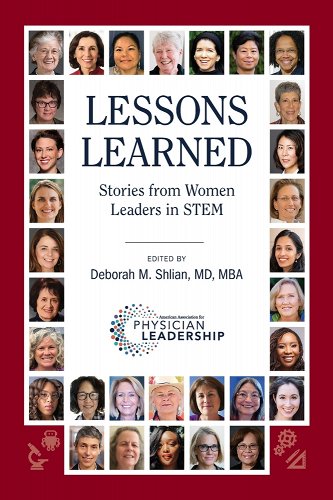
    6. Deborah M. Shlian, M.D., Editor: Lessons Learned: Stories from Women Leaders in STEM

    Each of the 30 stories in this book is unique, exceptional, humorous and honest. No matter where you start reading, you are going to be inspired. The profiles illustrate the variety in women’s paths to personal fulfillment, particularly in science, technology, engineering and math, yet all are grounded in a strong sense of the kind of purpose that is fundamental to the Revealing Genius Excavate–Tell–Affirm™ process. A board-certified family practitioner, Dr. Shlian also published Lessons Learned: Stories from Women Physician Leaders andhas won awards for her medical mystery thrillers.

    The famous and inspiring children’s author Dr. Seuss once said: “The more that you read, the more things you will know. The more that you learn, the more places you’ll go.” I hope these books help you get inspiration for doing executive personal branding—and that you’ll soon find yourself doing the great work of your life and more effectively changing the world for the better.

    If you’d like more executive personal branding assistance from Revealing Genius, consider signing up for our complimentary Excavate Your Brand webinar or investing in our flagship online course or Brand Leadership Summit. We provide 1:1 executive coaching options too.

    Mary E. Maloney

    Mary E. Maloney, FACHE

    An executive advisor, educator, speaker, author and producer, Mary E. Maloney is the founder of Revealing Genius and the expert that accomplished leaders trust for positioning, messaging and brand strategy for themselves, their teams and their organizations. A former CEO and CMO, Maloney guides C-suite leaders, founders, physicians and board directors to powerfully and strategically message their expertise and “why” so they lead with conviction and achieve their most coveted goals.

  • What Healthcare Leaders Can Learn About Branding From the ‘Mayo Magic’

    What Healthcare Leaders Can Learn About Branding From the ‘Mayo Magic’

    Like with iconic brands, your executive personal brand is solid when it’s built on trust, consistency and knowing what you stand for.

    What can you learn about personal branding from an iconic brand like the Mayo Clinic? 

    I daresay a lot.

    In this blog, we’re going to first explore the “Mayo magic”—some key ideas about why Mayo Clinic has been named, again in 2023 as it has been so many times before, “among the best of the best” hospitals by U.S. News and World Report and listed as one of the “most trusted healthcare brands” by Beckers Hospital Review.

    Then we’ll discuss the benefits of having a solid corporate brand like Mayo’s. 

    Finally, we’ll relate the branding principles established by this iconic corporate brand to why it’s worthwhile to have a solid executive personal brand—like the one you can build using the Excavate–Tell–Affirm™ process from Revealing Genius.

    Successful Brands Are Built on Trust 

    Perhaps the most important lesson to take away from Mayo Clinic is that the best brands are built on trust.

    A February 2023 Business Insider article titled, Mayo Clinic CEO: Here’s Why We’ve Been The Leading Brand in Medicine for 100 Years, asks Mayo CEO Dr. John Noseworthy how the clinic built its reputation and manages to stay at the top. 

    “I think it all comes down to our core value, which is that the needs of the patient come first,” Noseworthy says in the piece. “I know that might sound kind of trite in today’s world, but our staff is extraordinarily committed. If you spent a day here, and you grab(bed) anybody at the Mayo Clinic and ask(ed) them, ‘what’s the purpose of your work?” they would say, ‘to meet the needs of our patients.’”

    In other words, patients come to Mayo because they can—and do—trust their needs will be served.

    The Best Brands Are Consistent

    Based on the Mayo example, the best brands are consistent. In the Business Insider article, Noseworthy explains how the Mayo brand is expressed the same way across the organization. 

    “In my role, what I hear every day from patients and family members is that the minute they step onto a Mayo campus, whether it’s in Rochester, Minnesota; Scottsdale, Arizona; Florida; or in our large integrated health system, they immediately sense that there’s something different,” he says. “They feel it right from the first person they speak with, and it’s the physicians, it’s the science, it’s the engineers and technologists. It’s that patient focus and a relentless focus on quality. This goes all the way from the heart surgeons down to the cleaning staff.”

    Iconic Brands Stand for Something Significant

    A few years back, a woman I know took her young daughter to Mayo Clinic’s Rochester, Minnesota, location for treatment for epilepsy. Ask her what words came to mind when she thinks about Mayo today, and she’ll say: “research, specialists, world-renowned.” 

    Top brands know what they stand for—and then they deliver on it. For Mayo, this is serving people first, and especially people experiencing special health concerns. 

    “Founded more than a century ago by two brothers in the rural Midwest, the Mayo Clinic has built a world-renowned reputation as an exemplary network of clinics and hospitals that has become the preferred destination of patients with difficult-to-treat conditions,” reads the intro to a 2018 Q&A article published in Knowledge at Wharton, a business journal from the Wharton School of the University of Pennsylvania. 

    “As people live longer and have multiple different chronic diseases, the need for … advanced services will be ever greater,” says Larry Jameson, EVP of the University of Pennsylvania Health System, in the article.

    The Benefits of a Strong Healthcare Brand

    Being as famous and respected as Mayo would certainly be nice for any brand. But what are the deeper business benefits of having a strong brand in the healthcare industry?

    Qualtrics suggests that strong brands can capture greater market share, accelerate new patient acquisition through online rates and word-of-mouth marketing, and increase loyalty. 

    Here are some specific examples:

    • Having a strong brand can help an organization appeal to underserved or growing segments. 
    • Having a strong brand that truly resonates with consumers can translate to patients promoting your organization through online reviews and social media mentions.
    • Having a strong brand can boost communication and help to create moments that matter with those the organization serves.

    Applying the Key Principles of Iconic Brands to Executive Personal Branding

    So how do these ideas I’ve garnered from an iconic brand translate into your executive personal brand?

    As we have seen, consistently delivering on a brand promise helps people decide to do business with a brand. They trust that brand to deliver for them. 

    Executive personal branding can help you excavate your brand promise and develop ways to tell others about it consistently and authentically. Doing executive personal branding will help you answer such questions as: “What is your brand promise?” and “How consistently are you delivering on it?” If someone asks you today what you as a healthcare leader stand for, what would you say? If you were asked the same question tomorrow, would you give the same answer? 

    Executive personal branding can not only help you clarify what you stand for but also affirm it until you feel it with conviction. And it can helpyou effectively deliver the same message about it in any situation—whether that’s the proverbial elevator, in an all-staff meeting, or on your resume or CV.

    The words Excavate–Tell–Affirm in the last two paragraphs have been linked for a reason. They are the key steps in the time-proven executive personal branding process from Revealing Genius. You can use this process to create a solid executive personal brand that will bring you benefits, just like corporate brands benefit organizations.

    For example, a strong personal brand can help you:

    Once you get clarity, conviction and the ability to talk about your personal brand, maybe you’ll find yourself ranking on Beckers Hospital Review’s list of Great Healthcare Leaders to Know!

    Would you like to reap the benefits of a strong personal brand—just like big, iconic companies do with their corporate brands? We’d love to help. Learn more by signing up for our complimentary Excavate Your Brand webinar or invest in our flagship online course or Brand Leadership Summit. We provide 1:1 executive coaching options too.

    Finally, a heartfelt thanks to all the healthcare leaders out there who are leading with purpose, no matter how tough it gets. It speaks volumes about your personal brand. You inspire us. 

    Mary E. Maloney

    Mary E. Maloney, FACHE

    An executive advisor, educator, speaker, author and producer, Mary E. Maloney is the founder of Revealing Genius and the expert that accomplished leaders trust for positioning, messaging and brand strategy for themselves, their teams and their organizations. A former CEO and CMO, Maloney guides C-suite leaders, founders, physicians and board directors to powerfully and strategically message their expertise and “why” so they lead with conviction and achieve their most coveted goals.