Category: Executive Personal Branding

  • Beyond the Boardroom: How Martha Mertz Redefined Leadership Through the “Women’s Way”

    Beyond the Boardroom: How Martha Mertz Redefined Leadership Through the “Women’s Way”

    Revealing Genius | The Great Work of Your Life Interview Series

    Beyond the Boardroom: How Martha Mertz Redefined Leadership Through the “Women’s Way”

    The Quick Answer

    What is the Athena Leadership Model?

    Conceived by Martha Mayhood Mertz in 1982, the Athena Leadership Model is a framework that redefines leadership beyond title and hierarchy. It identifies eight distinct principles—anchored by “Living Authentically”—that leverage collaborative, intuitive, and relationship-based strategies (often called the “women’s way”) to drive organizational success and community impact.

    Executive Summary

    In 1982, Martha Mayhood Mertz sat on a Chamber of Commerce board in Lansing, Michigan. She was the only woman in the room. When she noted the absence of female voices in leadership awards, her male colleagues delivered a stark assessment: “Martha, women aren’t leaders.”

    That single sentence didn’t defeat her; it “lit a flame.”

    It launched a quest to prove that women were leading—they were just doing it differently. They were building hospitals, organizing communities, and driving change through collaboration rather than command. To honor them, she founded Athena International. Three decades later, what began as a local award has evolved into a global movement reaching 48 states, 11 countries, and over 8,000 recipients.

    In this deep dive, we explore Martha’s journey through the lens of Revealing Genius’s Excavate-Tell-Affirm™ methodology. Her story offers a masterclass for C-suite executives on how to excavate core values, tell a counter-narrative that shifts industry perceptions, and affirm a new model of leadership that works for everyone—from the classroom to the boardroom.

    The Catalyst: “Women Aren’t Leaders”

    Every great executive brand begins with an “Excavation”—a moment where friction reveals a deeper truth. For Martha, that friction occurred in the early 80s commercial real estate world.

    “People didn’t believe women headed companies at the time,” Martha recalls. After breaking through that barrier to join the Chamber board, she realized her perspective was constantly at odds with the status quo. The prevailing definition of leadership was narrow: it was the person with the loudest voice, the highest title, or the one standing at the “head of the parade.”

    Because women were systematically excluded from those titles, they were excluded from the definition of leadership.

    “My colleagues told me, ‘Martha, women aren’t leaders,’ and that lit my flame. Because I could see around the community… there had been many, many, many outstanding women who had done things, but they just didn’t fit into the category of Webster’s description of what leader means.”

    — Martha Mayhood Mertz, Founder of Athena International

    The Executive Lesson:

    Martha didn’t try to fit the existing mold. She realized the mold was broken. For executives facing a career pivot or industry misalignment, the takeaway is powerful: If your values don’t match your environment, you don’t necessarily need to change yourself. You may need to change the definition of success in your industry.

    Strategic Approach: The “Women’s Way” of Leading

    Martha’s response to the friction was not to argue, but to demonstrate. She utilized a strategy that mirrors the Tell phase of personal branding: she created a platform to make the invisible visible.

    She launched the Athena Award to lift up one woman each year. But she didn’t stop at recognition; she sought to codify how these women were succeeding. With a grant from the W.K. Kellogg Foundation, her team researched the specific behaviors of high-performing female leaders.

    The result was the Athena Leadership Model, a framework that goes beyond gender to speak to anyone leading in the 21st century.

    The 8 Principles of Athena

    The model identifies eight distinct tenets, but Martha emphasizes that Living Authentically is the core from which all others radiate.

    1. Live Authentically: Knowing your values and acting in alignment with them.
    2. Learn Constantly: Embracing intellectual curiosity.
    3. Advocate Fiercely: Standing up for causes and people.
    4. Act Courageously: Taking risks despite fear.
    5. Foster Collaboration: diverse teams to achieve what individuals cannot.
    6. Build Relationships: engaging with others.
    7. Give Back: Philanthropy and mentorship.
    8. Celebrate: Honoring the humanity of our work and time together.

    “Living authentically is really the one that is of such a core importance in life… If we think we have these values and we’re not living them… I’ve put a space between myself and my truth.”

    — Martha Mayhood Mertz

    Why This Matters for C-Suite Leaders:

    In the modern corporate landscape, the “command and control” style is fading. The Athena model anticipated the shift toward empathy, emotional intelligence, and collaboration by forty years. Executives who adopt these principles—regardless of gender—find they can build more resilient, innovative teams.

    Challenges & Solutions: The Fear of the Podium

    It is easy to look at a global figure like Martha Mertz and assume she was born with executive presence. The reality was starkly different.

    The Challenge: Paralysis

    Despite building buildings and serving on boards, Martha was terrified of public speaking. She describes herself as an “absolute case.”

    “I can remember standing up at a local department store… I started to speak, and I wondered why I was feeling lightheaded. I finally realized, before I fell off the podium, that I wasn’t breathing.”

    — Martha Mayhood Mertz

    Her fear stemmed from a common executive insecurity: Imposter Syndrome. She doubted that her ideas added value to the conversation. “What do I have to say that will add value?” she often asked herself.

    The Solution: Passion Over Fear

    Martha didn’t overcome this fear through technique alone; she overcame it through purpose. Her passion for the Athena mission—for correcting the narrative about women leaders—was stronger than her fear of the microphone.

    She also learned to reframe “speaking” as “sharing.”

    “Find a way past the fear to the fun of sharing your ideas and seeing that others can align themselves in with your thinking.”

    — Martha Mayhood Mertz

    The Takeaway:

    Finding your voice isn’t about perfect delivery. It is about believing that your lived experience constitutes data that the world needs.

    Measurable Outcomes: From Local Award to Global Movement

    The “Affirm” phase of the Revealing Genius process is about operationalizing your brand so it sustains itself. Martha’s work is a masterclass in affirmation and scaling impact.

    • Global Reach: The Athena International program has expanded to 48 states and 11 countries.
    • Massive Network: Over 8,000 leaders have received the award, creating a built-in ecosystem of mentorship.
    • Diverse Impact: The model has been successfully applied in Fortune 500 boardrooms, NASA, and even a women’s prison in Arizona.

    The Arizona Prison Case Study

    Martha shared a poignant example of the model’s versatility. When taught in a women’s prison, the Athena Leadership Model didn’t just teach leadership; it restored humanity.

    “I realized that the impact of this model was capable of changing people’s lives… letting them ask the question, ‘Who am I?’ and find the value that they had maybe never been told about.”

    — Martha Mayhood Mertz

    This proves that true leadership principles are universal. Whether you are leading a multinational merger or leading yourself out of a crisis, the principles of authenticity, courage, and learning remain the same.

    2026 Perspective: The “Perfect Sphere” of Leadership

    Martha argues that we are moving toward a “perfect sphere” of leadership—a combination of the traditional, hierarchical model (often associated with male traits) and the collaborative, intuitive Athena model (associated with female traits).

    “When we take the traditional model of leadership and put it together with the Athena model, it becomes, in my mind, the perfect sphere… the perfect combination of qualities.”

    — Martha Mayhood Mertz

    This aligns with current data. Research consistently shows that diverse boards outperform homogenous ones. By valuing intuition and collaboration alongside strategy and decisiveness, companies create a competitive advantage.

    Key Takeaways for Executives (Q&A Format)

    Q: How do I know if I am leading authentically?

    A: Martha suggests a simple audit: Look at your decisions during challenges. Do you make choices based on your stated values, or based on what is most lucrative or easy? Authentic leadership closes the gap between your words and your actions.

    Q: Can the Athena model apply to male executives?

    A: Absolutely. Martha notes that the principles—collaboration, intuition, removing ego—are human traits. The “Women’s Way” is simply a descriptor for a style that was historically overlooked, but it is available to anyone leading in the 21st century.

    Q: How do I handle the “imposter syndrome” of public speaking?

    A: Focus on the mission, not the performance. Martha forgot to breathe because she wanted to “hurry up and get off the podium.” When she focused on the necessity of her message, she found her breath—and her voice.

    Q: What is the “Survivor Syndrome” in leadership?

    A: Martha survived a severe skull fracture at age five and was told she wouldn’t live. This instilled a drive to “make a difference” with her “second chance.” Executives often find their greatest drive comes from surviving professional or personal crises—use that resilience as fuel.

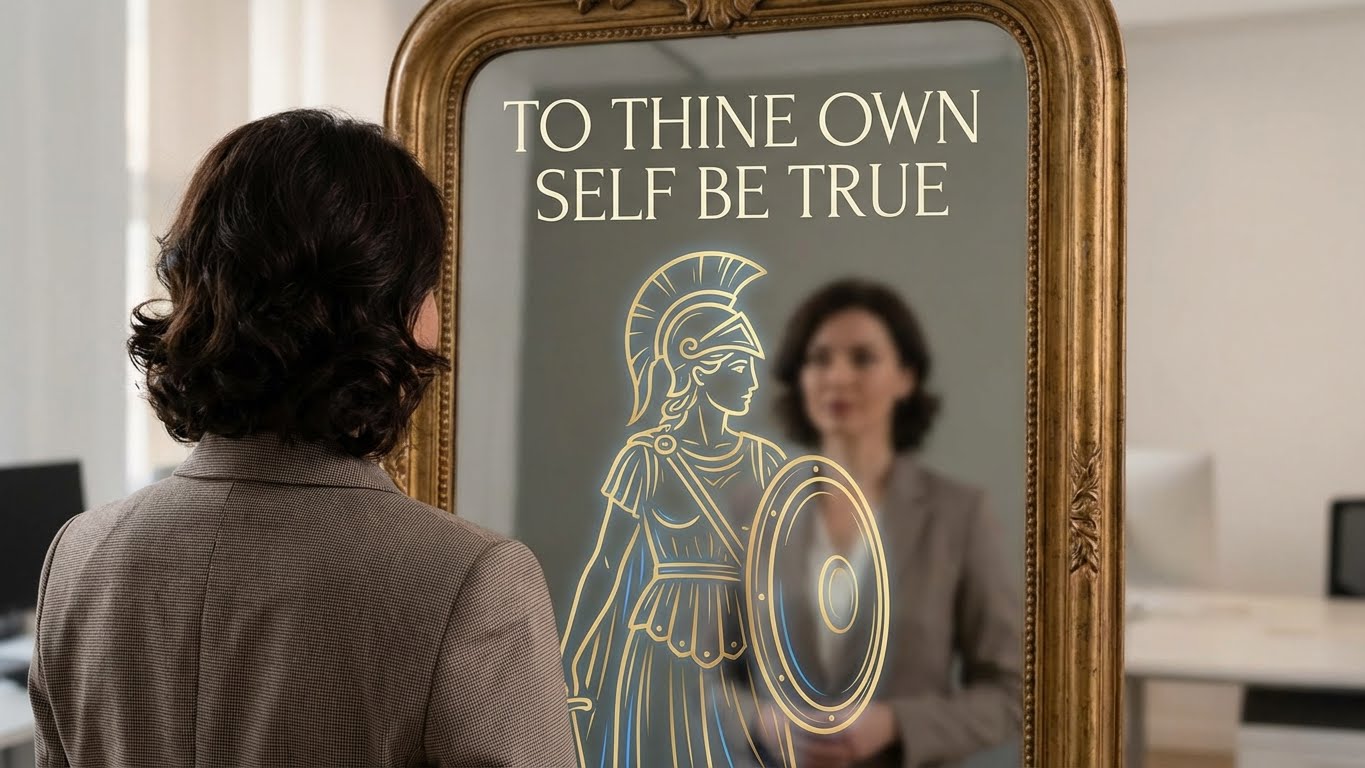
    Conclusion: “To Thine Own Self Be True”

    Martha Mertz’s journey circles back to a quote she learned in ninth-grade Latin class, which she attributes to Shakespeare: “This above all: to thine own self be true.”

    For decades, she didn’t understand what it meant. Now, it is the definition of her success. Success is not just the 8,000 awards or the global recognition. It is looking in the mirror and liking the person you have become.

    “I think that’s probably how I would define my own success… taking a strong look at who I am and liking that person.”

    — Martha Mayhood Mertz

    For the executive standing at a crossroads, the path forward isn’t found in a market analysis. It is found in the excavation of the self.

    Frequently Asked Questions

    Q1: Is the Athena Award only for women?

    While the award was created to highlight women who were overlooked, the criteria focus on excellence, community service, and—crucially—opening opportunities for women. The model itself is gender-neutral and applicable to all leaders.

    Q2: What are the criteria for an Athena recipient?

    Recipients must meet three specific criteria:

    1. Achieve the highest level of professional excellence.
    2. Devote time and energy to their community in a meaningful way.
    3. Actively assist women in realizing their full leadership potential.

    Q3: How does “Celebration” fit into a business leadership model?

    Martha argues that celebration is not just a party; it is a ritual of honor. “We need to stop and give honor to the moments that we have spent with other people… recognize that that was a singular time.” In a burnout culture, celebration is a tool for retention and morale.

    Q4: Where can I find more about the Athena Leadership Model?

    You can read Martha’s book, Becoming Athena, or visit the Athena International website. The book details the eight principles and provides a roadmap for integrating them into your professional life.
  • The Question That Changes Everything at Year-End

    The Question That Changes Everything at Year-End

    As we close out 2025, many of us ask: “Will my Future Self regret what I didn’t do this year?”

    It’s a natural question. But thanks to a client, there’s an even more powerful one: “What would my Future Self thank me for doing today?”

    This single reframe shifts us from anxiety to agency. And right now, between reflection and resolution, is the perfect moment to answer it with clarity.

    Your Brand Declaration: The Bridge Between Who You Are and Where You’re Going

    If you’re navigating transition—whether it’s a new role, a career pivot, or redefining your leadership legacy—you need more than a polished LinkedIn profile. You need a Brand Declaration: a clear, authentic statement of purpose that guides every decision and conversation in the year ahead.

    Here’s why it matters, and how to build yours:

    THE FILTER: Brand Authenticity = Credibility

    McKinsey’s research confirms what we intuitively know: leaders who demonstrate authentic personal brands build deeper trust and influence. Your Brand Declaration is your filter—it helps you say no to opportunities that don’t align and yes to the ones that do.

    Ask yourself: What do I stand for that’s non-negotiable? What values have guided my best decisions? Where is there daylight between my public brand and my private truth?

    Authenticity isn’t about perfection. It’s about consistency between your values and your actions.

    THE FUEL: Your Why Statement Formula

    Your “why” is your competitive advantage. It’s what makes people remember you, recommend you, and want to work with you.

    The formula: “To [expertise/contribution] so that [impact/transformation].”

    Example: “To bring calm clarity to high-stakes transitions so that leaders can earn trust and move through complexity with confidence.”

    This isn’t just about work. This is your north star for your life where work plays an integral part. When you can articulate your why with this clarity, you make every networking conversation, every interview, every strategic decision exponentially easier whether it’s personal or professional.

    THE FLOOR: How You Walk Through Doorways Matters

    Your brand isn’t what you say—it’s what people experience every time you show up- because presence precedes perception.

    Consider: How do you enter a room? How do you contribute in the first five minutes of a meeting? What energy do you bring to transitions, both literal and metaphorical?

    If you rush into a meeting late, eyes on your phone, apologizing as you sit, you’ve set a tone before you’ve said a word. If you arrive centered, greet people by name, and ask one grounded question, you’ve also set a tone—one people remember.

    The way you enter a room shapes what happens in it. Your Brand Declaration should include not just what you stand for, but how you embody it in every interaction. Your hows are your non-negotiables, what you need to do your best. It should define how you choose to enter rooms, conversations, and transitions—especially when stakes are high.”


    Make 2026 Count: Do What Your Future Self Will Thank You For

    Between now and January, take some time to craft your Brand Declaration. It’s three parts – your purpose, why and hows. Write it down. Test it in conversations. Refine it until it feels both true and energizing.

    If you want to walk into 2026 with a clear Brand Declaration, a tested Why, and language you can use in every board conversation, interview, and networking discussion, schedule your private session here. It’s one of the highest-leverage blocks of time you can invest in for yourself, or for someone in your coaching tree who is stepping onto a bigger stage. I wish I had it earlier on in my career.

    The executives who will thrive in 2026 aren’t the ones with the most credentials—they’re the ones with the clearest sense of purpose and the courage to live it out loud.

    What’s your non-negotiable as you head into the new year? I’d love to hear what’s crystallizing for you in the comments.

  • Finding Your Hyperion: Why the Most Effective Leaders Stand on Unseen Roots

    Finding Your Hyperion: Why the Most Effective Leaders Stand on Unseen Roots

    At 380.8 feet, Hyperion is the tallest living tree on Earth. For 800 years, this coast redwood has weathered storms, fires, droughts, and seismic shifts that would have toppled lesser giants.

    But here’s what stops most people in their tracks: Hyperion doesn’t have just a deep taproot. Its stability comes from an extensive lateral root system—spreading over an acre underground—that intertwines with other trees to create an invisible network of strength.

    The tree’s height is impressive. Its root system is everything.

    The same is true for leaders navigating today’s relentless uncertainty. The executives I work with 1:1 don’t lack experience, credentials, or capability. What they’re missing is what Hyperion has in abundance: an immovable foundation that allows them to stand tall regardless of what’s happening around them.

    Imagine the confidence you could access if you were anchored in the same architecture.

    The Certainty Paradox

    Harvard Business Review’s research on thriving in VUCA environments confirms: “While the leader has little to no control over the external competitive environment, they have astonishing influence over the internal performance environment.”

    We’ve been conditioned to believe that external uncertainty requires internal flexibility. That adaptive leadership means being ready to pivot at a moment’s notice. But maybe we’ve overcorrected. In our attempt to be responsive, we’ve become reactive. In trying to stay open, we’ve lost our center.

    The most effective response to extreme external uncertainty isn’t more internal flexibility—it’s extreme predictability in your own behavior. It’s what I call leadership certainty: the ability to make decisions with confidence, even when the path forward feels ambiguous, because you’re anchored to something immovable.

    Introducing ETA: A Framework for On-Purpose Leadership

    I’ve developed a framework specifically for leaders navigating high-stakes environments. It’s called ETA: Excavate > Tell > Affirm®.

    This isn’t theory. It’s a practical process for building the root system that allows you to stand tall regardless of what’s happening around you.

    Step 1: Excavate Your Purpose

    Most leaders can recite their organization’s mission. Fewer can articulate their personal brand purpose with the same clarity.

    Your purpose isn’t what you do. It’s why you exist to serve.

    Complete this sentence with 2-3 words, the first being a gerund (ending in -ing):

    “I exist to serve by __________.”

    Examples (actual clients):

    • “I exist to serve by building bridges.”
    • “I exist to serve by empowering change.”
    • “I exist to serve by inspiring hope.”

    This is the foundation of every decision you’ll make going forward. When you’re clear on your core purpose, decision-making shifts from analysis paralysis to aligned action. You’re not asking “What should I do?” You’re asking “What would someone who exists to serve by [your purpose] do in this situation?”

    That’s clarity.

    Step 2: Tell Your Signature Stories

    Once you’ve excavated your 2-3 word purpose, you need proof. Not data—stories.

    Your signature story answers: What’s the big, relevant change in the world that you’re passionate about?

    Consider Arianna Huffington. She believes sleep deprivation is undermining human performance at every level. Her signature story? She collapsed from exhaustion. Now her personal brand stands for sleep.

    Her story isn’t just compelling. It’s authentic. It connects her purpose to lived experience and gives her authority no credential could provide.

    What’s your story? What moment forged your purpose and clarified what you stand for?

    Your story doesn’t need to be dramatic or traumatic. It needs to be true, emotive, and definitional. It needs to explain not just what you believe, but why you can’t not believe it.

    Step 3: Affirm, at what, you are the Best in the World

    This is where many of my clients get uncomfortable. We’ve been conditioned toward humility, toward letting our work speak for itself. But clarity requires you to name what you do better than anyone else—unapologetically.

    Think about the last thank-you note you received. Or when someone said, “You genuinely impacted my life, my career, my trajectory.”

    What were they thanking you for? That’s a clue to your core competency.

    Not the thing you’re moderately good at. The thing people seek you out for specifically. The contribution only you can make in the way only you can make it.

    When you can name this and own it, you complete the ETA framework. You know your purpose (Excavate), you have the story that proves it (Tell), and you’ve claimed your unique contribution (Affirm).

    Why This Matters Now

    The leaders I work 1:1 with are saying that now more than ever, they feel like the ground beneath them won’t stop shifting.

    Leaders who try to match external chaos with internal adaptability burn out. They become reactive, inconsistent, and ineffective. Their teams sense the uncertainty and mirror it back, creating cultures of anxiety rather than resilience.

    But leaders who anchor themselves to a clear purpose, who tell stories that connect that purpose to reality, and who unapologetically claim their unique contribution—those leaders create what their organizations need most: predictability in an unpredictable world.

    The Business Case

    The ETA framework delivers tangible outcomes:

    Strengthened Decision-Making: Clear purpose filters every decision through a consistent lens, accelerating velocity and improving quality.

    Aligned Leadership Behaviors: Your personal brand becomes a declaration of what people can expect from you, preventing paralysis during rapid change.

    Organizational Trust and Resilience: Teams led by on-purpose leaders develop cultures of trust because they’re not reacting to their leader’s mood or the latest crisis.

    Empowered Teams: When leaders model purpose-driven decision-making, autonomy increases and micromanagement decreases.

    Transformational Leadership: On-purpose leaders don’t just manage change—they lead through it decisively and inspire confidence in others.

    The Great Work of Your Life

    The ETA framework isn’t just about better leadership. It’s about pursuing the great work of your life.

    Most leaders build impressive resumes, accumulate credentials, climb hierarchies. Then one day they ask: “Is this it?”

    That question emerges from misalignment. When what you do daily doesn’t connect to why you exist, no amount of success satisfies.

    The ETA process creates the foundation that allows you to pursue work that matters—not just to your organization, but to you. It transforms leadership from a role you play into an expression of who you are.

    When that alignment happens, you become like Hyperion. You stand taller than you imagined possible, not because you’re straining to reach higher, but because you’re fundamentally rooted in something true.

    Your Starting Point

    Here’s my challenge to you:

    Complete the sentence: “I exist to serve by __________.”

    Don’t overthink it. Don’t workshop it. What’s the first true thing that emerges?

    That’s your starting point. That’s the first root of your Hyperion.

    After decades of working with leaders 1:1 at the highest levels, I know this: You don’t lack confidence. You lack clarity. And when you get clear, everything else follows—confidence, conviction, impact, fulfillment.

    The external environment will remain uncertain. But you can become the certainty your organization needs. You can lead with clarity even when the path forward is ambiguous. You can build the root system that allows you to stand through any storm.

    That’s the promise of on-purpose leadership. That’s the power of ETA.


    If you’re stuck on creating a 2-3 word purpose (I exist to serve by……), DM “purpose” to me and I’ll send a simple exercise that I know you’ll enjoy to help you breakthrough. We love to see what emerges when leaders get clear on what they stand for.

    Follow me for more strategic frameworks on how to brand on-purpose.

  • The one thing every senior leader needs crystal clear (esp in turbulent times)

    The one thing every senior leader needs crystal clear (esp in turbulent times)

    This is your filter, floor and rocket fuel for what’s next…..

    François Arago once wrote about mathematician Leonhard Euler: “He calculated without any apparent effort, just as people breathe, as eagles sustain themselves in the air.”

    That’s what happens when someone operates from their core genius—when they know exactly WHY they exist to serve and what transformation they’re here to facilitate. Everything flows.

    But here’s what I see happening with senior leaders right now: They’re navigating unprecedented change—market volatility, workforce shifts, technological disruption, evolving stakeholder expectations—and many are doing it without a crystal-clear WHY.

    When your WHY is fuzzy, leadership feels rudderless.

    You’re making decisions without a clear point of reference. Your team doesn’t know what to rally around. Change feels like chaos instead of opportunity. You might second-guess yourself when you should be moving with conviction.

    But when your WHY is sharp? It becomes your filter for every decision, your floor when everything else shifts, and your rocket fuel for what’s next.

    Your WHY is simple but profound: At what you are the best in the world + the transformation you facilitate.

    Here’s the formula: To [contribution] so that [impact].

    Think about it—as a C-suite executive, business owner, founder, consultant, physician, or military leader, you didn’t get where you are by accident. You have a unique combination of strengths, experiences, and perspective that creates transformation for others. But can you articulate it clearly? Can your team? Does it guide your strategic decisions?

    Most senior leaders have never taken the time to truly crystallize this. They know they’re good at what they do, but they can’t clearly define the specific transformation they create or why it matters.

    That’s why we created the AI Revealing Genius WHY Generator.

    It’s a tool that helps you discover and articulate your WHY with precision. No email required (although you’ll need a free ChatGPT account)—just thoughtful questions that help you connect the dots between your unique strengths and the impact you create. Think of it as a solid starting point.

    Try it here: Link to WHY Generator

    My wish for you is simple: That you truly clarify your WHY and let it be your filter, your floor, and your rocket fuel. Because when senior leaders operate from their core genius, they don’t just navigate change—they create it.

    In our Fall Mastermind (starting Oct 1), we spend significant time helping leaders clarify and activate their WHY across all areas of life and work. If you find the WHY generator valuable and want to go deeper with a cohort of other senior leaders, we’d love to have you join us. Schedule a quick call to learn more.

    To your clarity and impact, Mary E

    P.S. The leaders who are thriving right now know exactly why they exist to serve and what transformation they’re here to create. Don’t lead another day without that clarity.

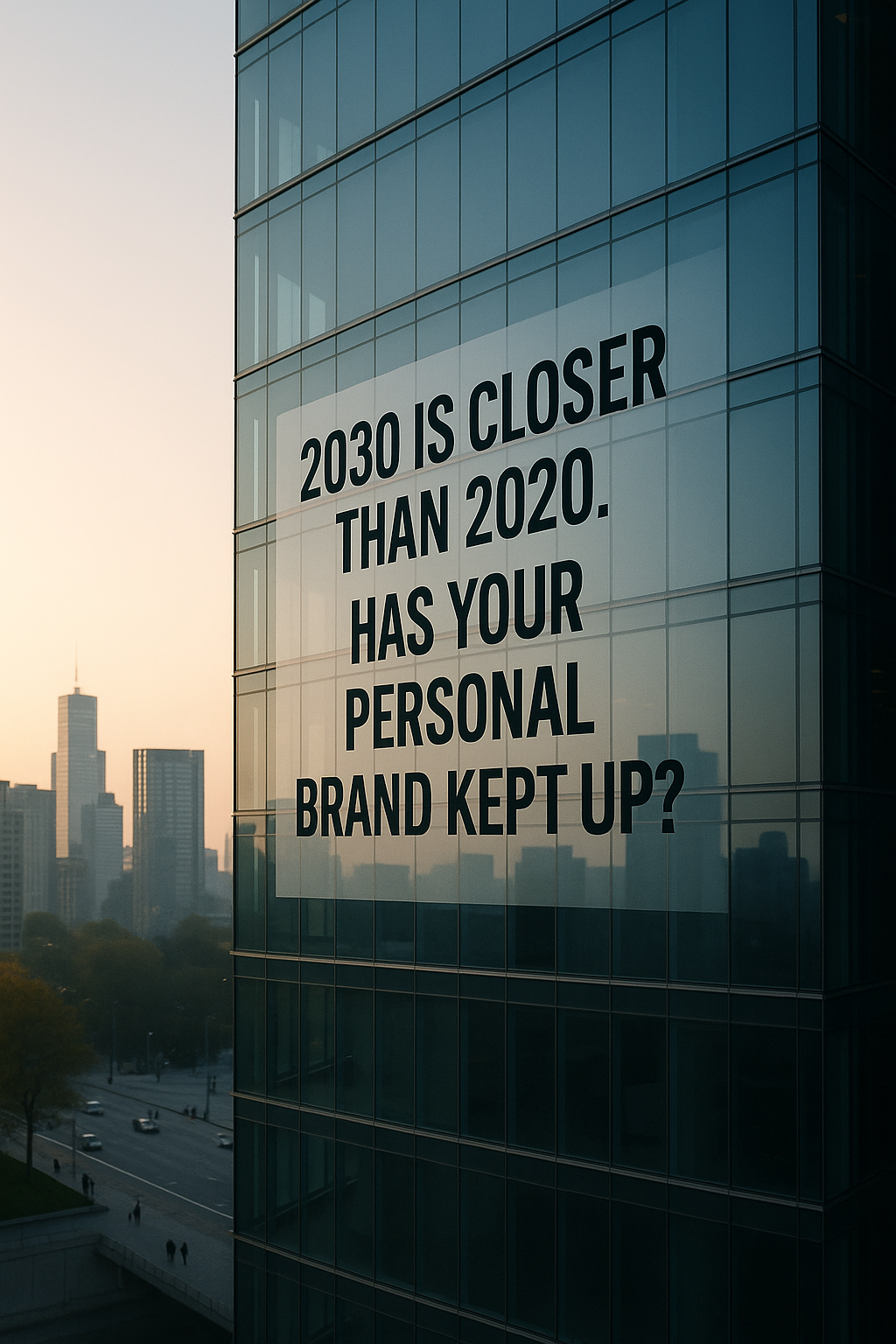
  • 2030 is Closer than 2020. Has your Personal Brand Kept Up?

    2030 is Closer than 2020. Has your Personal Brand Kept Up?

    Here’s the ONE THING you can do to end the year strong and enter 2026 with a personal brand that feels alive and aligned.

    The Reinvention Imperative

    Planning season is here and companies are auditing their strategies – so why not you?

    Every thriving company is revisiting its strategic plan. What if you applied that same energy and rigor to a strategic plan for your own personal brand?

    According to PwC’s annual global CEO survey, 40% of global CEOs believed their companies would no longer be viable in ten years’ time if they continued on their current path. The reinvention imperative this implied caught my attention because many executives are operating right now with an outdated personal brand.

    A seasoned C-suite leader—let’s call him George—booked a laser strategy session after being passed over for a board seat he was more than qualified for.

    “My resume is impeccable,” he said. “My results speak for themselves.”

    We reviewed his LinkedIn profile.

    “This,” I said gently, “might be why.”

    His brand was stuck in 2022 – no thought leadership, no clear point of view and very little that differentiated his innovative leadership style.

    He’s not alone.

    3 things to address in the Strategic Plan for Your Personal Brand

    1️⃣ Messaging: Take the Google test right now. Type your name into your favorite search engine and evaluate what comes up.

    ✅ Fix: Brand Declaration™ – concisely and compellingly outlines your…

    • Purpose – your guiding north star in 2-3 words
    • Hows – the standards you live and lead by; how you create value in any room
    • Why – a one-line articulation of your unique brilliance and the transformation you enable

    2️⃣ Marketing: Are you sharing 2025 insights, real stories, what you’re excited about in the future, or have you been radio silent for a while? Are you intentionally shaping a narrative that speaks volumes about your expertise and WHY?

    ✅ Fix: Vision Grid™ – like a corporate strategic plan, it maps where you’re going across six life pillars and aligns your strategy with what energizes you. They are:

    • spirituality
    • health/style
    • relationships
    • work/finance
    • recreation/fun
    • learning/education

    3️⃣ Mindset: Ask your trusted inner circle: What do you think I’m known for?

    ✅ Fix: Community – a safe place to find trusted accountability partners who challenge you to think bigger, stay the course and make 7th generation impact

    Just like corporate strategy, your personal brand deserves quarterly attention, if not more. Revisit it with intention and the results compound:

    • Resonant messaging that gets noticed and remembered
    • Doors opening from unexpected places
    • Renewed energy, clarity and confidence to lead with impact

    Your Choice Point

    There are just a few months left in the year. Will you enter 2026 with a brand that’s outdated or one that reflects the authority you already own?

    About the Brand Declaration Lab

    Ready to move from reflection to action? The Fall cohort of the Brand Declaration Lab is now enrolling. Over 12 weeks (Oct 1 – Dec 17), you’ll craft a strategic plan for your personal brand—one that aligns with your values, positions your leadership and serves you for years to come. This is our third mastermind, and the outcomes so far have been transformative for hundreds of executive leaders. ???? revealingenius.com/mastermind

    #ExecutivePersonalBrand #BrandLeadership #MessagingMatters

  • Executive Presence: How to Own the Room—Without Saying a Word

    Executive Presence: How to Own the Room—Without Saying a Word

    Have you ever watched someone walk into a room and, without saying a word, command attention? They exude a hard-to-describe sense of quiet confidence, a peace within, regardless of what’s happening around them. That’s executive presence. It’s more than charisma—it’s purpose in motion. And in today’s fast-paced, high-stakes world, executive presence isn’t a luxury. It’s a leadership requirement.

    So, what’s the secret?

    Here’s the truth: The most magnetic leaders aren’t performing. They’re anchored. They’re deeply grounded in their identity and purpose. They radiate clarity, confidence and conviction. They appear to be calm, not because they have the answers, but because they know who they are, what they stand for and why they lead.

    The Core of Executive Presence Is Purpose

    Executive presence isn’t about dominating a conversation. It’s about aligning your internal compass so precisely that your authenticity speaks louder than your words.

    As explored in The Power of Purpose: A Leader’s Playbook for Aligning Identity, Impact, and Growth, (DM me for a complimentary copy) purpose is the foundation of sustainable, influential leadership. When you lead from purpose, you don’t just “show up”—you show up intentionally.

    This grounded presence shows up as:

    ✅ Poise under pressure

    ✅ Authentic confidence (not arrogance)

    ✅ Clarity in decision-making

    ✅ Calm in the chaos

    ✅ A magnetic sense of “they know why they exist to serve”

    People trust “it.” They follow it.

    How to Cultivate Executive Presence (Without Saying a Word)

    Here’s a simple framework to elevate your presence from the inside out:

    1. Define Your Purpose Start with two words. Kevin McCarthy recommends distilling your essence into a concise into 2-3 words. The first word should start with an “-ing”-word. For example, “Revealing Genius,” “Creating Clarity,” or “Igniting Growth.” Purpose isn’t a tagline. It’s who you are when you’re fully alive and aligned. Try it on by completing this statement: I exist to serve by <fill in your 2-3 word purpose here.”

    2. Embody It Daily Executive presence is felt. If your purpose is “Uplifting Potential,” then your body language, listening, and leadership should reinforce that. When your being matches your doing, people sense your integrity. That’s the power of authenticity.

    3. Be a Mirror, Not a Megaphone You don’t have to dominate the room to lead it. Sometimes, the most powerful voice is the one that listens actively and deeply. When you’re present and grounded, people naturally feel safe, seen, and inspired.

    Why Executive Presence Matters Now More Than Ever

    We’re living in an era of nonstop disruption. The most effective leaders today are not the loudest—they’re the most anchored. As The Power of Purpose playbook emphasizes, stability in leadership doesn’t come from certainty—it comes from clarity of identity and intention.

    When your presence reflects a clear sense of purpose:

    • People lean in
    • Teams perform better
    • Stakeholders trust you
    • And growth—both personal and organizational—accelerates

    The Takeaway: Presence Is Purpose, Expressed

    Executive presence is not a performance. It’s a way of being, an operating practice—of knowing what your personal brand stands for and how you want to show up in the world.

    Before your next meeting, interview, pitch, panel or keynote, don’t ask, “How can I impress them?” Ask instead: “What would it look like to show up on- purpose—fully and unapologetically?”

    Because once you do that, you won’t need to say much at all.


    ???? Let’s keep the conversation going. What’s your two-three-word purpose? How do you anchor yourself before high-stakes moments? Drop your thoughts in the comments. Also, feel free to DM me for a complimentary copy of the playbook, The Power of Purpose: A Leader’s Playbook for Aligning Identity, Impact, and Growth.

    #brandonpurpose #executivepersonalbrand #riseabovethenoise

  • Grounded Greatness: How to Effectively Communicate Your Brand Essence Without Shrinking Back or Selling Loudly

    Grounded Greatness: How to Effectively Communicate Your Brand Essence Without Shrinking Back or Selling Loudly

    Hint: it doesn’t start with wordsmithing  

    In the dense forests of Northern California stands Hyperion, the tallest known living redwood tree, reaching a breathtaking 380 feet into the sky. What’s less visible—but equally impressive—is the vast underground root system that supports its height. While redwoods don’t have deep taproots, they survive by intertwining their roots with other redwoods, forming a wide, resilient network that keeps them grounded and upright.

    This is the metaphor we invite you to consider as you think about how to communicate your own transferable skills and leadership genius: it’s not about towering over others or blending into the canopy. It’s about rooting into your unique value with clarity, conviction, and connection—so you can rise without toppling, thrive without apology, and serve without shrinking.

    If you’re a C-Suite executive, senior leader, business owner, or founder facing a pivot (planned or unplanned), launching something new, or simply trying to find your next peak, this newsletter is your compass. You’ll learn how to position your strengths without sounding salesy, how to overcome imposter syndrome (everyone has it!), and why every summit starts at the base—with strong roots and a clear declaration of who you are.

    The Power of Positioning and Messaging: Ground First, Then Rise

    Most senior leaders don’t struggle with communicating the essence of their personal brands because they lack experience, intelligence, or vision. They struggle because they’ve spent so much time doing the work, they haven’t made the time to step back to message the work. Many of my clients tell me that when it comes time to reposition, pitch, or pursue something new, they either sound “too vague, too verbose or too self-promotional—and none of them land very well.”

    The antidote? Clarity. And clarity doesn’t start with wordsmithing—it starts with your roots. It starts with what we call a Brand Declaration (BD)—a bold, precise articulation of who you are, what you stand for, and how you lead.

    Your BD has three essential parts:

    1. Your Purpose (2-3 words): The unshakeable core of why you exist to serve.
    2. Your Why: The place where you’re best in the world and the transformation you create when you’re operating from your inherent strengths, your unique zone of genius.
    3. Your Hows: Your leadership filters—your non-negotiable floor for how you show up that enable you to say no gracefully to things that no longer serve you and to lean into what truly lights you up.

    When rooted in this clarity, your message writes itself. You’re no longer explaining what you’ve done—you’re expressing who you are and how you lead. You’re not asking for validation—you’re extending an invitation to work with someone extraordinary: you.

    Please, before you do your TEDtalk or commencement speech, write a book, submit your CV/resume, redesign your website or revise your LinkedIn (you get the picture!), start here. This is your messaging bedrock, your personal brand GPS.


    Lessons from the Summit: What Past Climbers Know That You Might Forget

    Talk to any accomplished climber—or executive who’s made a bold leap—and they’ll tell you: what gets you to one summit won’t always get you to the next. In fact, every ascent begins with a descent: letting go of old mindsets, outdated narratives, and overly humble language that no longer fits.

    If you’re a C-suite leader leading transformative change or pivoting industries or a founder who just sold a company, the temptation is to lead with the safe stuff: years of experience, titles held, metrics achieved. But the truth is, people don’t buy your resume—they buy your relevance. They want to know what you know how to do now, in today’s climate, with today’s teams, tools, and challenges.

    That’s where transferable skills come in—but only if they’re positioned properly.

    You have to translate them, not just list them. You’re not saying, “I ran ops for a $100M healthcare startup.” You’re saying, “I translate chaos into structure. I scale ideas into impact. I honor and involve people to transform cultures.” See the difference? One tells your history. The other is an introduction to tell your story.

    And here’s the thing most summiters know: you have to tell the story before someone else does. Because if you don’t define your brand, the market will do it for you—and yikes, they’ll likely get it wrong or it will get lost in a sea of sameness.

    That’s why you need a Brand Declaration. It’s your line in the sand and your launchpad. When done right, it becomes the backbone of your:

    • New role, new mandate, or new leadership chapter
    • New business or brand launch
    • LinkedIn, website, CV, or bio refresh
    • Messaging for pitches, media, speaking, book outline or interviews

    Before you go to market with any asset, get your narrative straight. Not just the story of what you’ve done, but the story of who you are becoming and the why that drives you.


    Overcoming Self-Doubt: The Confidence to Claim Your Genius

    Let’s talk about the elephant in the boardroom: Imposter Syndrome. You’d be surprised how many high-level leaders whisper the same fear: “What if I’m not really that good?” or “Who am I to say I’m the best in the world at this?”

    The truth? If you’re asking those questions, you’re probably more self-aware—not less. And if you’re hesitating to claim your unique edge, it’s not because you don’t have one—it’s because you haven’t yet rooted into it with words that resonate.

    So let’s get real. You don’t need more credentials. You need more conviction.

    The fastest way to quiet the inner critic is not to shout louder—but to get still, to ground, and to write your Brand Declaration. The process of naming your purpose, why, and hows forces you to get intimate with your brilliance—without embellishment, without bravado. Just truth.

    And once you see that truth on paper? You’ll stop shrinking. You’ll stop second-guessing. And you’ll start leading—and messaging—with the kind of clarity that attracts the right people who give you energy, and detracts those that simply aren’t a right fit.

    As redwoods show us: power doesn’t come from shouting above the canopy. It comes from rooting into the earth—and rising together.


    Ready to Get Grounded and Grow?

    If your voice has gone quiet… if your confidence has wobbled… if your message feels off… you’re not alone.

    You just need to get grounded again. You need to draw a line in the sand, put down roots, and rediscover what you were always here to do. That’s the starting point.

    That’s why we created the Brand Declaration (BD) Summit, a guided experience for high-achieving leaders like you. In less than one week (just one hour each day), you’ll reclaim your sea legs, your clarity, your confidence, and your conviction.

    Inside, you’ll craft your Brand Declaration—from scratch, with expert guidance—and use it to:

    • Lead and communicate from your zone of genius
    • Launch or reposition your business or career
    • Rebuild your message from the ground up
    • Make moves, decisions, and connections that feel 100% aligned

    You’ll experience live group facilitation to spark momentum and private follow-on coaching to lock it in. This hybrid model is the secret sauce that makes the BD Summit more effective than anything you’ve tried before.

    The next cohort kicks off June 5. Don’t wait to get your roots in the ground.


    Enroll in the BD Summit now. Let us help you rise like Hyperion—grounded, clear, and connected to the people you’re here to serve.

    Because the world doesn’t need a louder you.
    It needs a clearer you.

    Let’s begin.


    #brandonpurpose #executivepersonalbranding #riseabovethenoise #brandleadership #messagingmatters #branddeclaration # executivepresence #impostersyndrome #keystonebrands

  • Guest Blog 3 of 3: Charting the Course in Choppy Waters: How CMOs and Their Budgets Beat Economic Downturns

    Guest Blog 3 of 3: Charting the Course in Choppy Waters: How CMOs and Their Budgets Beat Economic Downturns

    Thank you Alan Gonsenhauser, (Interim Chief Marketing Officer | CMO Advisor | Keynote speaker) for contributing this article to our blog.

    In the current economic landscape, Chief Marketing Officers (CMOs) are navigating a crucial challenge: balancing budget cuts with growth. The saying “It’s easier to pass people in the rain than in the sunshine” is particularly apt. Difficult times present unique opportunities to gain a competitive edge. Let’s explore a balanced approach for CMOs in a down market, focusing on smart investments and wise cuts.

    Key Investments for Growth

    1. Fostering Customer-Centric Growth: Prioritize enhancing the customer experience and their journey. Focus on customer marketing initiatives and the post-purchase experience. Listen attentively to customer feedback and respond proactively. Cultivating customer-led growth is essential for increasing brand loyalty and driving future financial success.
    2. Enhancing Web Traffic Insight: Gain a deeper understanding of your web traffic. Leverage marketing automation and tools that provide insight into anonymous visitor behavior and intentions. This understanding is key for tailoring marketing efforts and engaging potential leads effectively.
    3. Promoting Organizational Harmony: Ensure that your marketing, sales, customer service, and product development teams are in sync. Aligning strategic goals across these departments is crucial for driving growth and increasing operational efficiency, especially in targeting lucrative market segments.
    4. Utilizing Generative AI: Carefully implement generative AI technologies, such as ChatGPT, to streamline routine tasks. This allows your team to concentrate on strategic initiatives. Generative AI can also enhance content personalization, improving engagement and conversion rates on your digital platforms.

    Smart Reductions for Efficiency

    1. Conducting a Content Audit: Review and refine your content strategy. Eliminate content that does not align with the buyer’s journey, ensuring that your resources are focused on impactful material. You will often fine that ~70% of your current content is no longer relevant of consistently used.
    2. Streamlining Agency Relations: Consolidate your global agency partnerships. This move not only reduces costs but also ensures consistent brand messaging. Exploring new models like international outsourcing can be a cost-effective approach to talent management.
    3. Optimizing Your Martech Stack: Evaluate your marketing technology stack. Remove redundant or rarely used tools to streamline operations and increase efficiency.

    In a down market, the goal isn’t to slow down but to move forward with a strategic mindset. Investing in customer-focused growth, insightful web analytics, team alignment, and innovative AI, coupled with prudent cost-cutting measures, equips CMOs to navigate these challenging times effectively.

    Embrace these strategies to not just survive but thrive in a down market. By doing so, you’ll position yourself and your organization to emerge more robust and better prepared for future challenges.

    For more insights and strategies, visit DemandRevenue.com or connect with Alan at https://www.linkedin.com/in/alangonsenhauser

  • Guest Blog 2 of 3: Confessions of a CMO Coach: What 150 Marketing Leaders Taught Me About Driving Revenue Growth

    Guest Blog 2 of 3: Confessions of a CMO Coach: What 150 Marketing Leaders Taught Me About Driving Revenue Growth

    Thank you Alan Gonsenhauser, (Interim Chief Marketing Officer | CMO Advisor | Keynote speaker) for contributing this article to our blog.

    Over the course of my career, I’ve provided CMO coaching to more than 150 marketing professionals, including many who went on to become CMOs. Also having been a CMO 11-times and a P&L general manager 3-times, i’ve developed a clear understanding of what both current and aspiring marketing leaders are facing. From my time as a CMO Coach and Executive Advisor at SiriusDecisions/Forrester to my work at Demand Revenue, I’ve watched the B2B marketing landscape evolve dramatically, and it’s become more demanding than ever.

    Today’s CMOs wear many hats. They’re responsible for managing complex tech stacks, proving marketing’s impact to the C-suite, staying aligned with sales and product, overseeing digital transformation, and making sure those efforts translate into measurable growth and improved brand equity. This isn’t just about executing campaigns. Today’s marketing leader is a strategist, an operator, a data interpreter, and a growth catalyst.

    That’s why targeted CMO coaching is becoming more of a necessity than a luxury—not just for those already in the role, but also for senior marketers preparing to take that next step. In a business environment that’s moving faster than ever, effective CMO coaching provides the clarity and momentum marketing leaders need to keep up and stay ahead of competitors in the B2B marketing landscape.

    Why CMOs Need Strategic CMO Coaching

    The CMO role today looks nothing like it did a decade ago. It’s evolved well beyond branding and lead gen. CMOs are now expected to shape and influence business-wide strategy and outcomes. They’re responsible for leading marketing not just as a function, but also as a short- and long-term revenue engine.

    This shift introduces new challenges:

    • Navigating an increasingly crowded MarTech environment
    • Linking marketing strategy directly to revenue performance
    • Aligning efforts with broader business priorities
    • Leading across the entire customer experience
    • Making timely, data-informed decisions

    At the same time, CMOs must manage all of this within the confines of limited resources, evolving buyer expectations, and a hyper-competitive market. It’s a lot to balance. And too often, CMOs find themselves stuck in reactive mode, responding to fires instead of leading with strategy.

    In my coaching experience as a CMO Coach, I’ve seen these challenges emerge consistently. CMOs often wrestle with prioritizing initiatives, justifying budget decisions, and collaborating effectively with cross-functional partners. Some struggle to communicate marketing’s value to the boardroom. Others are overwhelmed by how quickly the demands of the job shift.

    This is where strategic coaching makes a real difference. It brings outside perspective, structure, and focus. And more than anything, it gives CMOs the space to step back, reframe the challenge, and lead with greater confidence.

    What CMO Coaching Offers

    In addition to helping current CMOs refine their leadership, this coaching also supports senior marketing professionals preparing for the next step. Over the years, over 30 individuals I’ve coached have successfully advanced into CMO roles. That path to the top often requires more than experience; it demands strategic readiness, executive presence, and clarity of vision. Coaching accelerates that development by helping high-potential leaders think like CMOs before they hold the title.

    Whether you’re already in the role or on your way, CMO coaching offers a dedicated space to build your leadership muscle, test ideas, and identify the strategies that actually move the needle.

    With experience coaching over 150 marketing professionals, I’ve noticed repeatable patterns in both the hurdles leaders face and the strategies that help them succeed. While every engagement is unique, several core benefits consistently emerge from effective CMO coaching relationships. Let’s explore these key areas where marketing leaders see the most significant transformation.

    CMO Coaching for Strategic Focus

    One of the most valuable outcomes of coaching is learning how to block out the noise and focus on high-impact activities. There’s always more to do than time allows, and not everything contributes equally to business outcomes. A coach helps you step back, see the big picture, and get clear on where to direct your time and energy.

    That kind of focus can transform how marketing teams plan, allocate resources, and measure success. It also helps cut through internal politics and shifting priorities by keeping you grounded in what matters most.

    How CMO Coaching Drives Team Effectiveness

    CMOs cannot succeed alone. Your ability to lead and develop your team is just as important as your ability to set the strategy. Coaching helps leaders think more intentionally about how they support their teams, communicate, delegate, hire, and build a performance culture.

    It also offers a judgment-free and confidential space to talk through people’s issues. That could mean addressing conflict, rethinking team structure, or deciding how to support a high-potential employee who’s ready for more responsibility.

    Stronger Collaboration with Sales

    The relationship between marketing and sales remains one of the most important—and most challenging—dynamics in B2B organizations. Coaching provides tools and frameworks for improving that partnership, from shared KPIs to aligned go-to-market strategies.

    When marketing and sales are genuinely aligned, everything gets easier: pipeline velocity increases, conversion rates improve, and communication across departments becomes far more productive.

    Where Coaching Has the Most Impact

    Coaching for CMOs tends to center around a few key priorities that apply across most organizations:

    CMO Coaching Approaches for Data-Driven Strategy

    It’s not enough to collect data. Leaders need to interpret it, make the numbers talk, and use it to guide action. Coaching helps CMOs:

    • Choose the right metrics
    • Build reporting that connects marketing to revenue
    • Communicate the impact clearly to executives
    • Foster a culture of insight-led decisions

    Data isn’t just about proving value, it’s also about making more intelligent decisions faster. Coaching helps ensure you’re looking at the right signals, not just the loudest ones.

    CMO Coaching for MarTech Strategy and Optimization

    With so many tools available, choosing and integrating the right MarTech can be challenging. Coaching helps CMOs make strategic decisions and ensure that tech investments serve clear business goals.

    That might mean auditing your current stack, evaluating new platforms, or clarifying which tools your team uses and why.

    Developing Marketing Team Talents Through Coaching

    The marketing field is becoming increasingly specialized. CMO Coaching supports marketing leaders in assessing their team skill gaps, hiring effectively, and helping all your team members grow in alignment with your organizational structure and career needs.

    A big part of this work is helping CMOs build adaptable, cross-functional marketing teams that are aligned with the company’s stage of growth. The proper marketing organization department structure can differentiate between chaos and clarity within the company and the broader marketing goals.

    How To Communicate Value To Those In Charge

    One of the toughest parts of being a marketing professional is helping others within the company understand how marketing is really contributing to the goals and, most importantly, the bottom line. Coaching prepares CMOs to speak to boards and executive teams in ways that build trust and demonstrate the verifiable value of the marketing team’s work, contributing to the company’s macro goals and the marketing department’s micro goals.

    To communicate clearly with the C-Suite, the CMO must be able to translate marketing activity into business results and impact, simplify complex stories into actionable narratives, and handle tough questions with credibility and composure. CMOs also need to be well-versed in business and finance language to communicate effectively with the CFO, CEO, and board.

    A Coaching Approach Made Just For You

    There are plenty of marketing leadership coaches out there, but not all understand the intricacies and quirks of B2B marketing. Here’s how I approach CMO coaching:

    My Coaching is Grounded in Experience

    I’ve held many marketing roles and worked closely with leaders across a range of B2B industries. That firsthand experience means my guidance is grounded in what happens inside modern B2B organizations, based on decades of first-hand experience, not just theory.

    I’ve been in those internal corporate meetings, heard the off-the-record concerns, and dealt with the performance pressures that rarely appear in public-facing reports. That context allows me to offer advice that’s not just strategic, but grounded in the realities of modern marketing leadership.

    I Share Actionable Tools

    I don’t just talk strategy (although that plays a crucial part). I share tools and frameworks that marketing leaders can use immediately, practical, field-tested methods built over years of hands-on collaboration with other CMOs.

    Whether it’s a messaging framework, a budget presentation outline, or a team structure organizational model, these resources are built to be used, not just discussed.

    Flexible Delivery

    No two leaders are alike. That’s why coaching can be delivered in different ways, whether it’s one-on-one sessions, facilitated team planning, targeted support on a specific project, or stepping in as a fractional CMO during times of transition.

    My approach as a CMO Coach centers on establishing the perfect cadence for your current needs while preparing you for upcoming challenges.

    How CMO Coaching Improves Marketing Excellence

    When coaching works, you can see it and measure it:

    • Enhanced clarity around the key initiatives that genuinely drive business expansion
    • Stronger collaboration with the executive team, built on alignment and trust
    • The ability to move faster on critical initiatives without unnecessary delays
    • Teams that are more motivated, less burned out, and more likely to stay
    • Tangible improvement across the KPIs that matter most

    It also creates more resilient leaders who can navigate uncertainty with focus and lead teams through change. With sustained application, this leadership continuity creates ripple effects that benefit both the marketing team and the broader organization.

    What’s Next for CMO Coaching and Marketing Leadership Development

    The marketing discipline never stands still, and neither will the methods we use to support marketing executives. Emerging areas of focus include:

    • Integrating AI and automation into workflows in ways that add real value
    • Addressing rising concerns around data privacy and marketing ethics with clear strategies
    • Creating talented groups that possess both specialized capabilities and the agility to realign when business demands evolve
    • Balancing today’s urgent targets with the long game of brand building

    The more complex marketing becomes, the more critical clarity and perspective are. Coaching helps cut through that complexity, offering a space to reset, refocus, and lead with intention—no matter how fast things are shifting.

    Final Thought: Why CMO Coaching Lifts Marketing Leaders Higher

    After years of working closely with marketing leaders, one thing has become clear to me: CMO coaching works. It sharpens strategic thinking, builds executive confidence, and accelerates the ability to drive revenue growth through effective marketing leadership.

    If you’re a B2B marketing leader looking to strengthen your approach and achieve marketing excellence, specialized CMO coaching can help you overcome today’s complex challenges.

    Whether you’re already in the CMO role or working toward executive marketing leadership, the right CMO coaching program—and the right CMO Coach—can provide the clarity and tools you need to lead more effectively and create meaningful revenue impact.

    Book a 15-minute CMO coaching consultation call with me, and we can discuss how we could support your next phase of growth.

    Frequently Asked Questions About CMO Coaching

    What does CMO coaching include?

    CMO coaching typically includes one-on-one strategic sessions, customized development plans, actionable frameworks for marketing leadership, and ongoing support for implementing revenue-focused marketing strategies. Each coaching relationship is tailored to the specific needs of the marketing leader and their organization’s growth objectives.

    How does CMO coaching improve marketing ROI?

    CMO coaching improves marketing ROI by helping leaders align marketing efforts with revenue goals, optimize resource allocation, implement more effective measurement practices, and build stronger collaboration with sales and executive teams. This leads to more efficient and impactful marketing investments.

    Who benefits most from CMO coaching?

    Both current CMOs looking to maximize their impact and senior marketing leaders preparing for the CMO role benefit significantly from executive marketing coaching. Companies experiencing rapid growth, those undergoing digital transformation, or organizations seeking to better connect marketing activities to revenue outcomes also see substantial benefits from investing in CMO coaching.

    To book a 15-minute Strategy call with Alan, click here: https://calendly.com/alan-gonsenhauser/15-minute-strategy-call?back=1&month=2025-04

    Connect with Alan here: www.demandrevenue.com | https://www.linkedin.com/in/alangonsenhauserhttp://

  • Guest Blog 1 of 3: Tactical to Indispensable: How the Right CMO Coach Transforms Your Strategic Impact.

    Guest Blog 1 of 3: Tactical to Indispensable: How the Right CMO Coach Transforms Your Strategic Impact.

    Thank you Alan Gonsenhauser, (Interim Chief Marketing Officer | CMO Advisor | Keynote speaker) for contributing this article to our blog.

    If you’re leading marketing in today’s high-pressure B2B world, the demands placed on marketing leaders, especially those in or aiming for the CMO role, have never been greater. Whether you’re a current CMO or a senior marketing professional preparing to step into that seat, you’re expected to be part: strategist, data analyst, growth architect, customer advocate, and executive leader. You must drive revenue, align cross-functional teams, manage sprawling MarTech stacks, and influence key business strategy decisions at the highest levels.

    That’s why more CMOs—and aspiring CMOs—are turning to coaches. Not just for support, but for transformation. The right CMO Coach doesn’t simply offer advice. They enhance leadership capacity, sharpen strategic focus, and turn pressure into performance. Whether you’re leading a mature organization, climbing the ladder to the CMO role, or running the show in a fast-growing startup, a strong coach becomes a force multiplier.

    “Alan has been a trusted source of best practices and coaching for me for almost ten years. In my marketing transformation journey, Alan has helped me establish investment priorities, assess organizational alignment, implement a campaign framework and systematize marketing strategy. His partnership has been invaluable.”

    – Melanie Marcus, CMO Surescripts

    But not all coaches are created equal. So what should you look for?

    Here are 10 essential qualities that differentiate high-impact CMO Coaches:


    Authentic CMO Experience

    Anyone can study marketing. Few have lived it at the executive level.

    The best CMO Coaches have been CMOs. They’ve sat in the hot seat, built the plans, faced the board, missed the targets, fixed the misses, and repeated the process under pressure.

    Ask:

    • Have they held the CMO title? How many times and in what situations?
    • In what industries and company sizes?
    • What hard-earned lessons do they bring to the table?

    I’ve held 11 CMO roles and served as a P&L general manager three times. I understand not just the theory, but the tradeoffs CMOs need to make under real conditions. From high-growth startups to PE-backed firms to global enterprises, I’ve seen and worked through it all.


    Proven Coaching Success

    Being a great CMO doesn’t automatically make someone a great coach.

    Effective CMO coaching is a skill set all of its own—one built on listening, guiding, pattern recognition, and helping others step into more prominent roles with clarity and confidence.

    Ask:

    • How many CMOs or future CMOs have they coached?
    • What measurable outcomes came from those relationships?
    • Do they have references who are still benefiting from the work?

    I’ve coached over 150 CMOs and marketing executives, with more than 30 stepping into CMO roles under my guidance. My approach combines strategic development with practical execution support, creating transformation that lasts. Many of my clients have experienced career advancement, improved influence, heightened longevity in the role, stronger team performance, and more confidence in the boardroom.


    Business Alignment Expertise

    Marketing leaders rise when they stop speaking only in “marketing speak”.

    A strong CMO Coach helps you align with what CEOs, CFOs, and boards actually care about: business results and impact.

    Ask:

    • Can they help translate marketing activities into real results and business impacts, including sales pipeline, revenue, market share, and customer lifetime value?
    • Do they understand the priorities of finance, operations, and your board?

    I bring finance, board, and private equity business acumen to my coaching relationships. I help CMOs—and those preparing for the role connect the dots from campaigns to pipeline to revenue and shareholder value. My coaching helps marketers become indispensable strategic business leaders. Many of my clients use coaching time to prepare board decks, investor updates, or budget justification meetings, and they arrive well-prepared.


    Cross-Functional Leadership Skills

    Alignment is more than a buzzword.

    Great CMOs don’t just lead marketing—they unify sales, product, and customer success.

    Ask:

    • Can they help you build joint accountability with the sales team? Have they carried a bag?
    • Do they provide strategies to integrate Product Management and Marketing around shared outcomes?

    Building on my experience as a P&L general manager I help current and future CMOs break silos, drive collaboration, and unlock decision-making speed across teams.


    Frameworks That Work in the Real World

    You don’t need more theory—you need tools, models, and frameworks to speed up operational efficiency.

    Ask:

    • What models, frameworks and systems do they use to help clients develop strategies, drive annual planning linked to the 3-year strategies, structure teams, pitch budgets, and align stakeholders?
    • Are their tools field-tested or academic?

    My playbooks are practical, proven, and easy to put into practice. From strategic campaigns to messaging architecture to annual planning templates, I help bring structure to the chaos. Clients reuse these frameworks in team workshops, budget justifications, and strategic planning sessions.

    “Alan was instrumental in helping to shape my marketing strategy as a ‘first time’ CMO. He brings both a pragmatic framework to marketing through his experience and a vast network across many industry segments as well all as an innovative mindset to compete in a digital world. Alan’s professionalism and ability to translate obscure marketing language to the c-suite was a huge contributor to the success of our marketing organization. Pleasure to work with and hope to have the opportunity to do so again.”

    – Jeff Petry, CMO Premier; Now Managing Director at Deloitte Consulting


    Data-Driven Thinking

    Modern marketing leadership means knowing your numbers—and making them mean something.

    You need someone who can connect KPIs and dashboards to decisions, make the numbers talk, and help you define what good looks like cross-functionally.

    Ask Yourself:

    • Can they help tie marketing activity to outputs/results, and ultimately financial and customer impacts? 
    • Do they translate metrics into executive-ready narratives?
    • Are they fluent in the metrics that matter most to your CFO?

    Drawing on my finance, marketing, and sales experience, I teach CMOs to speak in metrics that matter—pipeline influence, LTV/CAC, NRR, CAC payback, ARR efficiency, brand reputation health, and Net Promoter Score 3.0. I help you craft narratives that translate to the language your CFO will appreciate.


    MarTech Perspective (Without the Bloat)

    Today’s CMOs are surrounded by tools, but rarely supported by them.

    Your stack should serve your strategy, not hijack it.

    Ask:

    • Can this coach help you simplify and focus your MarTech?
    • Do they understand what drives ROI beyond the hype?

    Drawing on a broad network of experts and vendors, I help clients audit, streamline, and focus their martech stacks. I ensure tech serves your strategy, not the other way around. Many clients have eliminated redundant platforms and reinvested in more intelligent workflows. I also help CMOs evaluate the ROI of new tech requests with CFO-ready logic.


    Talent Development Focus

    Great CMOs don’t scale alone.

    If you want your organization to grow, your people need to grow with you.

    Ask:

    • How do they help you identify skill gaps and build team capacity? 
    • Can they help with organizational design and talent development? Do they have maturity assessments, competency maps, roles & responsibilities templates, and even job descriptions to speed up organization design activities more productively?
    • Can they coach you on coaching others?

    My frameworks support org design, role clarity, talent pipelines, and internal coaching. I equip leaders to build marketing organizations and centers of excellence that scale. Clients use these frameworks to navigate restructures, growth-phase hiring, and leadership transitions, avoiding costly turnover and building a stronger bench.


    Executive Presence Training

    The best ideas fall flat if they’re poorly delivered.

    Ask:

    • Can they help you build your presence in the boardroom?
    • Do they offer coaching around communication, tone, and executive-level storytelling?

    I help you show up as a peer to the C-suite, not a department head waiting for approval. We refine how you present yourself—sharpening your board narrative, adjusting tone for executive briefings, and translating your vision into language that moves decision-makers. The result is presence that lands with precision, confidence, and strategic weight.


    Anticipating What’s Next

    The best CMO Coaches help you prepare for what’s next.

    Ask:

    • How do they track market trends and emerging shifts?
    • Do they push you to anticipate change or just react to it?

    I bring the pattern recognition from 11 CMO roles and decades of advisory work to help you see around corners. I help CMOs adapt to evolving buyer behavior and broader market changes before they become problems.

    “As a global software leader transforming rapidly under private equity ownership, Precisely must operate with great speed and agility to stay out in front of market trends. One of the ways we’ve done this within the Precisely Marketing organization is to engage Alan and Demand Revenue to apply focus and industry best practices to key initiatives”

    -Kevin Ruane, CMO Precisely


    When Should You Hire a CMO Coach?

    • New in role? The first 90–100 days define your trajectory. Coaching helps you land early wins and set long-term direction.
    • Facing change management and transformation? Whether you’re shifting to a customer-led model or integrating AI into your marketing operations, outside guidance creates clarity.
    • Prepping for the CMO leap? Coaching accelerates your readiness and helps you avoid common leadership landmines. It’s not just what you know – you need to create cross-C-suite relationships early.
    • Feeling stuck? If alignment is off, goals are unclear, or credibility is fading, coaching can restore clarity and rebuild momentum.
    • Be Proactive. The best time to start working with a CMO coach is prior to feeling an acute need. 

    One of the most common coaching entry points is the “quiet panic” phase—when a marketing leader knows something is off but can’t quite put their finger on it. That’s when structured guidance makes all the difference.

    “Alan played a key role on our executive leadership team… to develop 3-year winning moves and annual business strategies, placing critical emphasis on growth strategies and creating a remarkable customer experience…”

    – Kevin Kemmerer, CEO Brightly Software, a Siemens company


    Questions to Ask Any CMO Coach

    If you’re evaluating coaching support during a high-stakes phase of your leadership, ask:

    • What frameworks do you rely on most often?
    • How do you help CMOs build influence across departments?
    • What’s your approach to coaching during high-stakes transitions?
    • How do you measure coaching success?
    • How do your methods differ from those of other coaches and consultants?
    • Do you have experience with companies like mine?
    • Say a CEO or board isn’t sold on marketing’s value—how do you help a CMO shift that dynamic?
    • When a new CMO steps in, what do you help them get right first, and how do you build out their 90-day plan from there?
    • For someone stepping up from VP to CMO, what changes most in the way you coach them?
    • What advice do you have for aspiring CMOs who want to accelerate their readiness without burning out?
    • Do you have experience with PE-owned companies? If so, how many?

    Red Flags to Watch For

    Avoid coaches who:

    • Have never held the CMO title
    • Are leadership coaches only, and not adept at the intricacies of marketing.
    • Talk tactics but ignore leadership
    • Can’t articulate a measurable coaching process
    • Offer vague, one-size-fits-all advice
    • May have held the CMO title, but can’t teach—doing and coaching are different skill sets
    • Or conversely, teach theory well but have never executed under pressure
    • Don’t understand your industry or business stage

    What a Great CMO Coaching Engagement Looks Like

    Expect:

    • 1:1 strategic sessions tailored to your challenges
    • Clear, customized development plans
    • Playbooks and templates that save time
    • Ongoing guidance through high-stakes decisions
    • Confidential space to think, grow, and evolve

    My coaching is built around structure, momentum, and growth, with over 150 marketing leaders supported and more than 30 who’ve stepped confidently into CMO roles. Each engagement is tailored to your challenges and evolves as your role expands, scaling with your responsibilities and always focused on meaningful outcomes.

    Many clients describe their coaching journey as a strategic inflection point—not just professionally, but personally. It’s a place to get perspective, reset, and show up as a stronger version of yourself every quarter.


    Final Thought

    You don’t need more information. You need elevation and focus.

    A great CMO Coach won’t just help you lead marketing. They’ll help you lead differently and cross-functionally.

    With clarity.

    With confidence.

    With influence.

    And with a game plan that has been stress-tested across various industries, growth stages, and market conditions.

    The best marketing leaders don’t go at it alone. If you’re ready to stand out in your marketing role and lead differently – with more clarity, confidence, and influence – let’s talk. 

    Book a 15-minute strategy call here

    Connect with Alan here: www.demandrevenue.com | https://www.linkedin.com/in/alangonsenhauser