Author: Mary E. Maloney

  • Executive Outplacement Ripe for Disruption

    Executive Outplacement Ripe for Disruption

    Executive personal branding and the Excavate-Tell-Affirm™ process from Revealing Genius effectively support executives in transition.

    The email arrived on a Tuesday afternoon. “Dr. Sarah Chen,” chief medical officer at a prestigious healthcare system for the past decade, stared at her screen in disbelief. The merger was final, and her position had been eliminated. After years of dedication and countless achievements, she was now facing an unexpected career transition.

    As the initial shock subsided, Sarah’s thoughts raced. “What’s next? How do I even begin to look for a new role? Will anyone value my experience? What do I really want to do to have impact at this juncture in my career?”

    The outplacement services offered by her organization seemed underwhelming—a few résumé writing sessions and generic networking tips. She couldn’t shake the feeling that this approach was woefully inadequate for someone at her level, especially in the rapidly evolving healthcare landscape.

    Sarah’s story is far from unique. I’ve encountered countless healthcare leaders thrust into similar situations. Their experiences have led me to a profound realization: The field of executive outplacement services is ripe for disruption. Fortunately, executive personal branding and the Excavate-Tell-Affirm™ process from Revealing Genius can lead the way toward better executive transitions.

    The Changing Face of Executive Careers

    Gone are the days when executives would stay in their roles for decades, unprepared for eventual exits. In today’s dynamic business environment, change should not just be inevitable—it should be planned for and even welcomed. The new world of executive careers is characterized by frequent transitions, with leaders expecting to move into new roles every few years.

    This shift in career expectations has created a mismatch between traditional outplacement services and the needs of modern executives. The old model, often stigmatizing transitions and focusing on tactical, templated approaches, is no longer sufficient. 

    The traditional approach rarely addresses on a substantive level how to navigate through the “loss” regardless of how the executive exited, planned or unplanned, amicable or not. Even loss of routine and creating a new normal with large amounts of white space on a calendar can be daunting. Executives have different needs and desires compared to an early or mid-careerist.

    Instead, what’s needed is a strategic, customized process that goes much deeper to embrace change and prepare executives for the next chapter in their careers.

    The Unique Needs of Healthcare Executives

    Healthcare executives, in particular, face unique challenges when transitioning roles. Many, especially those with medical backgrounds, have never been formally trained in executive personal branding or strategic self-positioning. Yet, in today’s competitive landscape, these skills are crucial for securing new opportunities and making impactful career moves.

    From my experience working with healthcare leaders, I’ve observed that what they truly need is a bespoke process for reinvention—a complete rebrand, if you will. This process should help them:

    1. Gain clarity and direction about their purpose, why they exist to serve, a North Star they can use for the rest of their careers 
    2. Position themselves and message strategically using a Brand Declaration 
    3. Confidently pursue their next keystone goal

    A Fresh Approach: Excavate-Tell-Affirm

    I believe we need a paradigm shift in how we approach executive outplacement. The time-proven three-spoke process I’ve developed, Excavate-Tell-Affirm, offers a fresh perspective:

    1. Excavate: Deep dive into the executive’s experiences, strengths and aspirations to uncover their unique value proposition and extraordinary why.
    2. Tell: Craft compelling narratives that effectively communicate the executive’s brand and potential impact that feels authentic and most importantly reduces complexity and ambiguity and is heard, trusted and actioned.
    3. Affirm: Build confidence and clarity through targeted feedback and support.

    At Revealing Genius, we believe in taking a giant step back, thinking deeply about one’s purpose, why you exist to serve, how you want to live and how you can find fulfillment and have seventh-generation impact. 

    This approach moves beyond the tactical to the strategic. It’s about helping executives like you not just find their next role, but reimagine their professional identity and how they want to show up as part of their new normal. 

    Real-World Impact of Executive Personal Branding

    The effectiveness of this new approach is evident in the success stories I’ve witnessed:

    • An EVP in organizational development from one of the largest health systems in the Northeast  gained the confidence to start her own consulting firm.
    • A finance executive for a national foundation  successfully positioned himself for a president’s role.
    • A CEO from an iconic health insurance brand , who had never needed a réumé before, created new messaging and became an advisor in behavioral health.
    • An introverted COO with expertise in call centers uncovered signature brand stories that landed her a coveted role at a Fortune 10 firm, amidst fierce competition.
    • A hospitalist rebranded herself and was invited by a private equity firm to lead a rural telehealth startup as CEO.
    • A physician-executive who had reached the pinnacle of his career in his region went on to work with a nationwide influencer, expanding his influence and impact to a broader audience.

    These stories demonstrate the power of a personalized, strategic approach to executive outplacement. They show that with the right guidance, you and other healthcare executives can not only navigate transitions successfully but also expand your influence and impact in new and exciting ways—the next act might look very different.

    The Organizational Imperative

    It’s worth noting that upping the game with executive outplacement isn’t just about the success of individuals. It’s also a reflection of organizational values. According to the American College of Healthcare Executives, organizations have a professional and ethical obligation to provide outplacement services to healthcare executives who have dedicated their time to the organization. I’d add that organizations have an obligation to provide modern, effective outplacement services to these high-value executives.

    How an organization handles outplacement speaks volumes about its brand, culture and core values. By offering innovative, high-quality outplacement services, healthcare organizations can demonstrate their commitment to their leaders’ long-term success, even as they part ways.

    What You Can Do Today

    By reimagining outplacement as a process of reinvention and rebranding, organizations and individual healthcare leaders like you can pursue the great work of their lives. Because that’s the game, right? 

    The time for change is now. Let’s welcome reinvention, embrace the possibilities of career transitions and get you the support you truly need to thrive in the next chapter of your professional journey. If you have questions about how you can use your outplacement package to work with Revealing Genius, I hope you’ll schedule a complimentary exploratory call.

    Mary E. Maloney

    Mary E. Maloney, FACHE

    An executive advisor, educator, speaker, author and producer, Mary E. Maloney is the founder of Revealing Genius and the expert that accomplished leaders trust for positioning, messaging and brand strategy for themselves, their teams and their organizations. A former CEO and CMO, Maloney guides C-suite leaders, founders, physicians and board directors to powerfully and strategically message their expertise and “why” so they lead with conviction and achieve their most coveted goals.

    AI was used in the development of this article.
  • Is Joining a Mastermind Sphere Your Next Right Step Toward Achieving Your Keystone Goal?

    Is Joining a Mastermind Sphere Your Next Right Step Toward Achieving Your Keystone Goal?

    Here are four anecdotes and a nine-question test to help you decide.

    Mastermind groups became popular when Napoleon Hill wrote about them in his classic book Think and Grow Rich. Here at Revealing Genius, we’ve evolved them to be “mastermind spheres” because spheres have even greater reach. 

    But is joining a mastermind sphere the right next step toward your keystone goal? 

    A keystone goal is like the stone at the top of the arch. When it’s in place, everything comes together perfectly. Here are four anecdotes about how mastermind spheres have helped leaders we know achieve keystone goals that support their model, messaging, marketing and mindset. Read on a little further to take our nine-question test to see if joining a mastermind sphere might be your next right step.

    Anecdote 1: Model—The Blueprint for Success

    Your model is the foundation of your goals. It’s the strategic plan that outlines how you intend to achieve your objectives. Consider how a mastermind sphere helped Jim with this—and how it might help you. 

    Jim’s big vision was to purchase PT/OT/orthopedic medical groups and help them flourish. By his own admission, the idea of moving forward with his big vision was a little scary. This was a dramatic detour from his day job, teaching as a Ph.D. at a university. 

    Jim’s keystone goal was to write a business plan to formulate his approach. The mastermind group helped him refine it. 

    One of his mile markers was to circulate the business plan to attract one board member. He did, and that one board member multiplied to several key board members who provided the expertise and funding to get his venture off the ground. 

    His next mile marker is to close his first deal. In less than nine months, his dream is becoming a reality. 

    Anecdote 2: Messaging—Communicating Your Vision

    Messaging is the story you tell, the value you offer and the way you connect with your audience. Here’s how a mastermind sphere helped David in this area. Would similar support help you?

    A nurse and a clinical services and healthcare administration leader with deep and wide oncology expertise, David had been downsized from an executive role and, after two years of searching, was on the verge of giving up. 

    His big vision was to “build or lead teams that truly feel appreciated for providing the highest quality of patient care.” His keystone goal was to land a full-time role where he could be instrumental in transforming an organization. 

    David knew he didn’t want a bedside nursing role but struggled to communicate his vast expertise. His mile marker was to create a concise transformation statement that clearly articulated at what he was the best in the world and the transformation that happens when he’s playing in his zone of genius. His mastermind sphere rallied to assist, and he tried on his transformation statement with his larger network as well. 

    David landed a dream job within three months, and we did a virtual champagne celebration. He continued to leverage the mastermind sphere to achieve his big vision in his new role. 

    Anecdote 3: Marketing—Reaching and Engaging Your Audience

    Marketing is how you reach the people who need to hear your message and how you engage them meaningfully. Here’s how a mastermind sphere helped Melanie with her marketing.

    Melanie’s big vision was to become the top Medicare insurance salesperson in her division. Her target audience (beloved avatar) was people approaching or over 65 in the seven states where she was licensed. 

    Her keystone goal was to try out a postcard mailing but she didn’t know what to say to engage the audience, and she didn’t want to waste money on a large print run. Her mile marker was to create two postcard messaging ideas (with the help of her mastermind colleagues) and test them in a small setting (using 30 as a statistically relevant sample size). 

    The results were surprising, and Melanie was far more confident going to market knowing the messaging would work.

    Anecdote 4: Mindset—The Inner Game of Success

    Perhaps the most crucial pillar of all, mindset is the mental and emotional framework that determines how you approach your goals, handle challenges and sustain motivation. Here’s how a mastermind sphere aided Stella. Could it help you too?

    A physician, Stella had seen dramatic results in her private practice when her patients stopped eating sugar or ate much less of it. She had a big vision to reach people beyond the geographic reach of her California-based office with this message. Her keystone goal was to create an online class. Her mile marker was to offer the class to our mastermind group. 

    She did both, and we gave her feedback on the content, delivery and pricing. She is now offering this class to the masses. She has found a new way to expand her influence doing something she loves: education. 

    Is a Mastermind Sphere for You? Nine Questions to Consider

    If you answered yes to any of these nine questions, a mastermind sphere might be just the thing for you. 

    1. Am I unsure that I’m focused on what I really want?
    2. Is it time to move on and reidentify myself?
    3. Am I struggling with imposter syndrome?
    4. Am I lacking clear goals and a plan?
    5. Am I wondering if I can do it? 
    6. Is it taking too long to get traction? 
    7. Am I killing it but not taking good care of myself?
    8. Is my fear of wild success greater than my fear of failure?
    9. Am I waiting for something to push me to greater success?

    Whether you’re an entrepreneur, a professional, or someone striving for personal growth, the mastermind sphere is a tool that can elevate your journey, making the pursuit of your keystone goals not just possible, but inevitable.Revealing Genius mastermind spheres are now forming. Learn about joining by scheduling a complimentary introductory call.

    Mary E. Maloney

    Mary E. Maloney, FACHE

    An executive advisor, educator, speaker, author and producer, Mary E. Maloney is the founder of Revealing Genius and the expert that accomplished leaders trust for positioning, messaging and brand strategy for themselves, their teams and their organizations. A former CEO and CMO, Maloney guides C-suite leaders, founders, physicians and board directors to powerfully and strategically message their expertise and “why” so they lead with conviction and achieve their most coveted goals.

  • Commit to a Mastermind Sphere and Make Achieving Your Keystone Goals Inevitable

    Commit to a Mastermind Sphere and Make Achieving Your Keystone Goals Inevitable

    Join a group of like-minded peers to support your success with your model, messaging, marketing and mindset.

    In today’s fast-paced world, where distractions are abundant and focus is often fragmented, achieving our most significant and life-changing goals can feel like an uphill battle. Enter the mastermind group—a powerful tool for personal and professional development that has been a game-changer for many high achievers throughout history. From Napoleon Hill, who popularized the concept in his classic book Think and Grow Rich, to modern entrepreneurs, executives and thought leaders, the concept of the mastermind group—which we here at Revealing Genius call a mastermind “sphere” because spheres have even greater reach—has stood the test of time. 

    What makes mastermind spheres so effective? And how do they help leaders like us achieve our keystone goals by supporting our model, messaging, marketing and mindset?

    The Concept of ‘Keystone’ Goals

    Before diving into the intricacies of mastermind groups, it’s essential to understand the concept of keystone goals. A keystone is the central stone at the summit of an arch, locking the whole together. It is the central principle or part of a policy or system on which all else depends.

    A keystone goal is a significant objective that, when achieved, creates a ripple effect, positively impacting various areas of your life. These goals are transformative, setting the stage for substantial progress in both personal and professional domains. They are often challenging and require sustained effort and focus to achieve. Their achievement, in turn, can unlock new levels of success and fulfillment.

    The Mastermind Sphere: A Synergy of Minds

    A mastermind sphere is a collective of like-minded individuals who come together regularly to support each other in achieving their goals. The power of such a group lies in its ability to combine its members’ diverse experiences, insights and skills, creating a synergy that can propel each individual toward their keystone goal.

    The structure of a mastermind sphere typically involves regular in-person or online meetings, during which members discuss their progress, share challenges and offer support. The sphere functions as a sounding board, providing feedback, accountability and encouragement. It’s a place where ideas are tested, refined and implemented, leveraging the collective wisdom of the group and its larger network.

    An Insider’s Take on Mastermind Spheres

    From having the privilege of being part of a mastermind sphere and facilitating them, I can attest to their power. When I lead a mastermind sphere, I start with this overarching, visionary question: If you could do, be, have or see anything—with no limitations—what would that look like? After attending to each group member’s answer, we identify a keystone goal on the way to that vision. Then we start setting milemarkers designed to help each person achieve their goal and vision. It’s important to note that these milemarkers include a target timeframe for completion, usually 30 days. Our group leaves the session committing to their individual:  

    • Big vision
    • Keystone goal
    • Milemarkers

    Here’s how this process played out for Frank.

    Frank’s big vision was to create a character franchise like Ethan Hunt (Mission Impossible), James Bond and Jack Reacher. He had never talked about it outside of our mastermind sphere because, for him, it was a concept that “scared the horses.” Frank confessed that he couldn’t stop thinking about it, though. It was the one thing that really made him come alive. 

    In the safe space of the mastermind group, Frank grew more comfortable talking about it. We encouraged him to make a significant shift from dreaming about it to putting a plan in place. His keystone goal was to write the first book in the series. His first 30-day milemarker was to write 10 pages. 

    As you might guess, Frank did this, then went on to complete the book in record time at night and on the weekends, while still working full-time in public health. He recently completed the artwork for the cover and is pursuing a publisher—all within six months. The very act of accomplishing his keystone goal made him come alive and has positively impacted other areas of his life. He’s on fire with momentum.

    Four Mastermind Pillars: Model, Messaging, Marketing and Mindset

    The effectiveness of a mastermind sphere can be significantly enhanced when it focuses on four specific areas critical to achieving keystone goals. These areas—model, messaging, marketing and mindset—are the pillars upon which success is built. Let’s look at each of these in turn.

    1. Model: The Blueprint for Success. Your model is the foundation of your goals. It’s the strategic plan that outlines how you intend to achieve your objectives. In a mastermind sphere, members can help you refine your model by offering insights from their own experiences. They can identify potential pitfalls, suggest alternative approaches, and help you create a more robust and effective strategy.

    For example, if your keystone goal is to build a successful business, your model might include your business plan, revenue streams and operational structure. Through the mastermind sphere, you can receive feedback on your model that will help you identify areas that need improvement or innovation. This collective input can transform a good plan into a great one and set you on a clearer path to success.

    2. Messaging: Communicating Your Vision. Messaging is about how you communicate your goals and vision to the world. It’s the story you tell, the value you offer and the way you connect with your audience. In a mastermind sphere, you can refine your messaging by testing it with a supportive yet critical audience. Members can provide feedback on how your message is received, helping you to clarify and strengthen your communication.

    Whether you’re crafting a personal brand, launching a product or promoting a cause, your messaging needs to resonate with your target audience. The mastermind sphere can help you identify the key elements of your message, ensuring that the overall result aligns with your goals and effectively engages those you aim to reach. This clarity in messaging is crucial for creating a strong connection with your audience, which in turn drives the success of your keystone goals.

    3. Marketing: Reaching and Engaging Your Audience. Marketing is the bridge between your message and your audience. It’s how you reach the people who need to hear your message and how you engage them meaningfully. In a mastermind sphere, you can brainstorm marketing strategies, test new ideas, and receive feedback on what works and what doesn’t.

    The sphere’s collective knowledge can help you navigate the ever-changing marketing landscape, whether your focus is digital marketing, content creation, social media engagement or traditional advertising. By leveraging the insights and experiences of your mastermind peers, you can create more effective marketing campaigns that resonate with your audience and drive the results you need to achieve your keystone goals.

    4. Mindset: The Inner Game of Success. As the mental and emotional framework that determines how you approach your goals, handle challenges and sustain motivation, mindset is perhaps the most crucial pillar. A mastermind sphere can be incredibly powerful in shaping and strengthening your mindset.

    Through regular interaction with high-achieving peers, you can cultivate a growth mindset, learn to overcome limiting beliefs and develop the resilience needed to persevere in the face of obstacles. The support and encouragement of the group can help you stay focused on your goals, maintain a positive outlook and build the mental toughness required for long-term success.

    When a mastermind sphere effectively focuses on these four pillars—model, messaging, marketing and mindset—the impact on achieving keystone goals can be profound. The synergy created by the sphere accelerates progress, helping each member overcome challenges more quickly and with greater confidence. The collective wisdom and support of the sphere create a fertile environment for growth, innovation and success.

    Moreover, the accountability built into the structure of a mastermind sphere ensures that members stay on track with their goals. Regular check-ins and progress updates create a sense of responsibility, not just to oneself, but to the whole sphere. This accountability can be a powerful motivator, pushing members to take consistent action toward their keystone goals.

    In the end, the power of a mastermind sphere lies in its ability to transform individual potential into collective achievement, turning your most ambitious goals into reality.

    Harnessing the Power of Mastermind Spheres

    Mastermind spheres offer a unique and powerful way to achieve your keystone goals by focusing on model, messaging, marketing and mindset. The collective intelligence and support of the group can help you refine your strategies, strengthen your communication, enhance your marketing efforts and cultivate a winning mindset. Whether you’re an entrepreneur, a professional or someone striving for personal growth, the mastermind sphere is a tool that can elevate your journey, making the pursuit of your keystone goals not just possible, but inevitable.Revealing Genius mastermind spheres are now forming. Learn about joining by scheduling a complimentary introductory call.

    Mary E. Maloney

    Mary E. Maloney, FACHE

    An executive advisor, educator, speaker, author and producer, Mary E. Maloney is the founder of Revealing Genius and the expert that accomplished leaders trust for positioning, messaging and brand strategy for themselves, their teams and their organizations. A former CEO and CMO, Maloney guides C-suite leaders, founders, physicians and board directors to powerfully and strategically message their expertise and “why” so they lead with conviction and achieve their most coveted goals.

  • When Imposter Syndrome Meets Brand Clarity

    When Imposter Syndrome Meets Brand Clarity

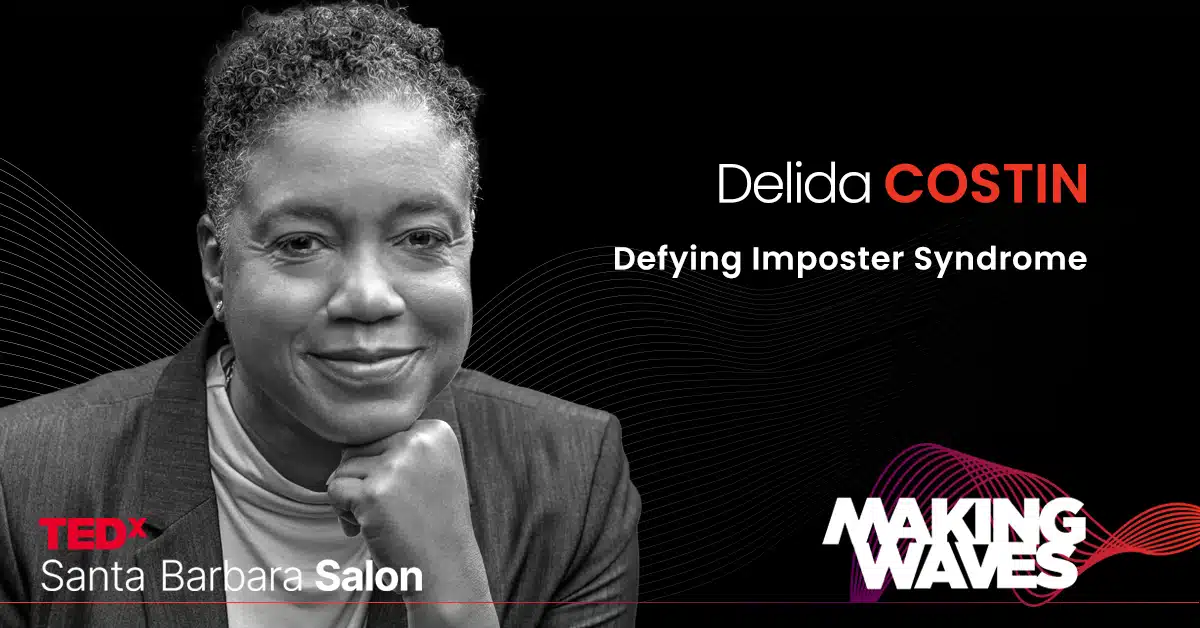
    A solid executive personal brand can help you be a better leader in the face of feeling like a fraud, especially the way Delida Costin thinks about it.

    I was so inspired by Delida Costin during her August TedX Santa Barbara session, “Defying Imposter Syndrome.” She said, among many amazing things: “You have to run to the hard stuff because that’s where we get better.” Building on that thought, the team at Revealing Genius can vouch that executive personal branding helps leaders be effective when they run to the hard stuff.

    Something that fits on the “hard stuff” list for most leaders is imposter syndrome, the subject of Costin’s recent talk. Having clarity about their personal brand has helped many leaders manage imposter syndrome for themselves and others—including the broader aspects of imposter syndrome that Costin adds to the conversation.

    Let’s take a moment to talk about what imposter syndrome has often been thought of—and Costin’s new ideas about it. Then let’s explore how executive personal branding can help leaders when they themselves feel like imposters—or when they see others in their organizations feeling that way.

    Traditional Imposter Syndrome and a Broader View

    In the business world, imposter syndrome has been defined as feeling that you’re a fraud in the workplace, that you’re not truly good at what you do, that you don’t belong. While this internal perception can be real for some people, Costin points out that others don’t experience imposter syndrome internally. Instead, these other professionals are confident they can do their jobs and even successfully grow into increasingly responsible roles. These confident leaders and aspiring leaders feel like imposters because of external, systemic factors—such as being of a generation, gender or race for which our society or an individual organization is not ideally built, Costin explained.

    In her TedX, Costin, an attorney, illustrated this point with a story from her own experience, which includes facilitating two initial public offerings, including Pandora. This story comes from when Costin was a young associate in a law firm.

    A male partner invited Costin and two other then-associates, both male, to play golf. When Costin arrived, she was told that women weren’t allowed on the green before noon. The partner and the other two associates played golf, leaving Costin to “nurse a Coke” by the pool with the other women and the children. Costin said this was her introduction to being made to feel like an imposter from outside. The system in place didn’t pave the way for her to grow her career while being herself. Instead, it “othered” her, making her feel like an outsider, even an imposter.

    Costin explained in her talk that her career has helped her realize the benefit of being a “#defiant imposter” when facing something systemic that makes her feel like something less than she is. Given the golf course situation again today, she said, she might state, “I guess nobody is going to play golf today.” This is an example of what a defiant imposter would say to move the needle toward a more equitable situation for herself and those coming after her.

    Costin explained in her talk that as professionals progress in their careers, they have more responsibility to speak up. “As we become more senior, we have the ability to clear those red lights, not just the ones that are internally imposed but also those that are externally imposed,” she said. 

    The partner that took the group to the golf course that day “didn’t mean to make me feel uncomfortable,” Costin said, but he hadn’t thought things through. According to Costin, the question leaders need to ask and answer is, “How do we help people in this moment when the change (that we need and that would help them) has not yet arrived?” 

    Executive Personal Branding as a Tool for Transforming Imposter Syndrome

    The time-proven Excavate–Tell–Affirm™ executive personal branding process from Revealing Genius is an important tool for overcoming both internal and external imposter syndrome. For more on how it helps with internal imposter syndrome, read this Revealing Genius blog. For more on how it helps overcome external imposter syndrome, read on.

    In the excavate part of the process, leaders do exercises that help them clarify who they are, what they stand for, and the big, positive change they’d like their leadership to facilitate in the world. In the affirm step, leaders steep in their brand until they believe in it with conviction. When we support leaders in their efforts to tell others about their brands, they become poised and ready to deliver on their visions. They also are much less vulnerable to feeling like they’re a fraud because they have such clarity about who they are, who they are here to serve and their unique reason to serve.

    Believing in their executive personal brands down to their bones also helps leaders we work with gain enough confidence to “defy” external, systemic pressures that can lead to imposter syndrome. In fact, with a fully excavated personal brand, leaders like you are primed to become “defiant imposters,” the kind of leaders who are working to improve and society.

    An Example of a ‘Defiant Imposter’

    Now an alum of the Brand Leadership Summit from Revealing Genius, Costin herself has been a defiant imposter, using her personal brand to pave the way for others. For example, the dress code for anyone ringing the bell on the New York Stock Exchange is to wear black, gray or blue. When Costin took Pandora public, earning the privilege to ring the bell, she wore white.

    “I wanted to be somebody that popped. I wanted the world to see it,” Costin said during the TedX event. “You do it for yourself, but you also do it to inspire and change (the world) for the people behind you.”

    Ready to Clarify Your Executive Personal Brand?

    If you think having full clarity about yourself as a leader could help you change the world for the better, you’re right! Ready to experience the powerful impact you can make when you facilitate meeting imposter syndrome with brand clarity? We’d be delighted to assist.

    First, download our free whitepaper about imposter syndrome. Then learn more through our free 10-minute webinar, Brand Leadership Summit or online course. We’re honored to work with boards and leadership teams as well as individual leaders on your transformation statement and your brand manifesto.

    Mary E. Maloney

    Mary E. Maloney, FACHE

    An executive advisor, educator, speaker, author and producer, Mary E. Maloney is the founder of Revealing Genius and the expert that accomplished leaders trust for positioning, messaging and brand strategy for themselves, their teams and their organizations. A former CEO and CMO, Maloney guides C-suite leaders, founders, physicians and board directors to powerfully and strategically message their expertise and “why” so they lead with conviction and achieve their most coveted goals.

  • My Guest Needs No Introduction, Yet She Has Imposter Syndrome

    My Guest Needs No Introduction, Yet She Has Imposter Syndrome

    The Excavate–Tell–Affirm™ process from Revealing Genius points to ways to overcome this challenge that even pop music prodigy Billie Eilish experiences.

    If someone as accomplished as Billie Eilish experiences imposter syndrome, it’s no surprise that many of us do, too. Fortunately, the Excavate–Tell–Affirm™ process from Revealing Genius can help leaders overcome this very real challenge.

    During the fourth season of his “My Next Guest Needs No Introduction” Netflix series, David Letterman interviewed Eilish, an American singer-songwriter who has received many awards and nominations. I’ll call out just a couple of them:

    In 2019, Eilish’s “don’t smile at me” crossed the mind-boggling 1 billion Spotify downloads mark. Putting that figure into context, Letterman pointed out during the Netflix interview that there were only about 7 billion people on the planet when the episode was taped in 2022. (Today that figure is closer to 8 billion). 

    In 2020, at age 18, Eilish became the youngest person to win a Grammy for album of the year. 

    And yet, despite these and many other amazing accomplishments, Elish told Letterman she sometimes felt like an imposter. 

    “I feel like I somehow managed to pretend that I was a celebrity for so long that I became one,” she said. 

    While “My Next Guest Needs No Introduction” didn’t get into what Eilish does to overcome her doubts, the time-proven Excavate–Tell–Affirm™ executive personal branding process from Revealing Genius connects leaders to many potential ways to get past this obstacle. In this blog, I’ll focus on three:

    1. Create a one-page brand manifesto. A brand manifesto succinctly summarizes your two-word purpose statement, your why and your (up to nine) hows. (Get our related white paper: Overcoming Imposter Syndrome.)
    2. Prepare a “capsule messaging collection,” a phrase coined by my colleague and collaborator @ColleenScollans, from Clarke & Esposito. This will help you answer with confidence and conviction—in any situation—the age-old question, “So, what do you do?” (Get our related white paper: Personal Introductions Can Make or Break a Brand.)
    3. Sponsor other leaders. Once you get established in your career, people watch you closely and ask, “What does this leader do with their brand?” One of the best things you can do to polish your brand is “send the elevator back down” to help someone else rise—that is, sponsor a protégé. (Get our related white paper: The Key to Elevating Your Executive Personal Brand? Sponsor Someone Else’s.)

    Let’s talk a bit more about each of these.

    Brand Manifesto

    A brand manifesto describes your purpose in two impactful words, your why and your hows (up to nine of them). In other words, developing your brand manifesto excavates and articulates the unifying and deeply-held forces that define your convictions and, therefore, your personal brand. 

    The end product is a single page of clarity about why people should care about your unique genius. 

    Importantly, you can create a brand manifesto for yourself and, CEOs and boards, for your organization; there is incredible power when these align. (Read this blog for more on this idea!)

    Our white paper, Overcoming Imposter Syndrome, not only describes the process of declaring your brand as a way to deliver on your authentic genius, but also tells the success stories of Revealing Genius clients who have used their brands to help them overcome feeling like an imposter.

    Capsule Messaging Collection

    How many times in your career have you been called upon to introduce yourself to another person or a group? Probably many times.

    Some people feel like such imposters that it’s difficult for them to answer at all. 

    Others answer with their title or a one-size-fits-all elevator pitch—or by pausing to think about their audience before speaking.

    Our experience at Revealing Genius is that you can answer better if you have developed a capsule messaging collection. It’s a grid that helps you think about all your potential audiences—both personal and professional— and customize your brand messaging for each.

    Get more details and thought starters to get you rolling from our short but impactful white paper about personal introductions. Then the next time someone asks you about what you do, you needn’t feel like an imposter. Instead,  you can answer with conviction!

    Sponsorship

    Do you believe in your brand enough to stand up to help someone else build theirs? If so, it’s important to note the key differences between coaching, mentoring and sponsoring.

    A coach helps to augment existing skills.

    A mentor advises and offers guidance.

    A sponsor advocates.

    Beyond sponsorship’s inherent benefits and the personal satisfaction we fervently believe it offers, sponsoring a protege will likely help you rise above the noise and elevate your personal brand. People will believe in your brand because you use it to take positive action for others. Sponsoring a protege also can help you build a personal brand legacy.

    Our whitepaper, The Key to Elevating Your Executive Personal Brand? Sponsor Someone Else’s,  takes these ideas even further.

    Overcoming Imposter Syndrome

    Are you ready to take the next step to deliver authentically on your brand? 

    Be sure to download the free white papers mentioned in this blog; they are our gifts to you. You can also learn more by accessing our free 10-minute webinar, attending our 7-day Brand Leadership Summit or enrolling in our online course. We’re honored to work with boards and leadership teams as well as individual leaders on their transformation statement and brand manifesto.

    Mary E. Maloney

    Mary E. Maloney, FACHE

    An executive advisor, educator, speaker, author and producer, Mary E. Maloney is the founder of Revealing Genius and the expert that accomplished leaders trust for positioning, messaging and brand strategy for themselves, their teams and their organizations. A former CEO and CMO, Maloney guides C-suite leaders, founders, physicians and board directors to powerfully and strategically message their expertise and “why” so they lead with conviction and achieve their most coveted goals.

  • Transitioning? Rely on Your Transformation Statement

    Transitioning? Rely on Your Transformation Statement

    This concise expression of who you are, what you stand for and whom you most want to serve can inform your flight plan in times of change.

    As changes come into your life (and they will, over and over!), your transformation statement can give you a solid foundation from which to respond.

    In this blog, let’s look at what a transformation statement is and how it can help you soar through all sorts of transitions.

    What Is a Transformation Statement?

    Also known as a 30-second commercial, positioning statement or “elevator pitch,” a transformation statement is a single sentence that encapsulates what you do best in the world, whom you most want to serve and the transformation you are uniquely poised to help them make.

    When we at Revealing Genius work with our clients on their executive personal brands, we ask them to tell us their signature brand stories—the stories that are their alone, that their competitors can’t tell. We listen closely and help them fill in the following formula:

    I <action word> <my beloved avatar> how to <do what they want to accomplish> so that they can <have the result/transformation>.

    Think about a story from your life that resonates with you. This is a story that you probably tell over and over, in lots of contexts. Most likely this story gets at the heart of what you do and what you stand for. 

    Reflect on that story as you fill in the blanks in the formula:

    <Action word> What was the key thing that you did in this story? What is the one action word that best describes your action? (For Revealing Genius, the word is “guide.”)

    <Beloved avatar> Who did you help in the story? What are the details about that person that make them so important to you? Consider the person’s age, gender, profession, faith or hobby. Get into the details. (For Revealing Genius, this is “healthcare leaders.”)

    <What they want to accomplish> What was the goal or objective of the person you helped? (Revealing Genius clients want to purposely identify and articulate their brand value.)

    <The result/transformation> What significant change did you facilitate in this story? Be sure to consider the emotional impact of what you did. (The transformation that Revealing Genius is uniquely poised to create for our clients is positioning them as recognized experts in their fields so they can rapidly achieve the next milestones in their careers.)

    Putting all those pieces together, here’s the Revealing Genius transformation statement:

    We <guide> <healthcare leaders> to <purposely identify and articulate their brand value> so they <become recognized experts and rapidly achieve the next milestones in their careers>. 

    What’s yours?

    Transformation Statements in Times of Transition

    Throughout our lives and careers, our who, what, where and hows will change, possibly many times.

    What we do for a living could evolve as our careers progress and we develop as individuals; “where” we dwell could shift, whether the move is planned or unplanned; when comes and goes, i.e. when I get my Master’s degree or when the kids move out; the “hows” we operate with in the world also constantly change, i.e. doing the things that a rising star does versus leading as a CEO.

    But our “why” is constant, our True North guide, the thing that helps us navigate gracefully always.

    It does take a bit of work to clarify, believe in and learn to articulate our core purpose. But doing so is totally worth it. 

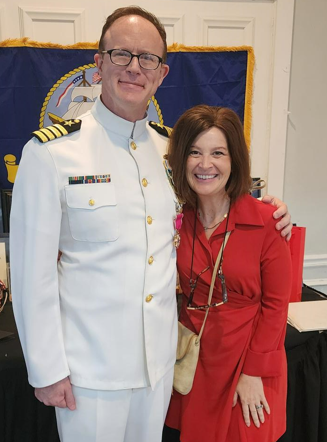
    As part of the celebration of July 4, 2024, Revealing Genius hosted a special Transformation Thursday workshop for graduates of our Brand Leadership Summit featuring Jean Paul “JP” Dube. I had the pleasure of attending JP’s retirement ceremony in May 2024 honoring his service as a captain in the United States Navy.

    Even though JP recently completed his tour of duty, he still has “a lot of gas left in the tank” as he re-enters civilian life. He sought (and got) feedback on his transformation statement. The workshop participants and I helped him craft a powerful one that will propel him forward in his next chapter.

    JP’s transformation statement before the workshop:

    I enable small to medium size businesses with security and risk management challenges to develop effective and cost saving security and risk management programs so their business can remain competitive in their field.

    After the workshop:

    I equip healthcare leaders to examine risks to their organization so they can develop hack-free countermeasures that ensure employees are safe and patients receive uninterrupted care.

    The Benefits of Being On-Purpose

    Companies have known the benefits of being on-purpose for a long time. Gartner says on-purpose brands outperform their competitors by 120%. Individuals can take a page from this playbook and thrive.

    Imagine the possibilities for yourself if you had a transformation statement and other executive personal brand collateral in hand. When you clarify your why, affirm it until you believe in it with conviction and learn to tell others about it (that’s our time-proven Excavate-Tell-Affirm™ process in action!), you’ll be making a positive impact and feeling fulfilled, no matter what, where you or how you are in the world! 

    Are you ready to take the next step? We’d be honored to assist you. Learn more through our free 10-minute webinar, Brand Leadership Summit or online course. We’re honored to work with boards and leadership teams as well as individual leaders on your transformation statement and your brand manifesto.

    Mary E. Maloney

    Mary E. Maloney, FACHE

    An executive advisor, educator, speaker, author and producer, Mary E. Maloney is the founder of Revealing Genius and the expert that accomplished leaders trust for positioning, messaging and brand strategy for themselves, their teams and their organizations. A former CEO and CMO, Maloney guides C-suite leaders, founders, physicians and board directors to powerfully and strategically message their expertise and “why” so they lead with conviction and achieve their most coveted goals.

  • The Aim of Your Transformation Statement? Flight!

    The Aim of Your Transformation Statement? Flight!

    This succinct expression of your executive personal brand will help you better understand who you most want to serve so your career or business can soar.

    Why does a caterpillar transform into a butterfly? So it can fly!

    So too with transformation statements … by creating and strategically deploying this key brand message, you’ll be able to effectively articulate to anyone, in any situation, the unique transformation only you can help them achieve. And then you and the people you help will both take wing!

    In this blog, I’ll talk about the time-proven Excavate-Tell-Affirm™ process from Revealing Genius and how it can help you develop your transformation statement. Then I’ll dive into the formula for a well-crafted transformation statement that can help you clarify who you most want to serve (your beloved avatar), so you can do The Great Work of Your Life.

    The Cocoon (Process) for Creating Your Transformation Statement 

    We’ve previously posted on the Revealing Genius blog about our process for developing a truly effective transformation statement, also known as an “elevator pitch,” a 30-second commercial or positioning sentence.

    During the excavate step of the time-proven Excavate-Tell-Affirm™ process, Revealing Genius listens actively to leaders as they tell their brand stories. Telling unique stories typically leads to an all-but-perfect transformation statement as this simple but effective formula gets filled in: 

    I <action word> <my beloved avatar> how to <do what they want to accomplish>
    so that they can <have the result/transformation>.

    As an example, here’s a transformation statement for Revealing Genius: 

    We <guide> <healthcare leaders> to <purposely identify and articulate their brand value>
    so they <become recognized experts and rapidly achieve the next milestones in their careers>. 

    Notice that while the formula is designed to express what you do, it’s really all about the people you want to serve, your “beloved avatar,” and the transformation you are best in the world at helping them achieve.

    This article from ellispond.com says it well: “It’s not just about understanding who they are, it’s about understanding who they want to become.

    “They have a problem, and you have the solution,” the article continues. “But nothing will sell that solution if you don’t understand the transformation that needs to take place within them.”

    Here at Revealing Genius, we ask clients, participants in our Brand Leadership Summit (the next one will take place Sept. 5-13) and people taking our on-demand online course to reflect on their beloved avatars. What is their day like? What are they thinking? What are they feeling? What are they struggling with? Why are they turning to you for help? 

    It’s important to get as much detail in your mind’s eye about your beloved avatar and include that detail in your transformation statement. Does this mean you can only serve people who meet all your criteria for a beloved avatar? Of course not. In all, your clarity about the transformation you were born to support will help you better articulate, with conviction, your unique genius.

    Your Transformation Statement Helps Your Career or Business ‘Take Off’

    I can honestly say that people come alive when they excavate their personal brands and learn to tell others about them through messaging tools like the transformation statement. When they also affirm their brands so they can feel them in their bones, the power of that conviction spills over into being on-brand every day.

    Gartner says on-purpose brands outperform their competitors by 120%. Individuals can take a page from this playbook and thrive.

    I’ve seen it happen many times.

    Here’s a shining example from my blog: How Kate Found Her Dream Job.

    I’ve also seen people who go through our Excavate-Tell-Affirm™ process get the promotion they seek, be selected for a coveted board seat, start a new business, grow an existing organization, do an outstanding update to their LinkedIn profile or CV, make a top-notch all-staff presentation … and so much more.

    Ready to excavate your genius and, in turn, transform the world? We’d love to help you, your career and your organization soar—in service to your beloved avatar.
    Learn more about executive personal branding, including transformation statement development, through our free 10-minute webinar, Brand Leadership Summit or online course. We’re honored to work with boards and leadership teams as well as individual leaders.

    Mary E. Maloney

    Mary E. Maloney, FACHE

    An executive advisor, educator, speaker, author and producer, Mary E. Maloney is the founder of Revealing Genius and the expert that accomplished leaders trust for positioning, messaging and brand strategy for themselves, their teams and their organizations. A former CEO and CMO, Maloney guides C-suite leaders, founders, physicians and board directors to powerfully and strategically message their expertise and “why” so they lead with conviction and achieve their most coveted goals.

  • Why You Need to Align Your Board (and C-Suite) With a Brand Declaration

    Why You Need to Align Your Board (and C-Suite) With a Brand Declaration

    Uniting your top leaders is fundamental to your organization’s success.

    What’s the one thing you want your audience to know about your organization? The one thing that, if you articulated it well, would align your board and thereby put you fully on track to deliver on your mission and vision? The answer is at the heart of your brand declaration, a statement of the aims of your company or non-profit.

    Take the case of The Atlas Enterprise, which publishes the resource lovingly known as “the Bible of neurosurgery.”

    When The Atlas Enterprise worked with Revealing Genius and strategy consultancy Clarke & Esposito to build its brand declaration, it created unprecedented alignment among its leadership team members—the board directors and its founder and public voice, Aaron Cohen-Gadol, M.D.

    Before creating the brand declaration, the non-profit’s leaders were struggling with how to talk meaningfully and compellingly about the organization’s portfolio of products together, then as stand-alones. Since developing the brand declaration, the team has been able to describe the non-profit’s offerings so their complexity is heard and understood. 

    In addition, the brand declaration development process helped Dr. Cohen recognize and acknowledge that his personal brand was just as important to organizational success as the overarching brand. He wrote a brand declaration for himself, too! (Read the case study about this initiative.)

    Board and leadership alignment are clearly key to organizational success. Let’s dive deeper into the ways it can help with high-level strategic work and day-to-day governance, key obstacles to achieving board alignment, and strategies for overcoming those obstacles, including the brand declaration.

    The Board Alignment Imperative

    At a high level, board alignment is fundamental to overall organizational health and success because it boosts decision-making, organizational culture, stakeholder confidence and the ability to adapt to changing circumstances. 

    The benefits of board alignment in day-to-day governance also are many. A board that’s aligned: 

    • Ensures the organization’s mission and strategic pillars are promulgated. When everyone on the board is on the same page, working collaboratively towards common objectives becomes easier, increasing the likelihood of success in achieving the organization’s mission.
    • Streamlines consensus in decision-making and actions. When board members share values, vision and goals, gaining consensus on critical decisions becomes easier. Alignment also enhances the effectiveness of the board’s actions.
    • Helps raise the floor on organizational culture. A cohesive board with shared values and a unified vision can set an example for the rest of the organization, demonstrating a culture of teamwork, trust and collaboration.
    • Inspires stakeholder confidence. When stakeholders see a united front, they are more likely to trust the organization’s leadership and support its initiatives.
    • Can better adapt the strategic plan to changing circumstances. Alignment is crucial during the strategic planning process. A unified board can more effectively develop and implement strategic plans that reflect its collective wisdom and vision. This enhances the organization’s ability to adapt to changing circumstances and achieve long-term success.
    • Provides common ground for conflict resolution. In any organization, conflicts can arise. Shared values and goals provide a foundation for finding common ground and working toward mutually beneficial solutions.
    • Increases board member commitment, engagement and retention. Members are more likely to be engaged and committed when they feel the board aligns with their interests and values. This, in turn, fosters a stable and supportive community. 
    • Increases the effectiveness and efficiency of governance processes. For example, when board members are aligned, onboarding and offboarding board members become seamless.

    10 Obstacles to Board Alignment

    An organization benefits when its board and leadership team are aligned, but getting there isn’t always easy. Here are some common obstacles that can get in the way of uniting your top leadership.

    1. Diverse backgrounds and perspectives. Board members often come from diverse professional backgrounds, disciplines and experiences. Balancing these diverse perspectives and aligning them toward a common vision can be challenging, especially if differences in values or priorities exist.
    2. Competing interests. Board members may have different interests or priorities based on their roles, affiliations or professional agendas. Conflicting priorities can make it difficult to achieve alignment on overarching organizational goals.
    3. Limited communication. Inadequate communication or information-sharing among board members can hinder alignment. If members aren’t well-informed about the organization’s mission, goals or ongoing activities, it can become difficult for them to align their efforts.
    4. Lack of trust. A lack of trust among board members can lead to skepticism, resistance to change and difficulties in reaching consensus on important decisions.
    5. Turnover and transitions. Board turnover or changes in officers can disrupt alignment efforts. New members or board chairs may bring different perspectives or priorities, and it takes time for them to integrate into the existing culture and align them with the organization’s objectives.
    6. Resource constraints. Limited financial or human resources can lead to competing demands and priorities. Board members may struggle to align with one another when faced with resource constraints or competing for the same limited resources.
    7. External pressures. Changes in regulations, economic conditions or shifts in the academic and professional landscape can create challenges for board alignment. Adapting to external pressures while maintaining alignment requires excellent strategic planning and effective communication.
    8. Lack of strategic planning. Without a clear and well-defined strategic plan, board members may lack a roadmap for alignment. A lack of strategic direction can result in disparate efforts and conflicting actions among members.
    9. Cultural differences. In organizations with international or diverse memberships, cultural differences can contribute to challenges in achieving alignment. Different cultural perspectives and expectations may need to be navigated and harmonized.
    10. Communication styles. Differences in communication styles among board members can lead to misunderstandings and misinterpretations, making it difficult to establish a shared understanding and alignment.

    Building a Board Declaration

    Overcoming the challenges above requires thoughtful and proactive efforts from board leaders, including employing effective communication strategies, fostering a culture of trust and collaboration, and investing in team-building activities. Regular assessments of board dynamics and a commitment to reaching a shared vision also are essential.

    At Revealing Genius, we recommend a brand declaration to support board and leadership alignment and effectiveness. Developing a declaration based on our time-proven Excavate–Tell–Affirm™ process helps excavate your company’s purpose, what it stands for and whom it most wants to serve. Once you’ve excavated your brand, you can affirm it until all your leaders feel it with conviction and more effectively tell all your stakeholders about it.

    Considering a brand declaration for your organization or yourself? We’re honored to work with boards and leadership teams and individual leaders. You can also learn more via our free 10-minute webinar, Brand Leadership Summit or online course.

    Mary E. Maloney

    Mary E. Maloney, FACHE

    An executive advisor, educator, speaker, author and producer, Mary E. Maloney is the founder of Revealing Genius and the expert that accomplished leaders trust for positioning, messaging and brand strategy for themselves, their teams and their organizations. A former CEO and CMO, Maloney guides C-suite leaders, founders, physicians and board directors to powerfully and strategically message their expertise and “why” so they lead with conviction and achieve their most coveted goals.

  • Ignite Your Next Success by Knowing Your Purpose

    Ignite Your Next Success by Knowing Your Purpose

    Manifest your greatest aspirations by uncovering your personal and organizational  ‘why.’

    It wasn’t until Guillermo didn’t get the board seat he was aiming for that he went on a journey to understand his purpose and become able to substantively communicate his “why.” Doing this using the time-proven Excavate–Tell–Affirm™ process from Revealing Genius changed the trajectory of his career. By developing his brand manifesto, Guillermo came alive.

    At the time Guillermo applied for that board seat, he was an accomplished executive, the recently retired president of a division of a large, well-known company. He had grown a brand to be a global household name. He was one of two on the shortlist for the role. So why didn’t he get it? The chair said the other, equally qualified candidate was better able to link her “why” to the firm’s reason for existing and how she could add value.

    The “purpose” Guillermo has now excavated? “Expanding possibilities.” The “why”? “To fuel empowerment for achieving breakthroughs that matter.”

    Wow.

    Today, Guillermo serves as an investor/advisor to two organizations and as a board director for two others. 

    Another example of the power of purpose: Peter had recently retired from being CFO of a $100M nonprofit. Going through the Excavate-Tell-Affirm™ process enabled him to discover what would bring him joy, fulfillment and income in his next act—teaching “finance language” to nonprofit CEOs. Peter called the one-minute brand affirmation that accompanied the final product “a love letter” to himself that only he would read.

    Inspired? Read on for more stories about people’s success after excavating their purpose and how you can make it happen in your world. The example in the last section of this blog describes the bonus power that can be achieved when an organization and its top executive go through this process together.

    Individuals’ Next Success After the Excavate-Tell-Affirm™ Process

    Taking what I learned about building brands as a CEO and CMO helped me create the Excavate-Tell-Affirm process, which has helped many C-suite executives articulate their brand

    value, including their extraordinary why. Here are six worthy examples: 

    1. A CEO emeritus of one of the largest payers in the nation repositioned himself to become a mentor and investor to innovative healthcare technology firms in the behavioral health space.
    2. A neurosurgeon who dedicated his life’s work documenting complex surgical procedures is finally becoming known for the innovative surgical training techniques he is using to train the next generation of brain surgeons.
    3. The president of one of the largest health systems in the nation, at the apogee of his career, strategically remessaged to attract a seven-figure salary in a role where he could impact millions of lives with one of the largest healthcare disruptors in the world.
    4. A physician executive took on her first CEO role for a telemedicine company and is making her mark specializing in #hyperlocal healthcare and revitalizing rural communities.
    5. A nurse who moved up the ranks to the C-suite at the same prestigious health system over 41 years pivoted into a private consulting practice and now has a waiting list of top-tier clients in need of her unique leadership development approach for large multi-location organizations in healthcare and beyond.
    6. A scientist from one of the largest pharmaceutical companies in the world rekindled her love of medicine and her work and found the courage to share her point of view, which has led to significant internal support and funding of a moonshot project she masterminded.

    Organizations Can Benefit, Too

    I hope you’ve enjoyed those stories of individuals’ success. Creating a brand manifesto can be particularly powerful when an organization does it alongside its top executive. Here’s a case in point.

    When The Atlas Enterprise worked with Revealing Genius and strategy consultancy Clarke & Esposito to build its brand manifesto, it created unprecedented alignment among its leadership team members—the board directors and its founder and public voice, Aaron Cohen-Gadol, M.D.

    Before creating the brand manifesto, the non-profit’s leaders were struggling with how to talk meaningfully and compellingly about the organization’s portfolio of products together, then as stand-alones. Since developing the brand manifesto, the team has been able to describe the non-profit’s offerings so their complexity is heard and understood. 

    In addition, the brand manifesto development process helped Dr. Cohen recognize and acknowledge that his personal brand (and manifesto) was just as important to organizational success as the overarching brand. He wrote a brand manifesto for himself, too! (Read the case study about this initiative.)

    Get Your Next Success by Boosting Your Brand

    My clients tell me they’ve been passed over for dream jobs and board seats; they lead tech companies that don’t get funded because their narrative is too complex to understand; they watch top talent leaving their company to go with a competitor because the competitor’s CEO is perceived to be more passionate about a cause. 

    Don’t let these things be true for you!

    Ignite your next success! Learn more about building a brand manifesto for yourself or your organization through Revealing Genius. We’re honored to work with boards and leadership teams as well as individual leaders. You can also learn more via our free 10-minute webinar, Brand Leadership Summit or online course. 

    Mary E. Maloney

    Mary E. Maloney, FACHE

    An executive advisor, educator, speaker, author and producer, Mary E. Maloney is the founder of Revealing Genius and the expert that accomplished leaders trust for positioning, messaging and brand strategy for themselves, their teams and their organizations. A former CEO and CMO, Maloney guides C-suite leaders, founders, physicians and board directors to powerfully and strategically message their expertise and “why” so they lead with conviction and achieve their most coveted goals.

  • In Transition? Your Superpower Can Help You Stand Tall

    In Transition? Your Superpower Can Help You Stand Tall

    When you excavate and affirm your executive personal brand, you can better navigate your next step.

    Some leaders think putting a career break on their resume or LinkedIn profile will damage their career prospects. I’d like to change the conversation/stigma around this notion through executive personal branding, including helping leaders identify their superpower.

    When leaders know who they are, what they stand for and what they’re best at in the world, they can stand tall and better deliver on their full potential in any situation–whether they’re learning something new in a career break, achieving their next career milestone or turning their big hairy audacious goal for the world into reality.

    Let’s start this article with an example of a person who owns her career breaks and pivots, then move into how to excavate your superpower to help you move forward through all parts of your life and finally, talk about how to affirm your superpower as part of your executive personal brand until you believe in it with conviction. “Excavate” and “affirm” are two of the three steps in the time-proven Excavate–Tell–Affirm™ process from Revealing Genius.

    Two Career Breaks, Seven Pivots

    Marine Hamou’s superpower lies in connecting the dots between exceptional people, ambitious ideas and business growth to help subject matter experts and startups win in the long run. She’ll be our guest in an upcoming edition of The Great Work of Your Life™ interview series. Notably, Hamou lists not one but two career breaks on her LinkedIn profile. And she has pivoted seven times during her career.

    During one of the breaks, Hamou immersed herself in learning Mandarin, attending classes at TCA Taipei School for three months. She also volunteered to teach English and computer skills for nine months in Southeast Asia.

    Hamou may see breaks as being full of possibilities in part because she is a “third culture kid,” a child who grew up in a different culture from her parents. 

    “Being in transition is not a disadvantage, it’s of great value,” she told me in a recent conversation. “It’s an opportunity to ask ourselves the hard questions.”

    A hard question Hamou has asked herself is “How much (income) is enough?” To be without a steady paycheck or a salary as she has at some points in her career can be scary, she noted. However, she thinks that if a leader honestly answers big questions like the one about income, the transition will always yield growth.

    According to Hamou, it’s also important to shift transition conversations from failure to growth: “Instead of asking, ‘What if I fail?’ (or) ‘What if it doesn’t work?’, … ask, ‘What can I learn?’

    “Transition is a time to reconnect with our true selves to move forward,” she added. “Blank pages are terrifying but also full of possibilities.”

    At Revealing Genius, we often ask our clients the hard question, “How do you want to live?” and encourage them to build their executive personal brand with their answer in mind. 

    Excavate Your Superpower

    So how can you get to know your superpower so it can support your efforts to move forward in the world, whether that’s into your dream job, onto a board and through a time of transition?

    One way Revealing Genius helps leaders excavate their superpower is by using the time-proven Excavate–Tell–Affirm™ process and asking them, “Who is your hero?” A leader’s hero can be someone they know, a famous person or a fictional character. 

    You can do this exercise right now. Who is your hero?

    The important and possibly harder follow-up we at Revealing Genius ask is, “What is it about this person that makes them your hero?” The answer to these two questions speaks volumes about your brand—and likely points to your superpower.

    A writer I know would name “Grandma Margaret” as her hero. She’d say the reason her grandmother is her hero is that during good times as well as during times of transition, Grandma Margaret would apply calmness and wisdom to every situation she encountered. 

    Interestingly, that writer’s superpower is being able to kindly and calmly bring up for discussion the elephant in any room. This ability helped her to discern when it was time to leave her longtime job and establish her own consulting business—and to approach the transition with strategies that included writing a learning plan!

    Affirm Your Superpower

    Superpowers, like executive personal brands, are made more potent by the use of affirmations. That’s why Revealing Genius builds affirmations into our executive personal branding program.

    Think about the famous children’s story, “The Little Engine That Could.” In it, a long train must be pulled over a high mountain after the locomotive breaks down. A small engine agrees to give this big job a try.

    As the little engine works to pull the train over the mountain, it repeats the motto, “I-think-I-can, I-think-I-can.” Children and adults alike applaud when the little engine reaches its goal. And we can all see that the engine’s superpowers—its positive attitude and perseverance—and the spoken affirmations of those superpowers help it get to the other side.

    We also hear a lot about affirmations being used in sports. When coaches consistently tell good athletes they can row faster, lift heavier or jump further, they do. When football players, gymnasts or discus throwers use affirmations to instill in themselves the belief that their training will pay off, new world records get set.

    Executive Personal Branding and Superpowers in Transition Times

    I know from experience that times of transition can be times of significant learning and growth. That’s why I help my clients own their career shifts and breaks. I support them in being unapologetic during these times, deliberate about learning and even strategic about how to leverage their superpower. When they know what they’re best at in the world, they may even plan their next transition!

    Want to learn more about the Excavate–Tell–Affirm™ process and the many ways it can benefit you? Get instant access to the free Revealing Genius 10-minute webinar, sign up for our Brand Leadership Summit or take our online course. We are honored to work with leaders 1:1 or to help build a brand manifesto.

    Mary E. Maloney

    Mary E. Maloney, FACHE

    An executive advisor, educator, speaker, author and producer, Mary E. Maloney is the founder of Revealing Genius and the expert that accomplished leaders trust for positioning, messaging and brand strategy for themselves, their teams and their organizations. A former CEO and CMO, Maloney guides C-suite leaders, founders, physicians and board directors to powerfully and strategically message their expertise and “why” so they lead with conviction and achieve their most coveted goals.